Hey everyone! Can you believe it is February? It seems like the holidays flew by, and in the midst of merry-making and cold weather, DIY progress slowed a bit around Edge Hill. Professionals, however, come for paychecks and brave the cold. There have been a lot of jobs around the farm that we have tackled willingly, but Rachel and I draw a hard-and-fast line at masonry; that is a job for the true professionals.
When Rachel and I were looking at houses in Richmond three years ago, we were sold on our little two-bedroom in Stratford Hills for a great number of reasons, one of the best being low maintenance!
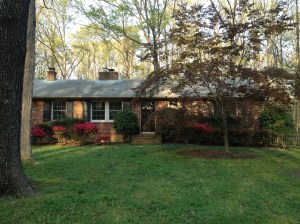
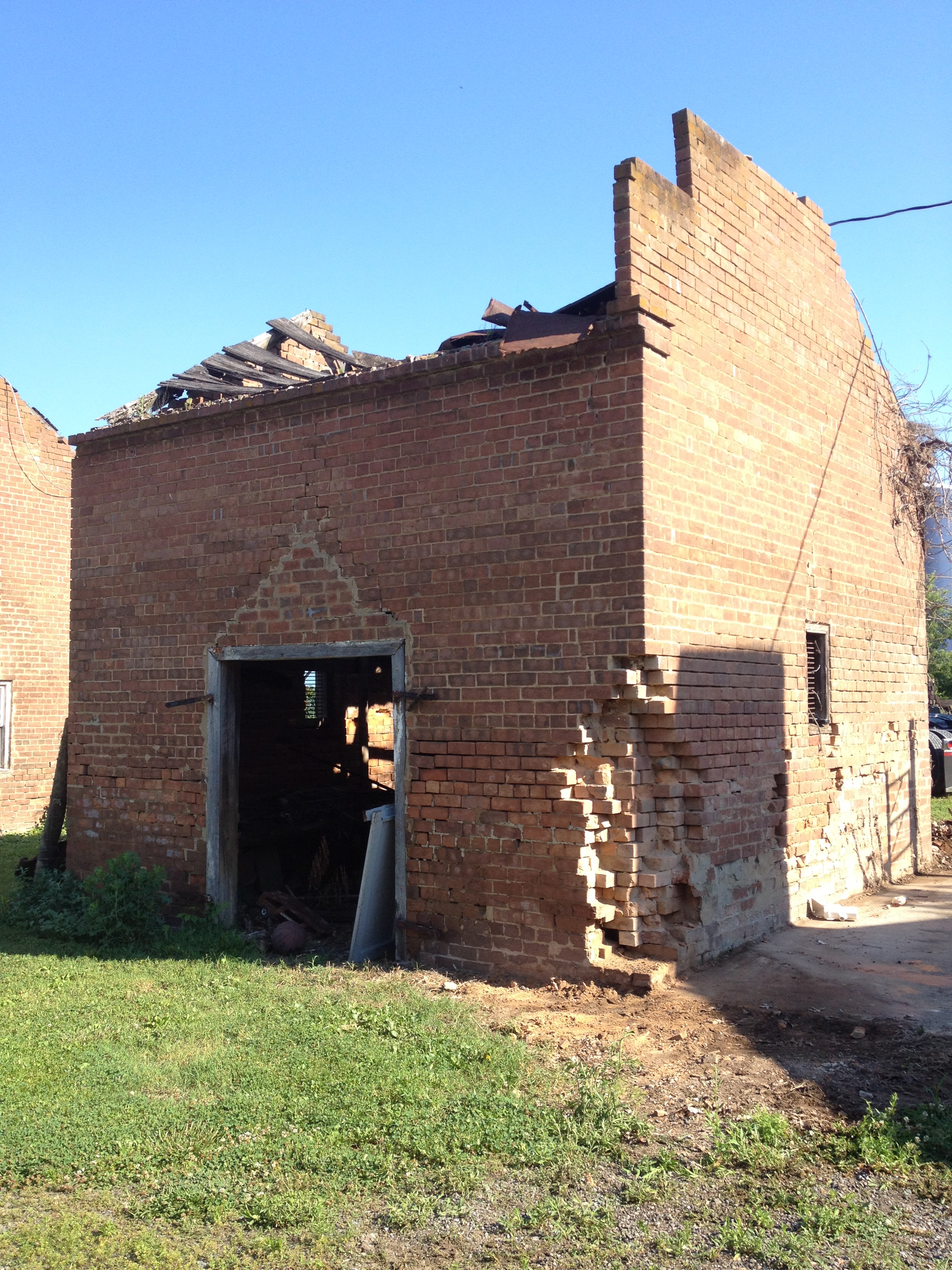
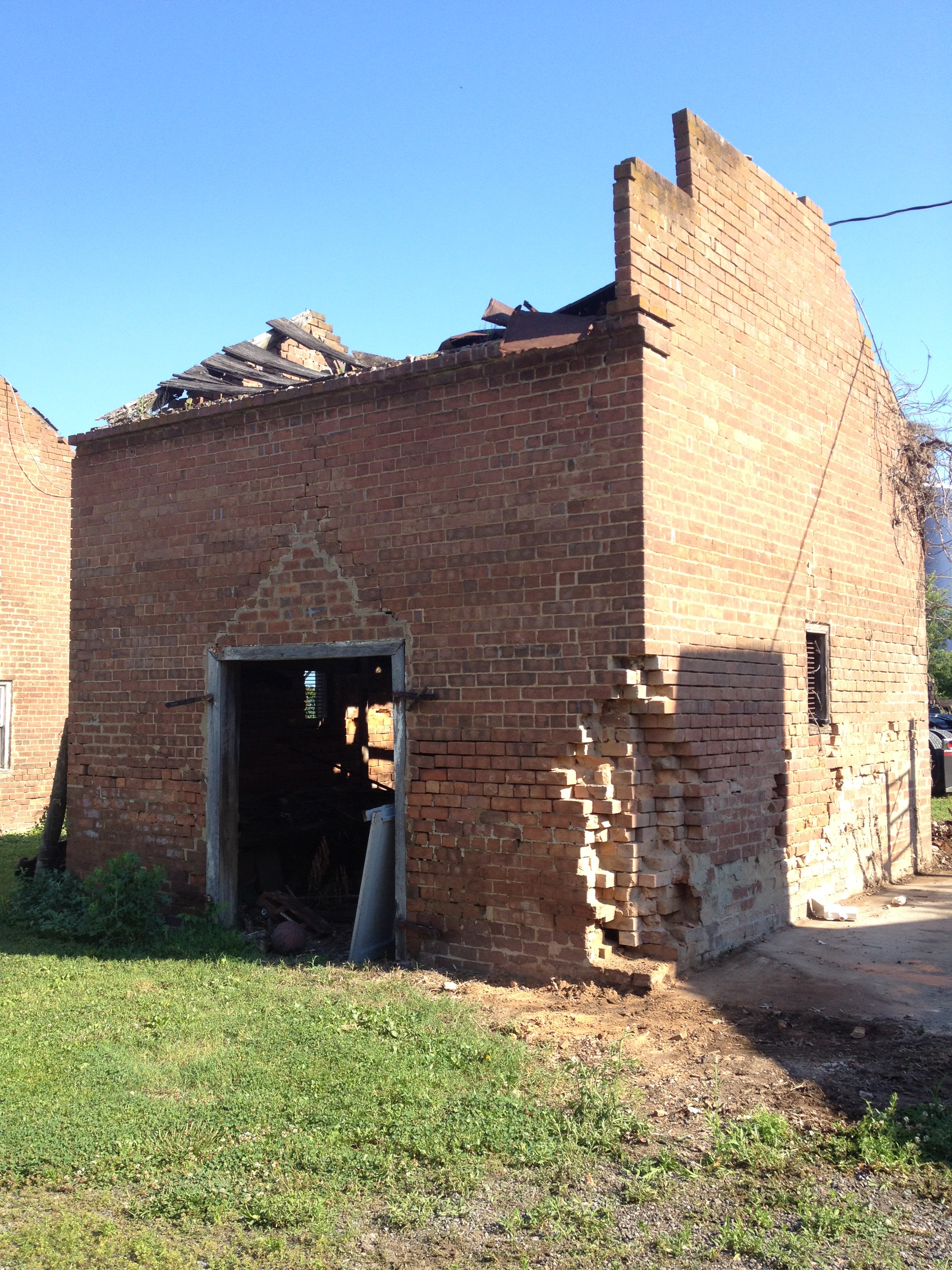
We’re going to miss this place! The Richmond home is solid brick construction, and we knew that meant no painting, reduced insect issues, etc. Edge Hill has taught us, however, that even brickwork needs lovin’ too. And when it does need work, it translates to some major TLC. You might remember that our brick smoke house was in dire straights when we arrived on the scene:


(this is the view along the top of the back wall; look at how the vegetation turned the timbers into a nice foothold…and eventually dirt!)


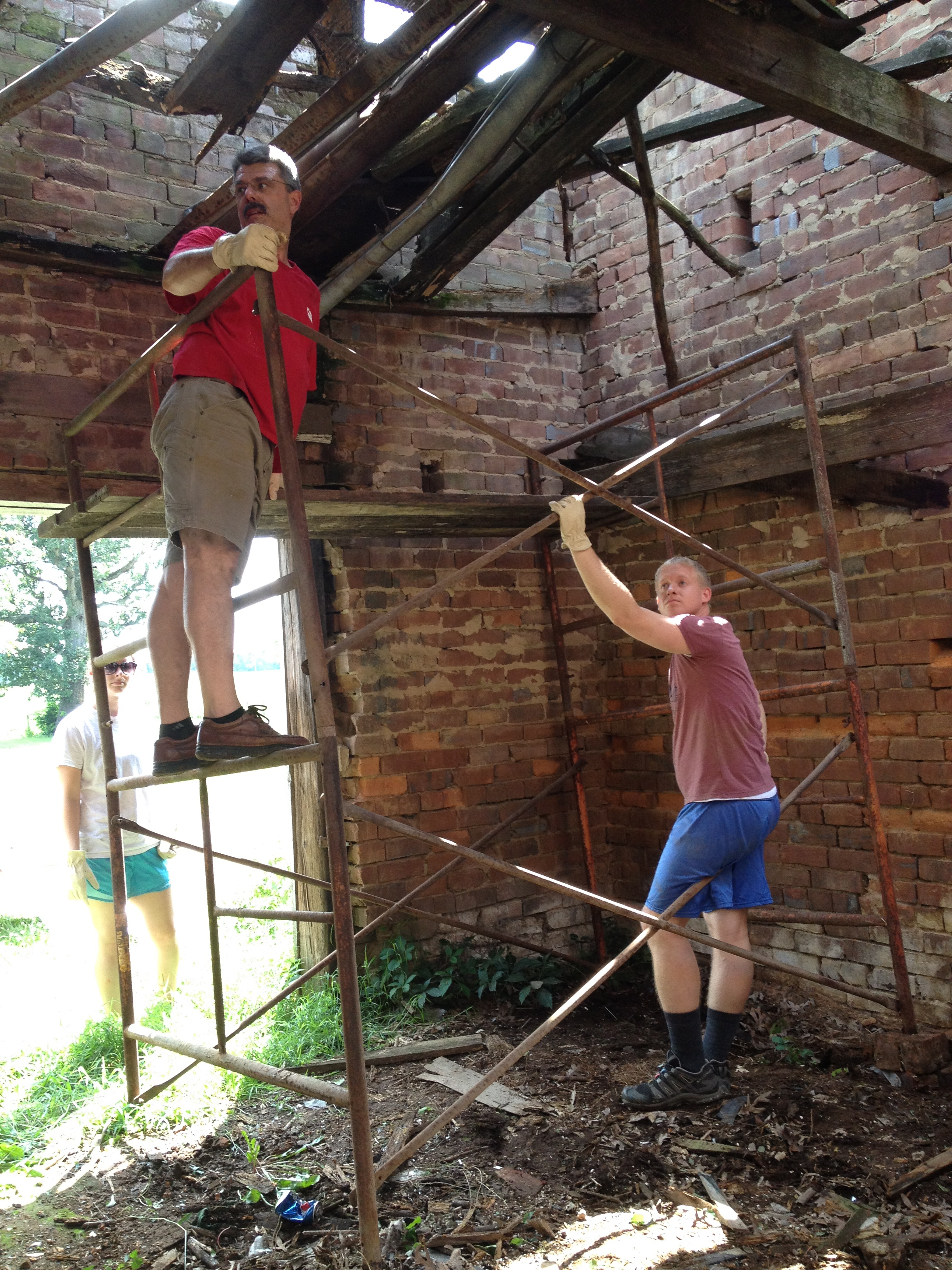
You’ll also remember that, at the end of the summer, we got some help tearing down the roof, removing the rotten rafters, and clearing out the junk that was inside the smoke house.
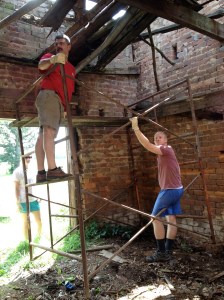


Even though we had cleared the place out, the smokehouse was still listing at an uncomfortable angle…think colonial America’s version of the Leaning Tower of Pisa. Time to call in the professionals: Chuck and his team of brick masons prevented the structure from falling down before our eyes.
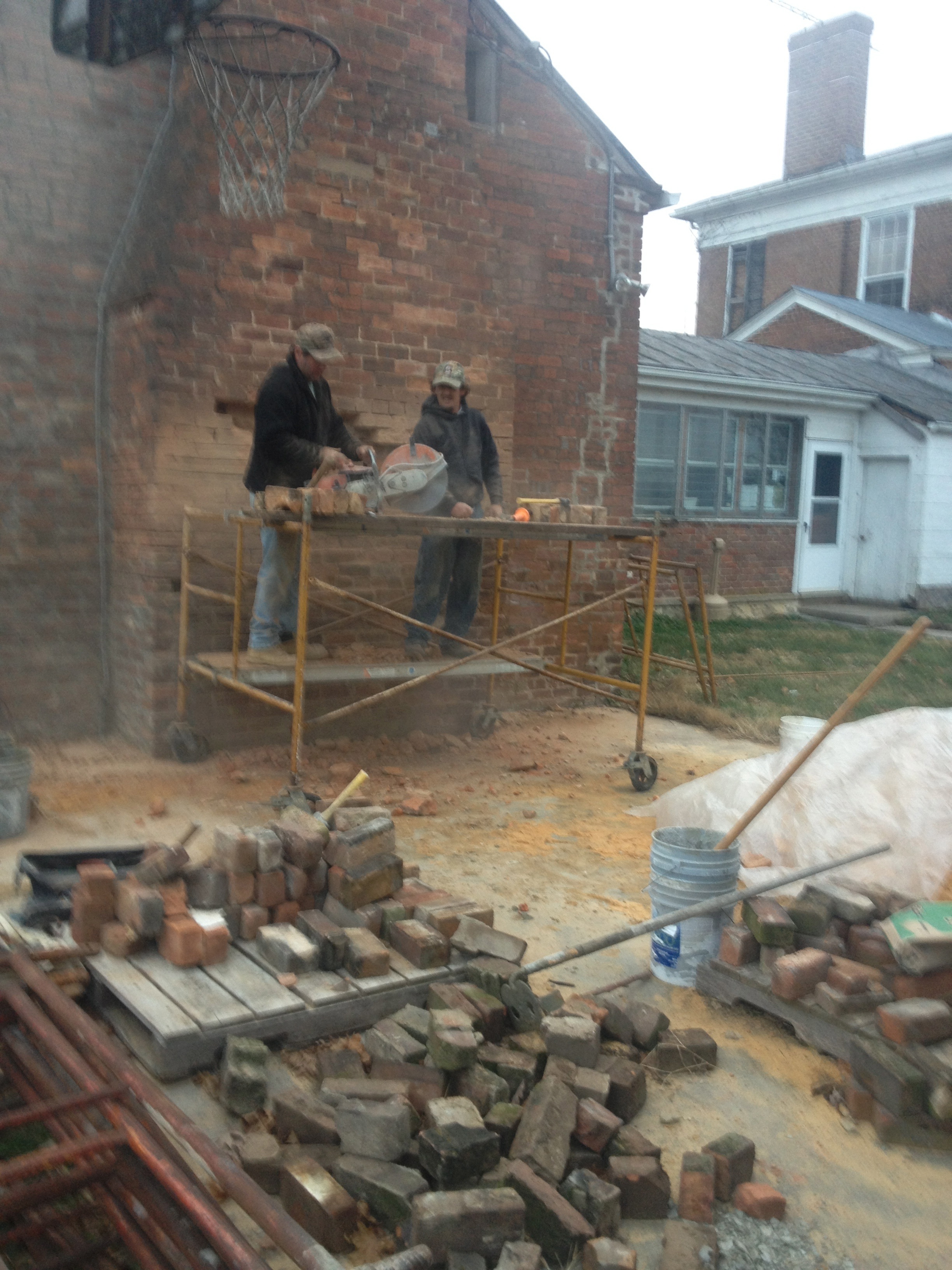
The masons went through a “repointing” process – they removed the old mortar and replaced it (this 2.5 minute video is very similar to the process Chuck used). They also used the pallets of brick we salvaged from the brick mound early in the summer . The masons worked on our property primarily on the weekends, which meant we got to observe the process!

(this is actually the summer kitchen, but you get the idea)
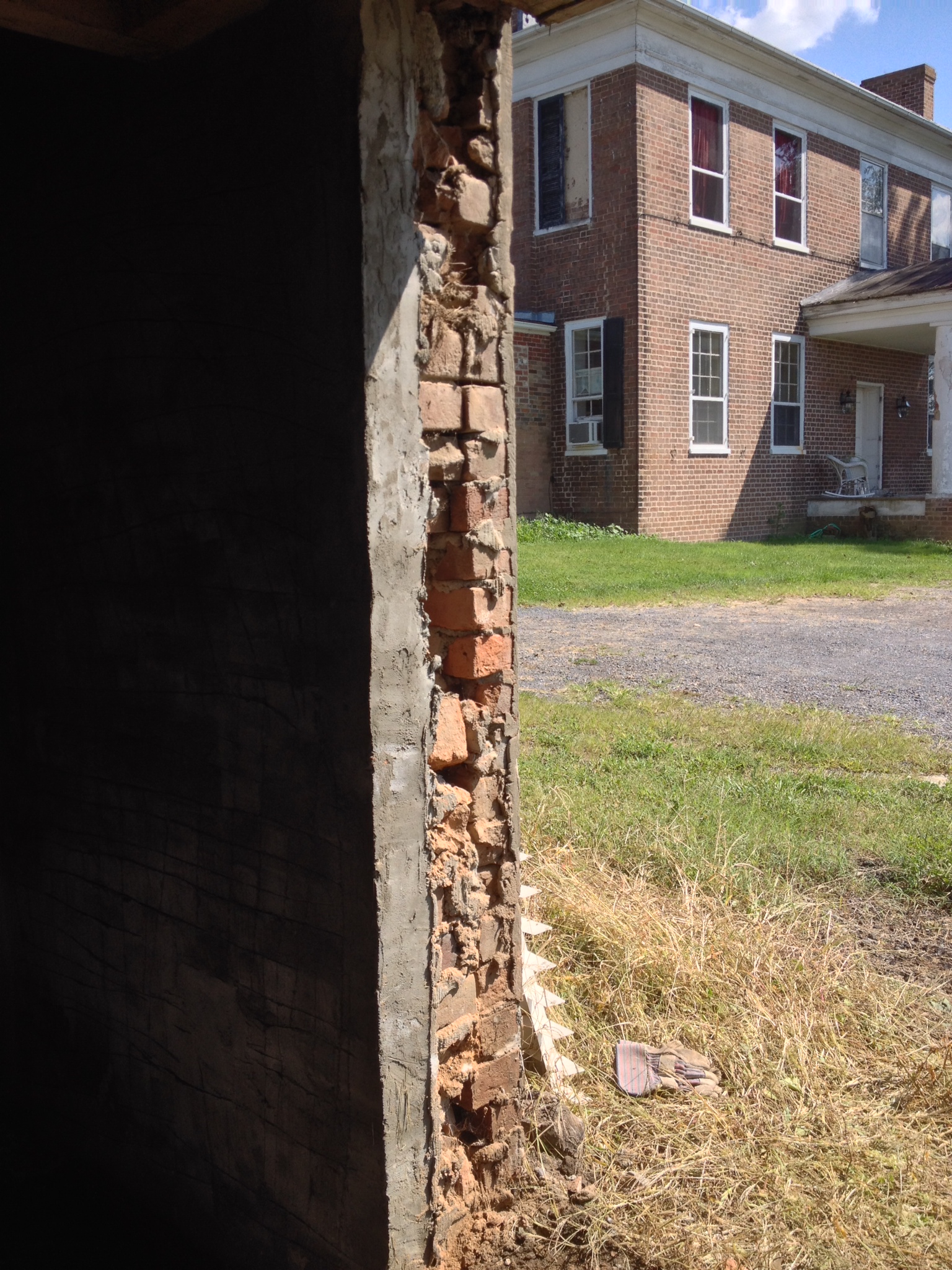
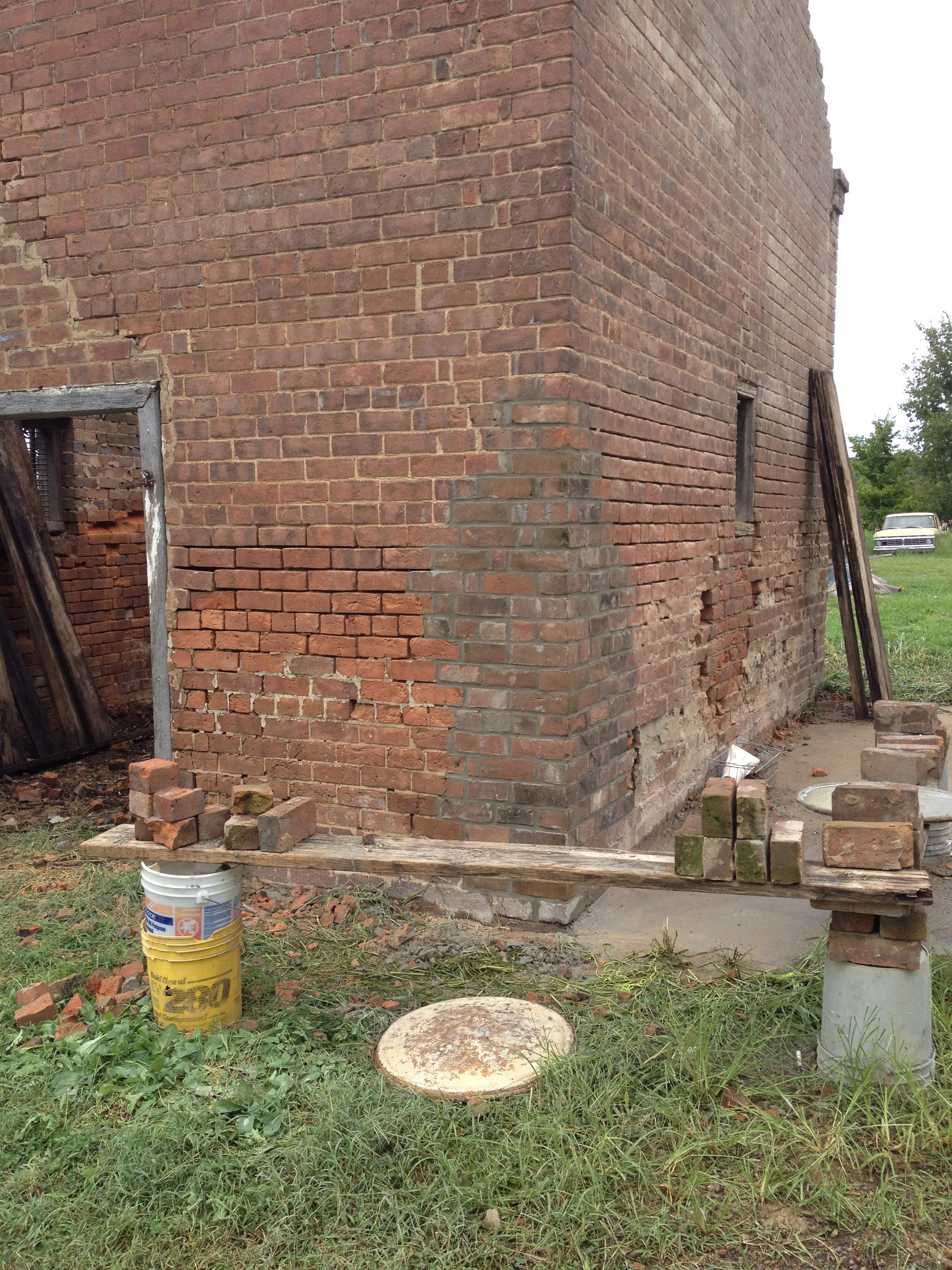
Our first and main concern was the corner of the smokehouse, which was mysteriously missing a sizable chunk right at car-bumper height, and the accompanying decayed wall had been haphazardly repaired with cement slathered into the brick voids.

Our masons agreed this was the first priority. The guys got right on it:

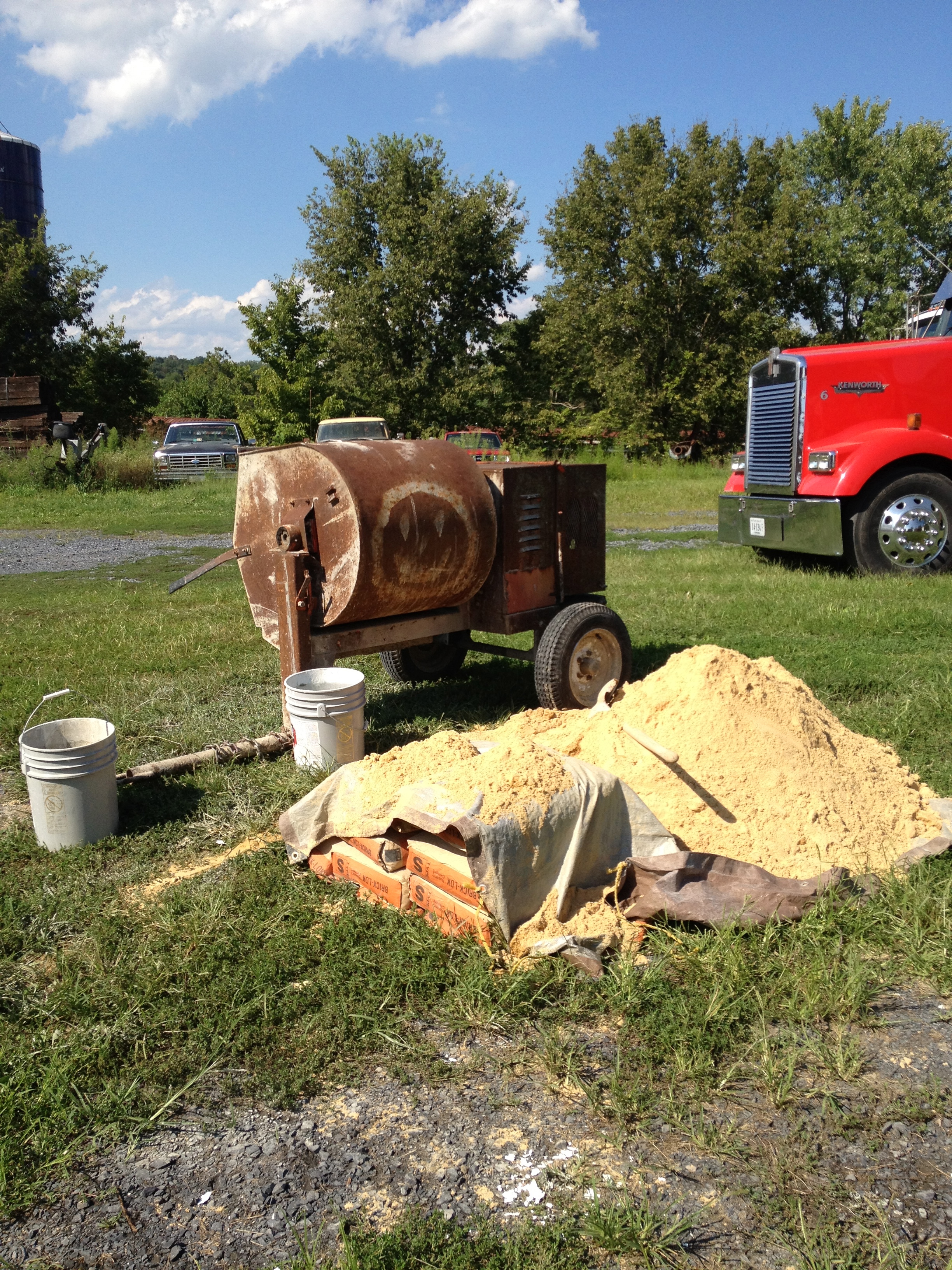
We are using Type S mortar and sand so the color is very close to the original mortar color. The guys started by routing out the joints:

And then proceeded to rebuild!


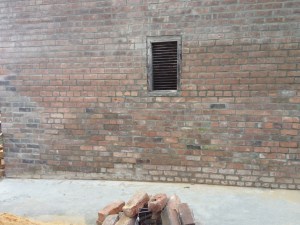
While there is some discoloration, fear not! There is a lot of moisture in the bricks and mortar that will evaporate over time, and once the weather is warm again each wall will be gently washed down to remove any excess brick/mortar dust. Last, repairing the east face of the structure was was a job that required a LOT of brick…which we did not have. Our hand-made, original bricks are conveniently size extra-large, meaning that matching brick must be custom-made for approximately $5.00 a brick. We (or should I say, our wallets) were in desperate need of a creative solution.
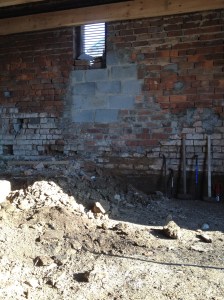
The masons said they could fix the wall’s structural integrity by using cinder blocks as an internal layer, and, because our walls are SO THICK, they could then face the exterior with “facing brick” made from our small reserve of original brick. This meant they would cut each of our old bricks into three slices, and preserve the historic look without having to patch in bricks that aren’t a perfect match!
View of the cinder blocks in place:
View of the exterior!
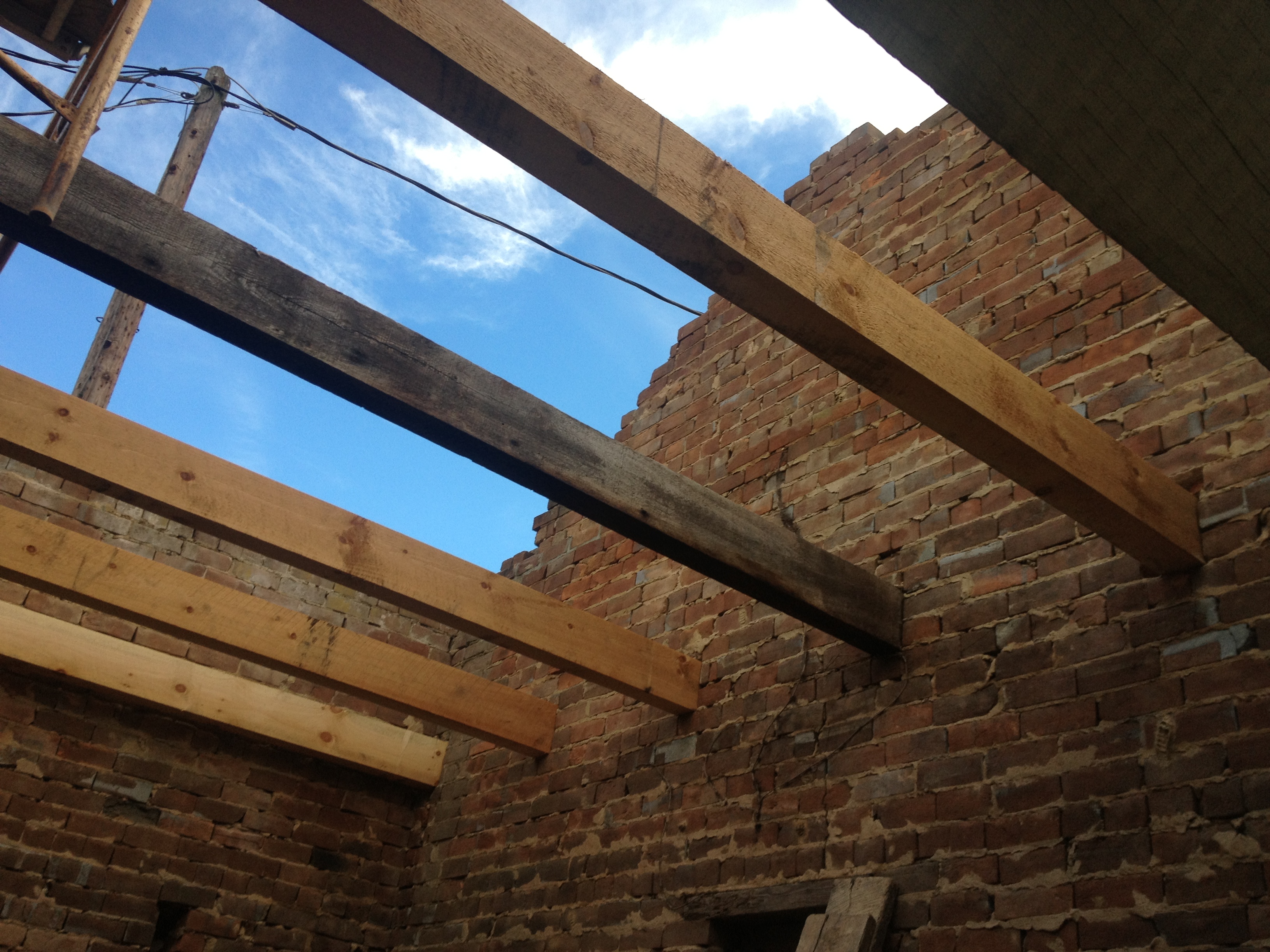
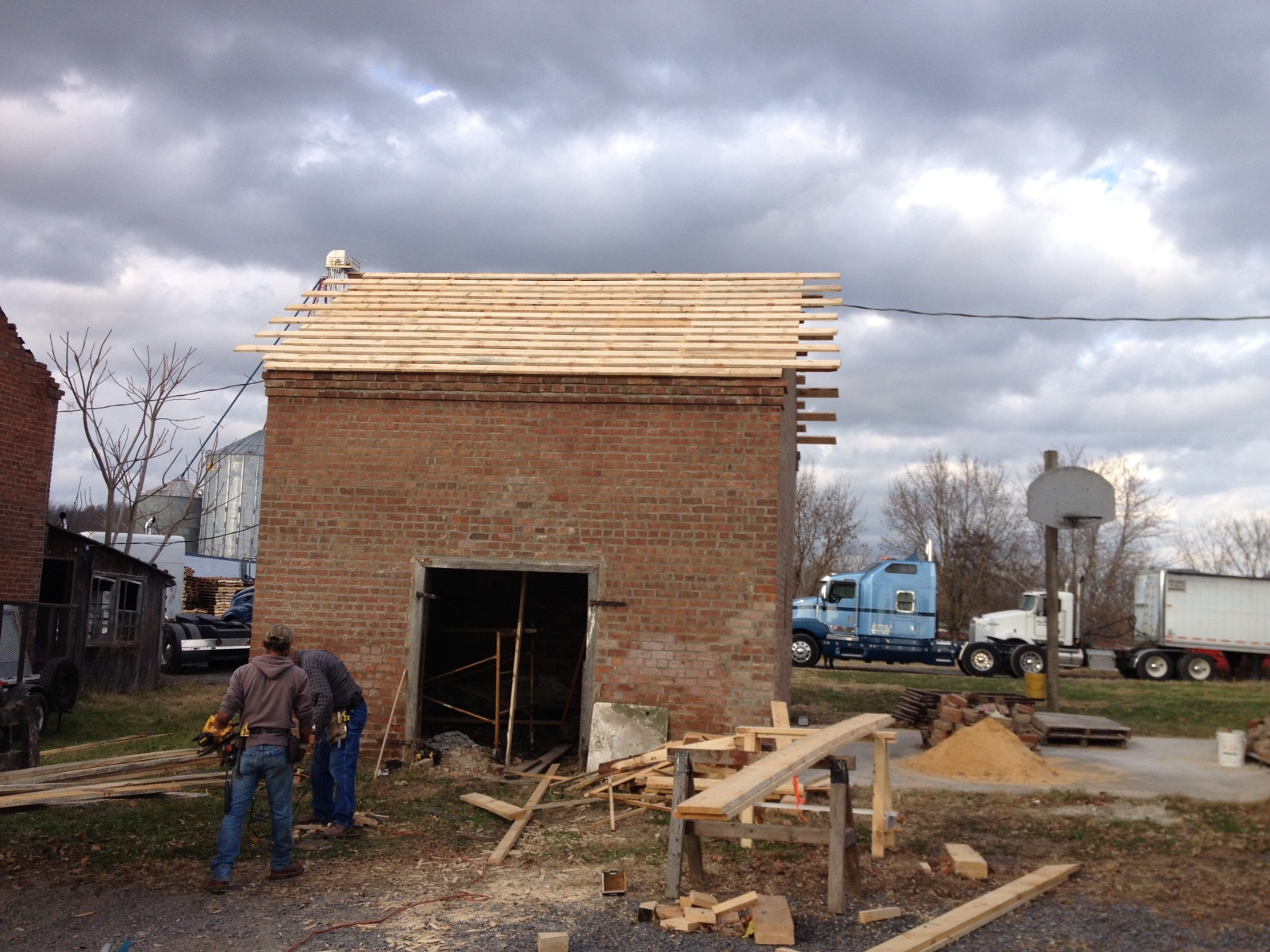
Once the brick was all repaired and stable, time to call in Colon and frame up the roof:


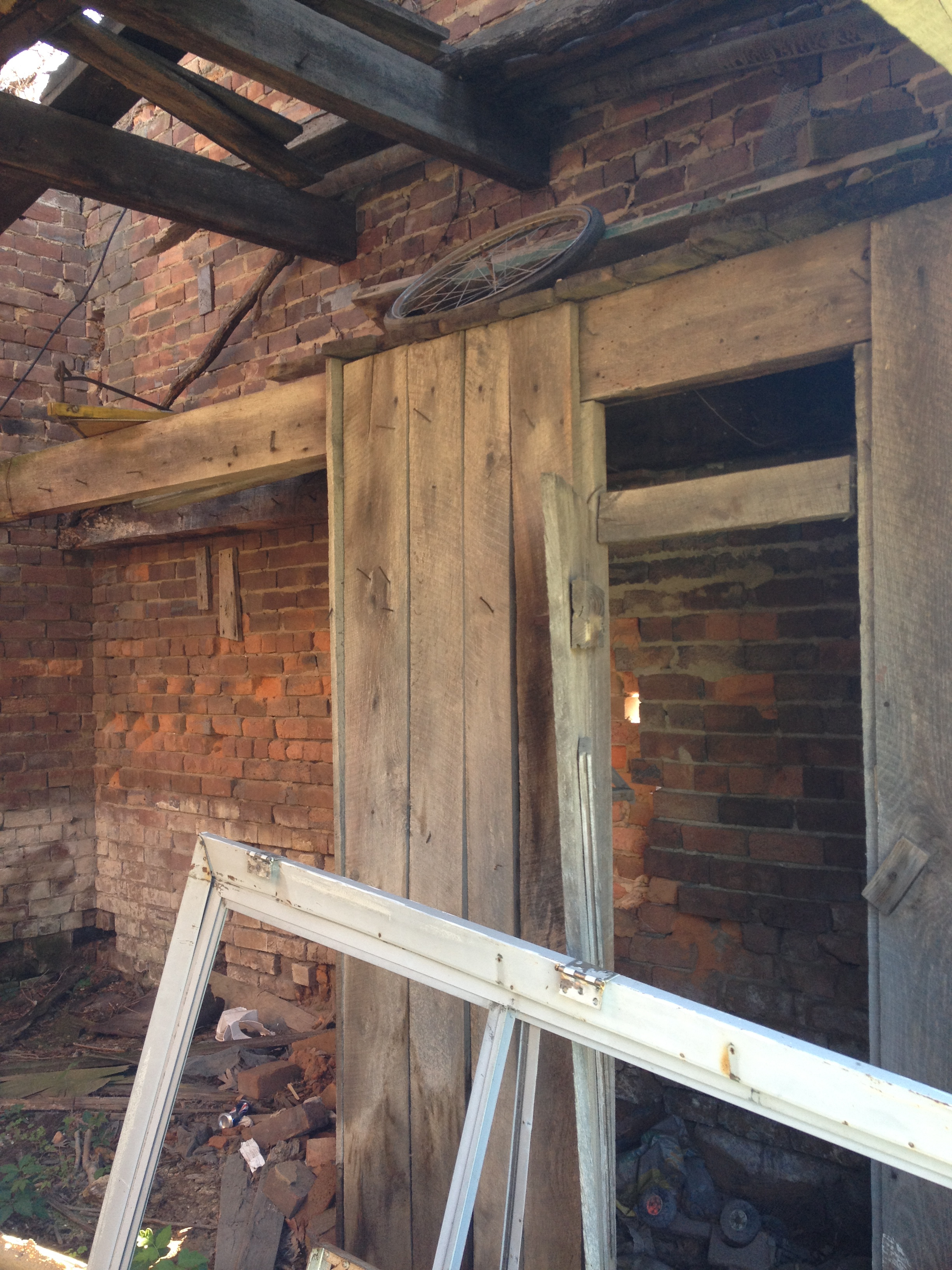
We designed the roof trusses exactly like the old rotten ones we took down, adding back the wooden pegs for an authentic timber-framed aesthetic. In the shot below, you can see the pegs as well as the ONE old beam that has survived 180 years!!

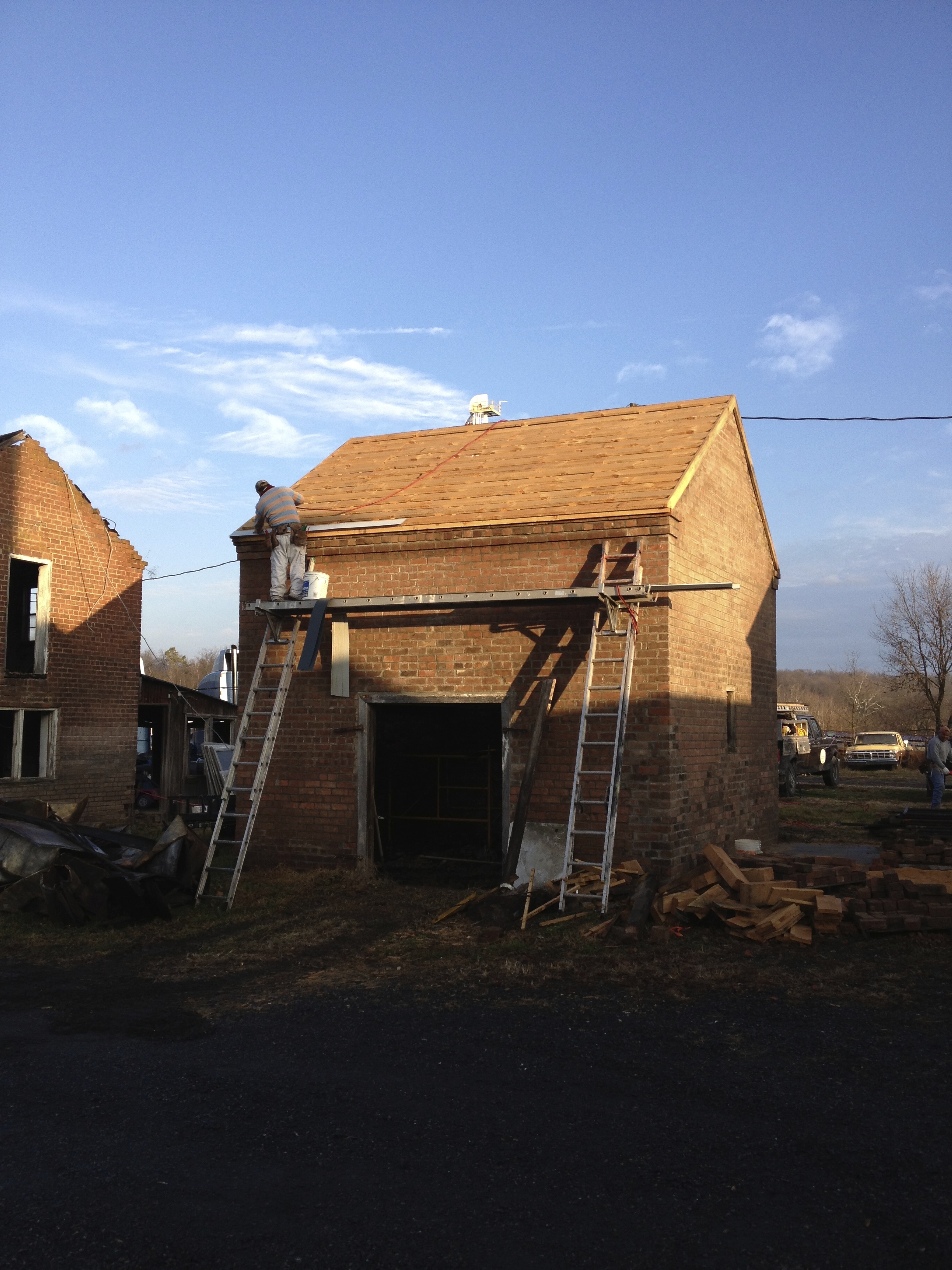
And last, but certainly not least, the roofers came and did their job. Their work was done in a New York Minute, so we only got one picture of their progress:
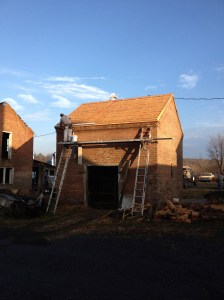
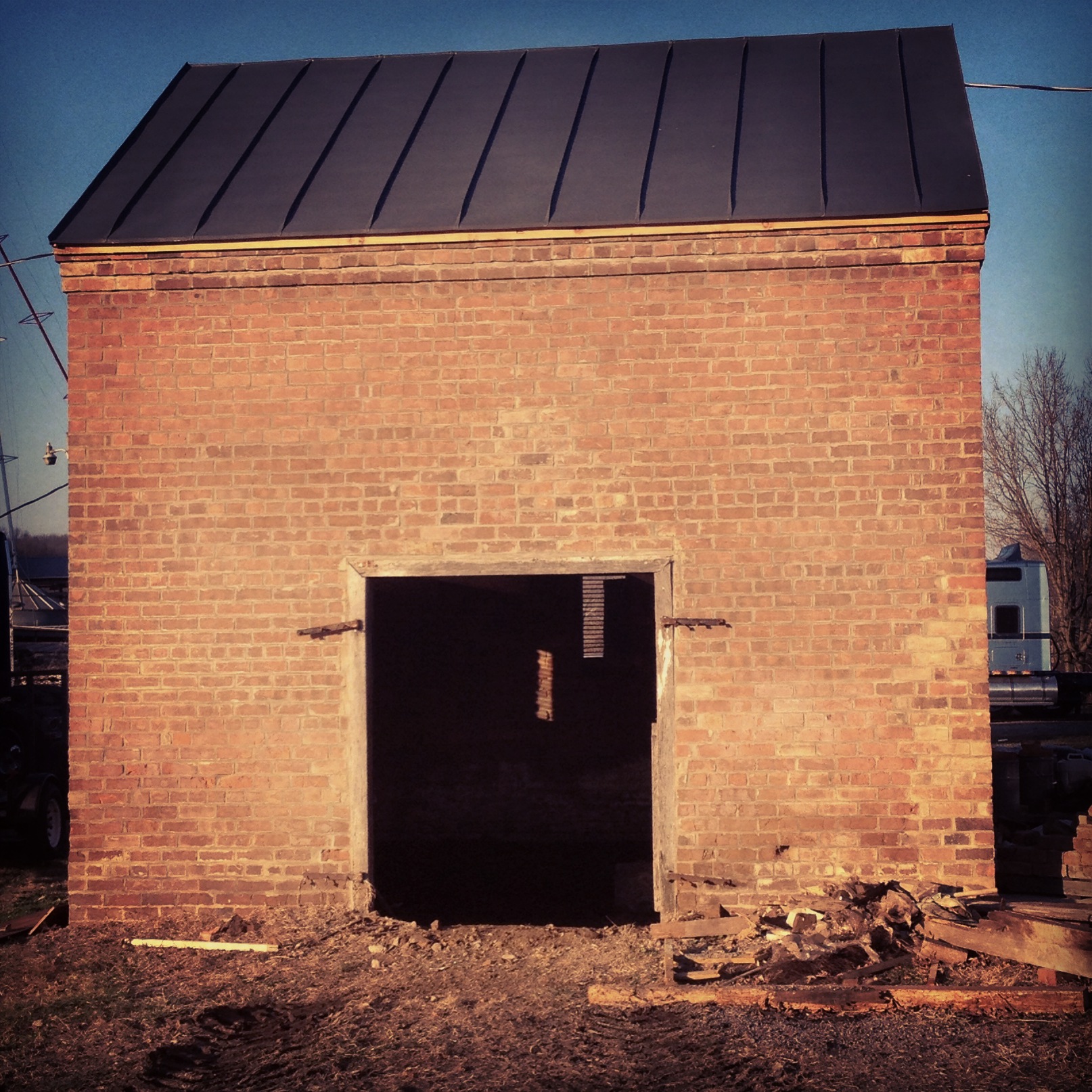
And, voila (this image was made only slightly more dramatic by Instagram photo filters)!
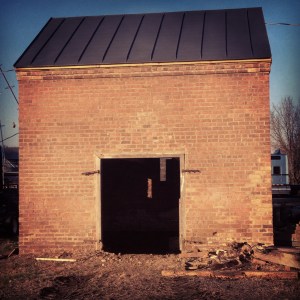
Compare:
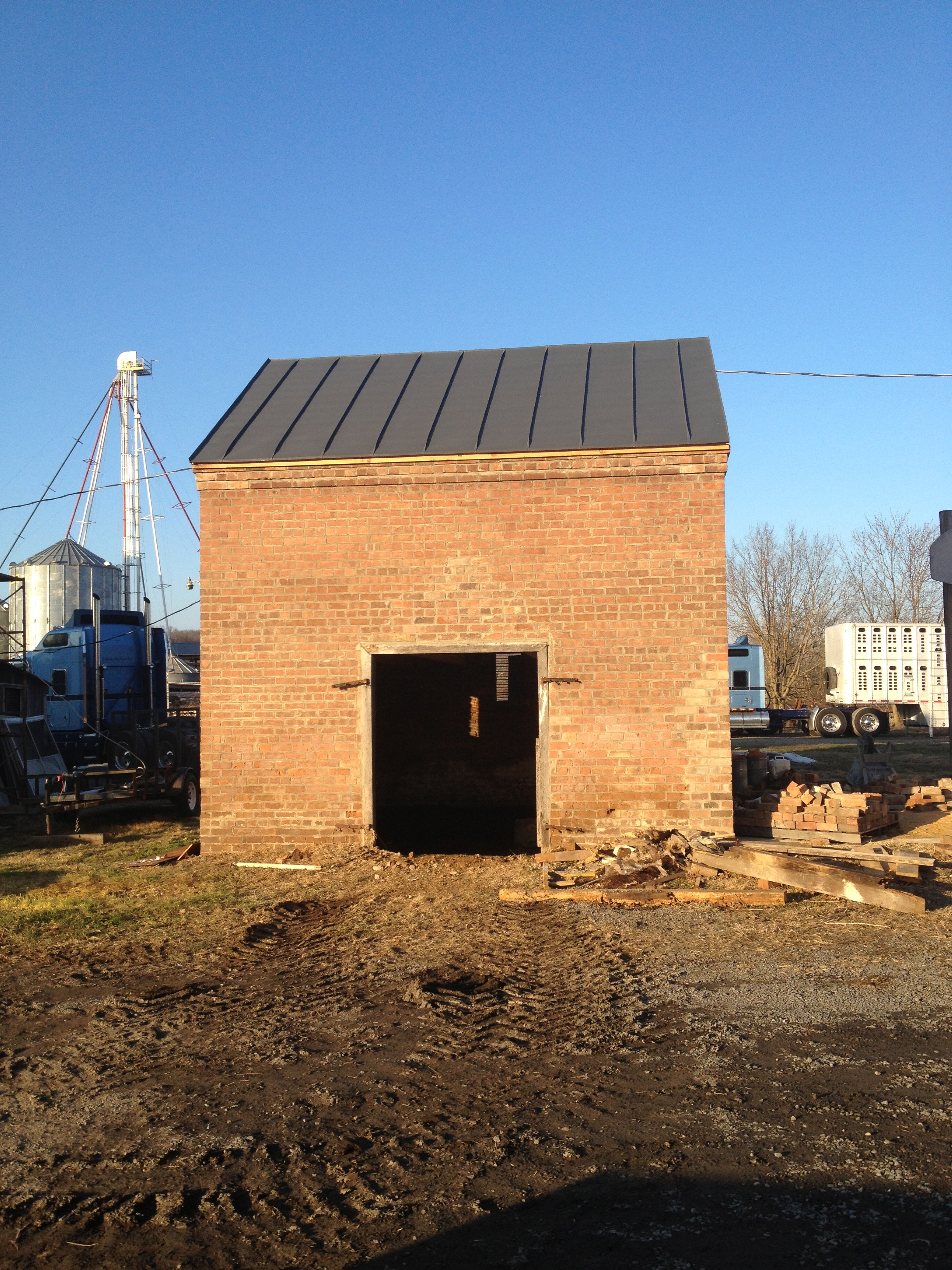
And again, here it is today:

The Smokehouse: Risen from the ashes!
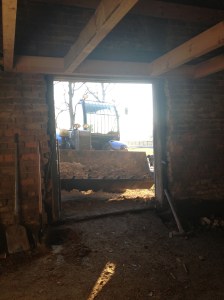
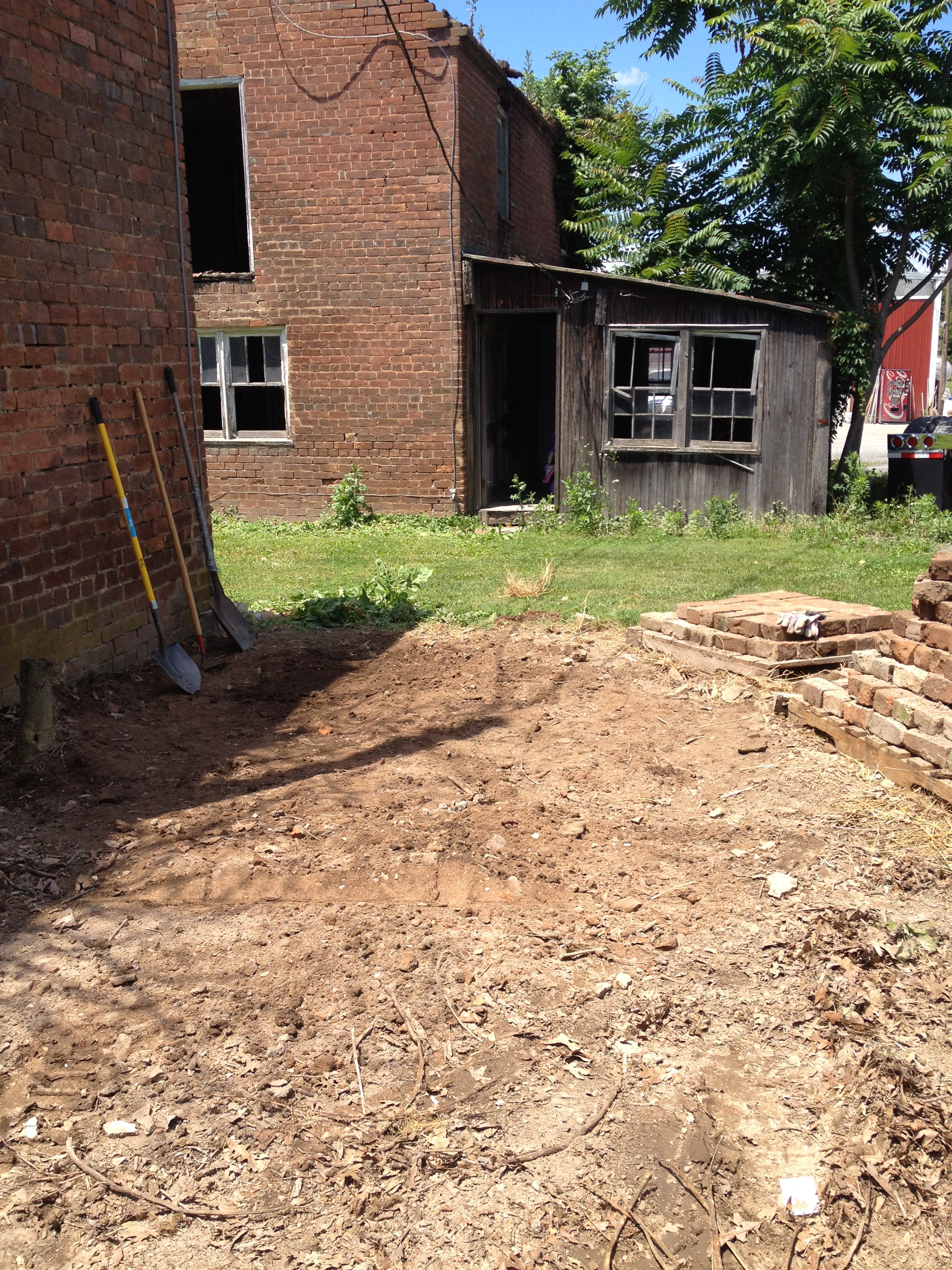
And speaking of ashes, the smokehouse transformation doesn’t stop there. I decided that it would be best to go ahead and pour a concrete floor in the smokehouse, as we anticipate using it as a workspace and garden shed. I didn’t just want to pour concrete on top of the current grade, so I made the decision that the floor would need to be excavated substantially to accommodate the appropriate depth of concrete while also preserving the head clearance under the meat smoking beams. Get out your digging shovel: this was a do-it-yerself job.

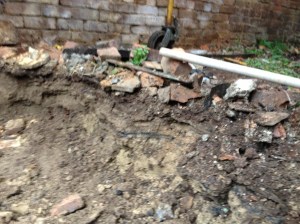
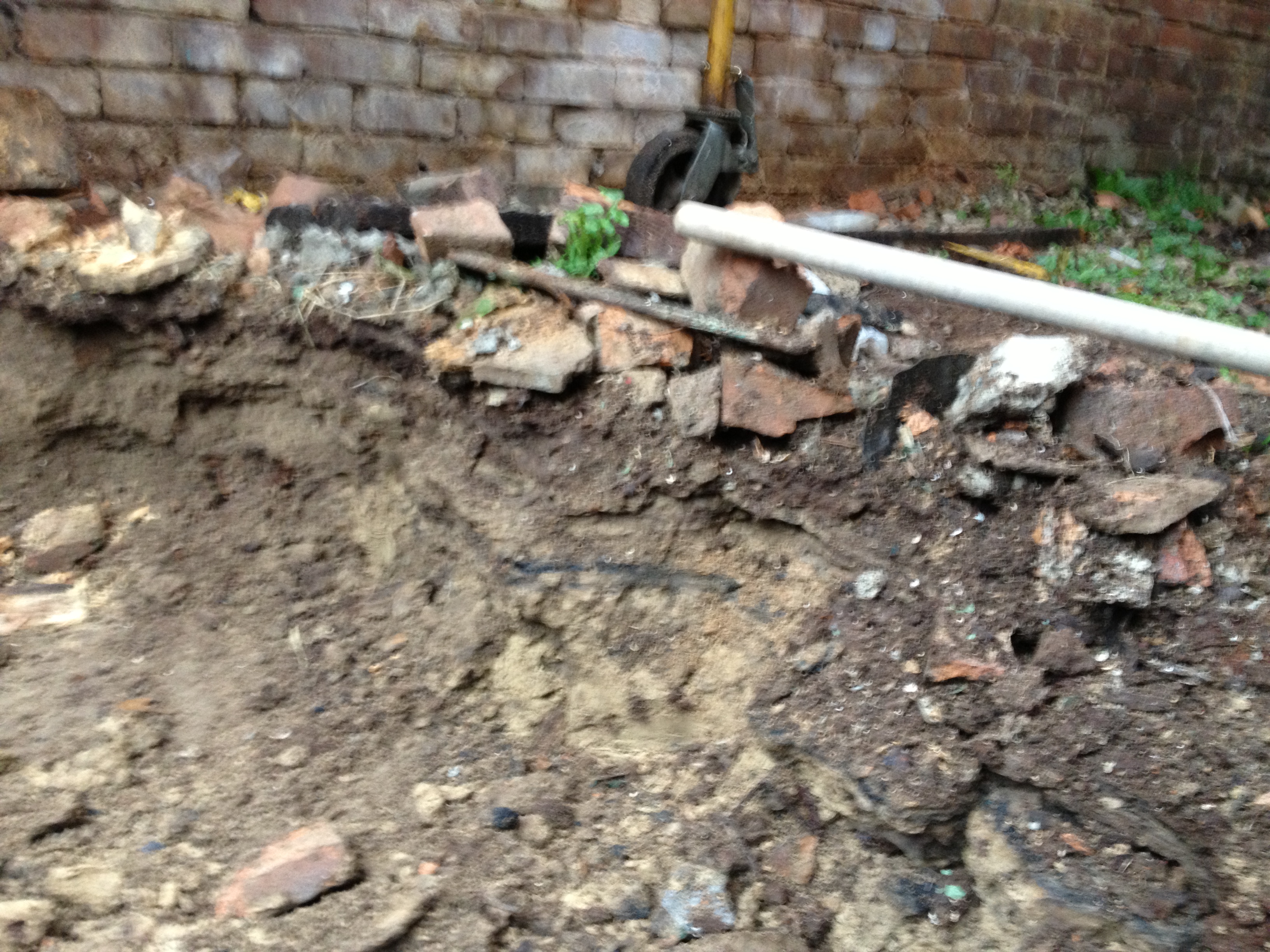
While digging, I found the original soot line under layers of dirt. This is where the floor height would have back when meats were still being smoked! Here’s another shot, showing the layers of debris.
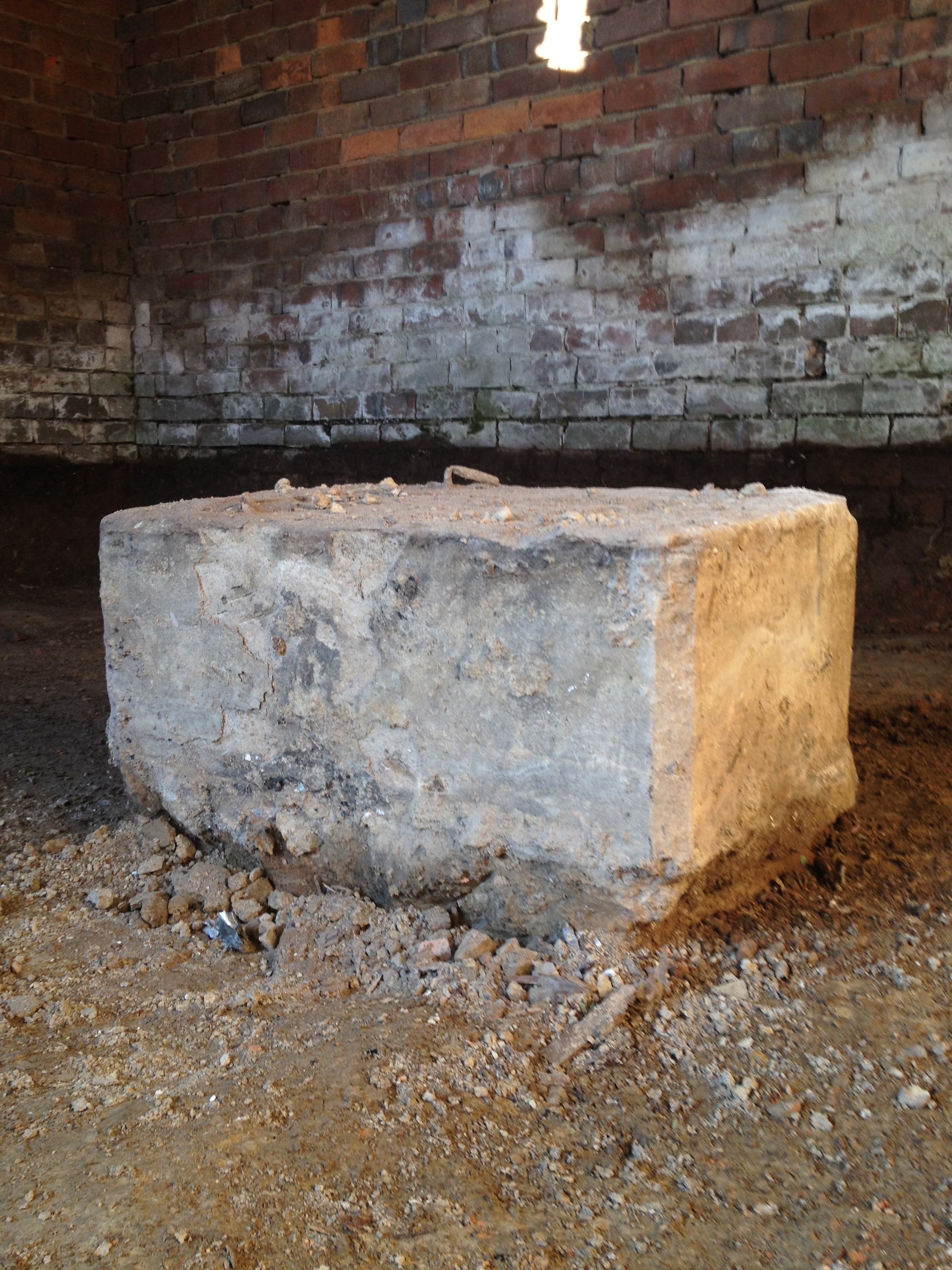
We dug down about a foot and a half. Trust me, this process felt like it was going to take all winter. But then the in-laws showed up for Smoke House Round Two! Thanks to Steve and Gina, we had four backs hard at work and we were able to move the dirt efficiently. During the process, we uncovered this cement block, that had been entirely buried pre-dig. We think it may have been the rest for an engine crane at one point when the smoke house was converted to a garage.

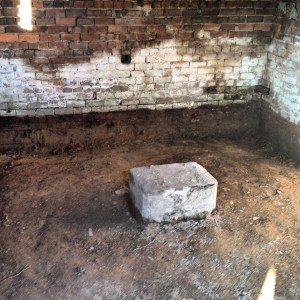
You can see the white line on the wall where the floor was when we started (the white sediment is salt that leeched into the brick during the smoking process). In our excavation we also found some ham bones, a horse shoe, and a bunch of old pottery shards. Our single most exciting find was:

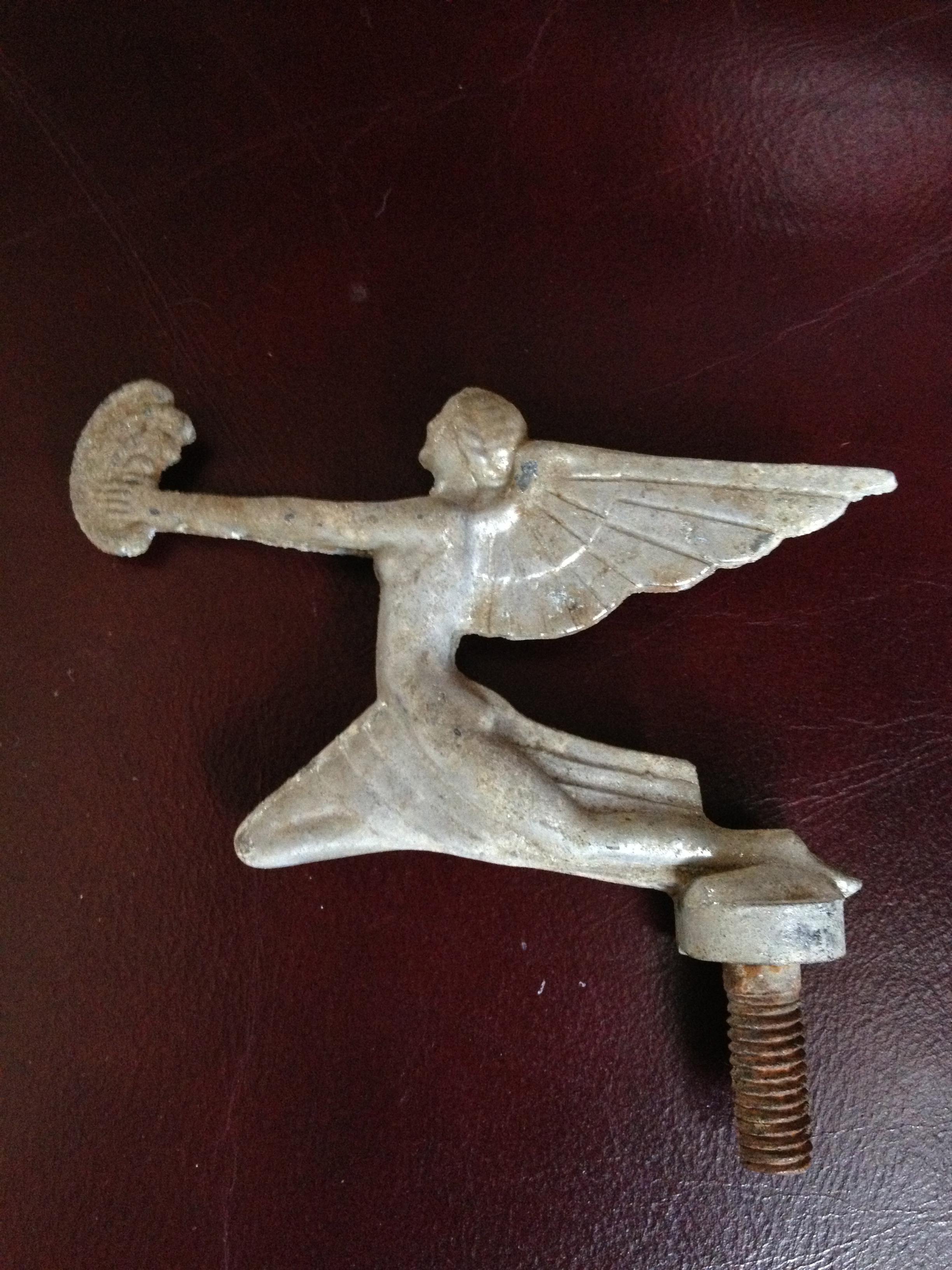
The hood ornament to an old Packard automobile, quite the luxury car in the early 1900s! This is more proof of the smokehouses’ transforming uses. Usually the Packard winged goddess of flight holds a tire, so we aren’t sure if this piece is after-market, but we do have some confirmation that at least one Packard made the smokehouse garage its home in the 1930s.
In an amazing turn of events, our next blog post will return to the history of the farm, as we have been delighted to make primary contact with one of the home’s former residents!! We’ll leave you with this teaser of things to come: a shot, backdropped by the smokehouse, taken in the early 1900s:
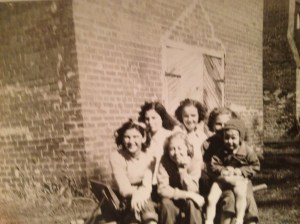
You can even see how the door boards were originally aligned. HISTORY!
Last, but certainly not least, we want to thank papa Bill for making the smoke house restoration a reality!






















 Living on the Edge(Hill)