
As you know, our forward progress this summer was . . . a little slow, to say the least. Between studying for the bar and the scheduling delays of some of our professionals, things were moving at a snail’s pace. Our optimism took a minor hit, as well – we quickly realized that our goal of moving into the Little House by the time the weather got chilly had been a little ambitious. In the last week or two, however, the pace has really picked up and we are feeling really motivated once again!
After the footers were framed in, we had a few things we needed to get done:
1) Get the concrete footers poured
2) Pour gravel
3) Build a radon vent (Surprise! We didn’t know we need this until the building inspector came out and failed our site)
4) Lay cinder block on top of the footers
5) Install foundation vents
6) Add a vapor barrier over the gravel, pour the crawl space floor
Here’s what the poured footers looked like:

Once the footers were poured, we got our DIY hats back on. Chad’s brother helped get the gravel into the hole, and we used gravel rakes to spread it evenly around the foundation space.


The concrete footers then got topped off with a wall of cinder block.

Please note the very fancy RED cinder block – bought for pennies on the dollar from Dollar General after it purchased too many signature red blocks for building a new location down the road. Score! Four courses of cinder block sit on top of the footers to make up the wall:
 And voila, with a little help from our masons, we had a wall!

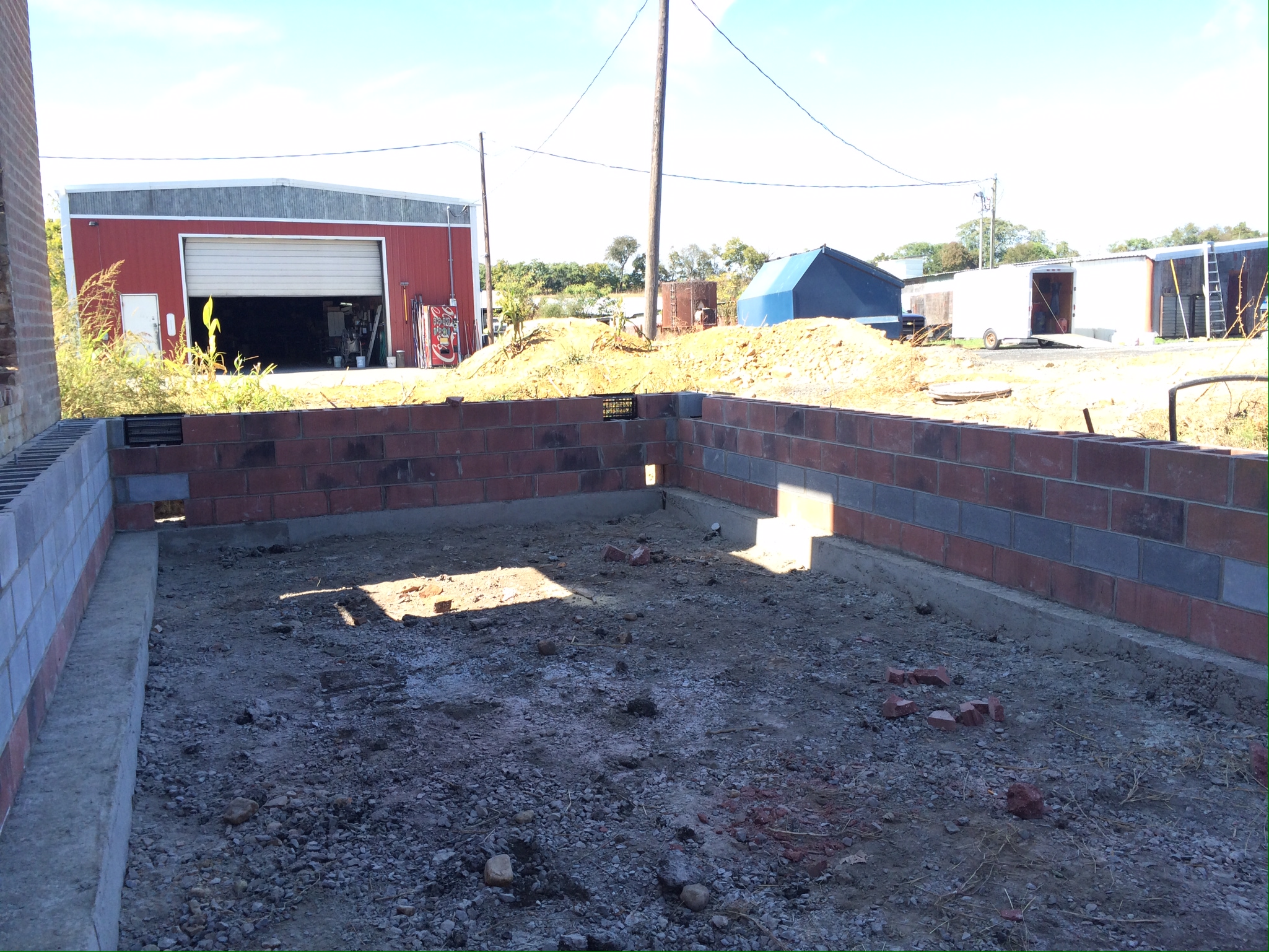
We also built a radon vent – this is nestled into the ground when the gravel is put in, and helps flush the radon out without poisoning the house. The radon system wasn’t something we were warned about during our initial building permit approval; however, when we had our foundation walls inspected, the inspector kindly noted our absence of radon vent. Of course, this head’s up came 24 hours before the concrete foundation was scheduled to be poured . . . and the vent needs to be installed BEFORE the concrete. Luckily, it turns out this portion of the radon vent is just PVC pipe, so we used the same bonding agent we had used for the smokehouse conduit. And yes, I am wielding a sledge hammer.
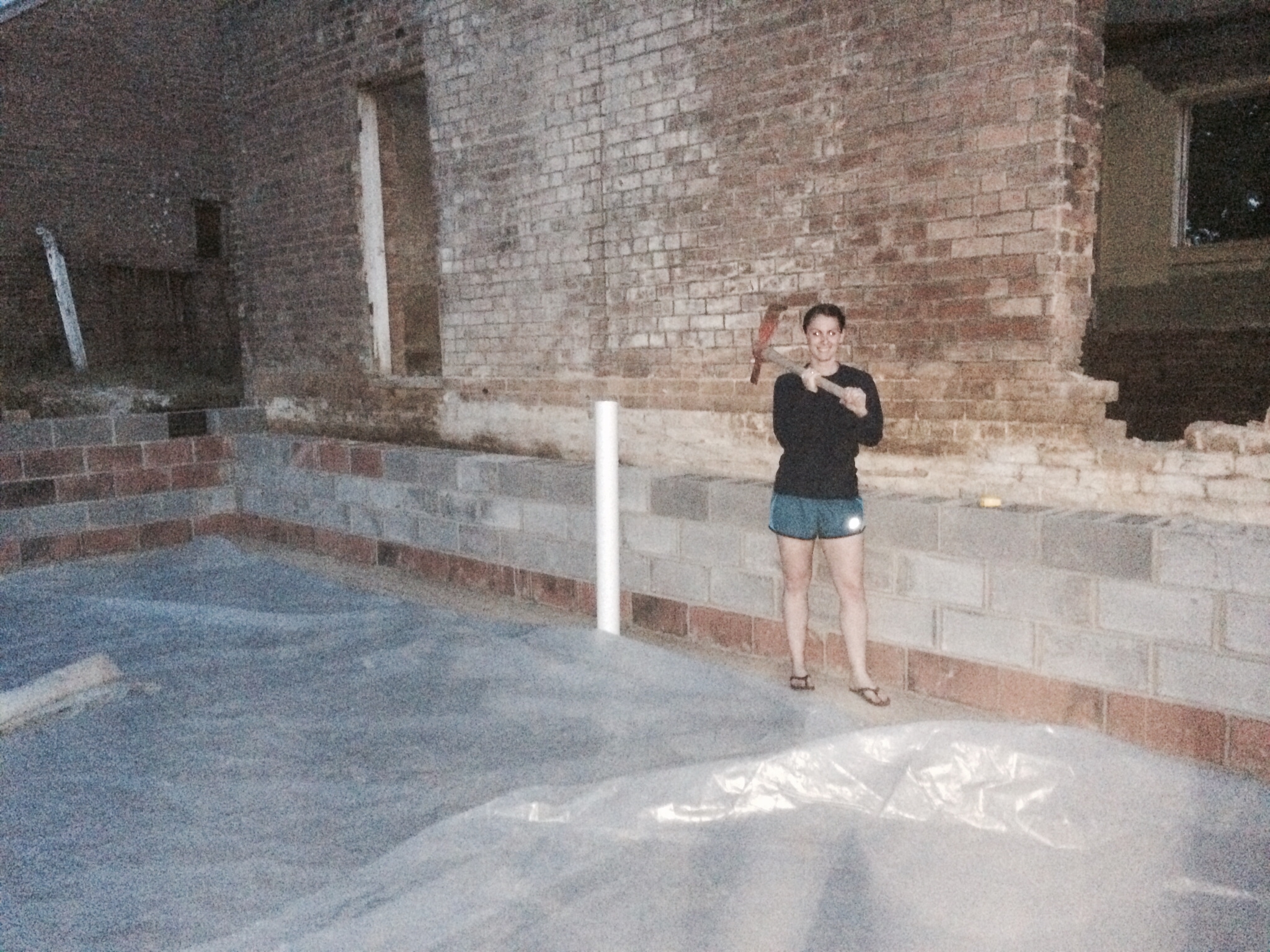

After hearing “radon vent” and “we’re going to do this ourselves,” I was a little skeptical, but after we were done, I was almost underwhelmed with how easy it was. Wham, bam, two PVC pipes, and thank you, ma’am. As you can see, the gravel also got covered with vapor barrier as the final step.
One of the last steps before framing was to buy and “install” foundation vents. I say “install” because after opening the box, there’s not much to it. The mason’s left holes in the cinder block wall periodically, and we just slid the vents into the hole. Chad splurged on these and spent an extra $10/vent to get the temperature sensing auto open and close models. No need to remember twice a year openings and closings! You can see one of the vents in the bottom left-hand corner of the picture, below.
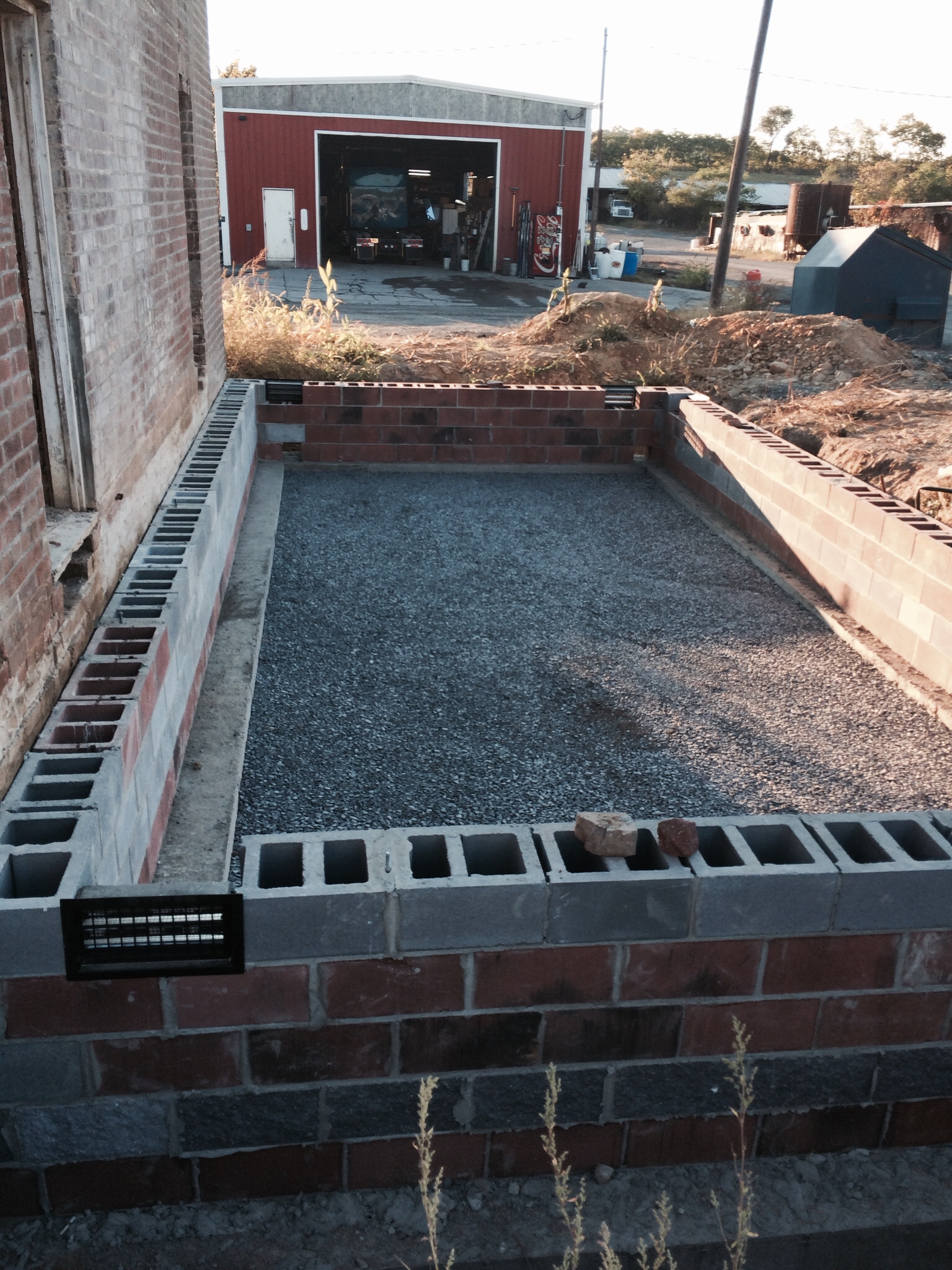
Finally, after all these steps were complete, the concrete company came and poured our crawl space floor! It’s a little hard to see in the picture below, but we swear that’s concrete.

After all this was done, we called in the big guns for THE day – framing, part 1. It is hard to explain our joy when we woke up around 6 a.m. last Saturday to see this next to our house:
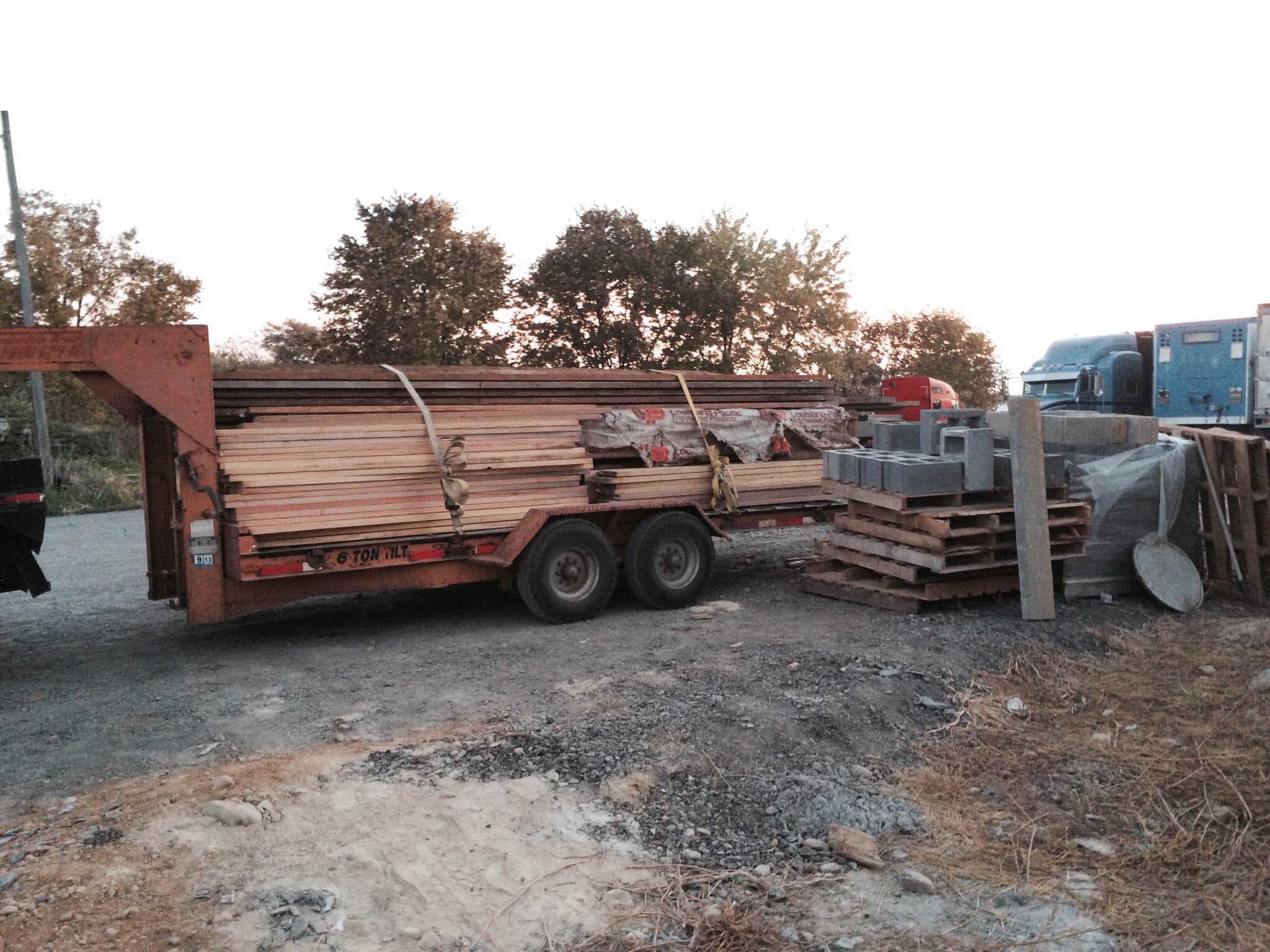
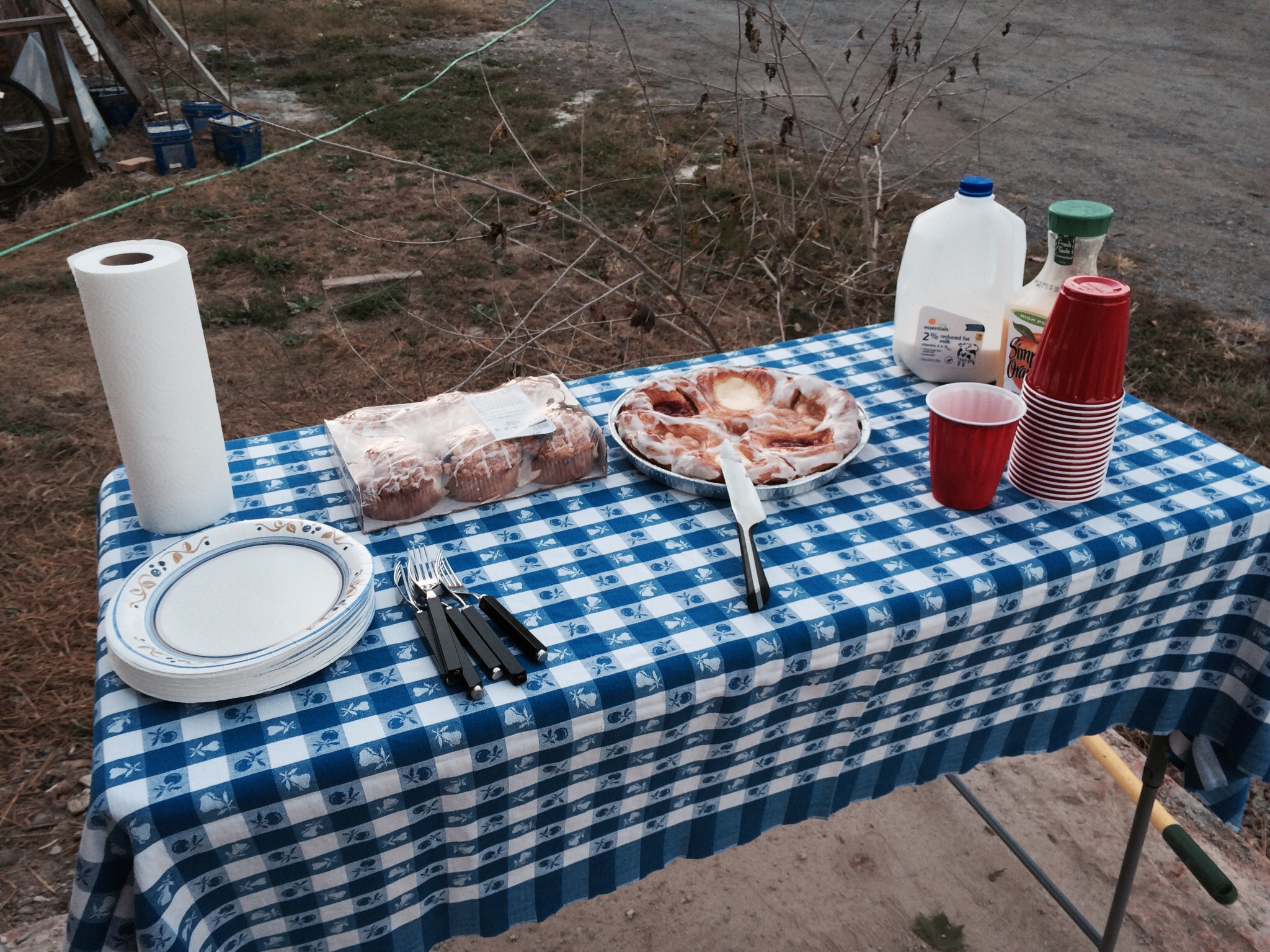
We had a crew of 4-6 through the day helping us get the job done. We figured everyone works a little better with a full stomach, so we started with a breakfast spread:
And then we got to work. First, a layer of vapor barrier went on top of the cinder block wall, topped with pressure treated wood (“plate”). The masons filled the cinder blocks with concrete and left a bolt sticking out periodically; this allowed us to tie the plate into the wall. Here’s Chad with the roll of blue vapor barrier:


Here’s an aerial shot of the bolt that ties into the cinder block:

Once the plate was bolted in around the entire wall, then we could set our floor joists at regular intervals.
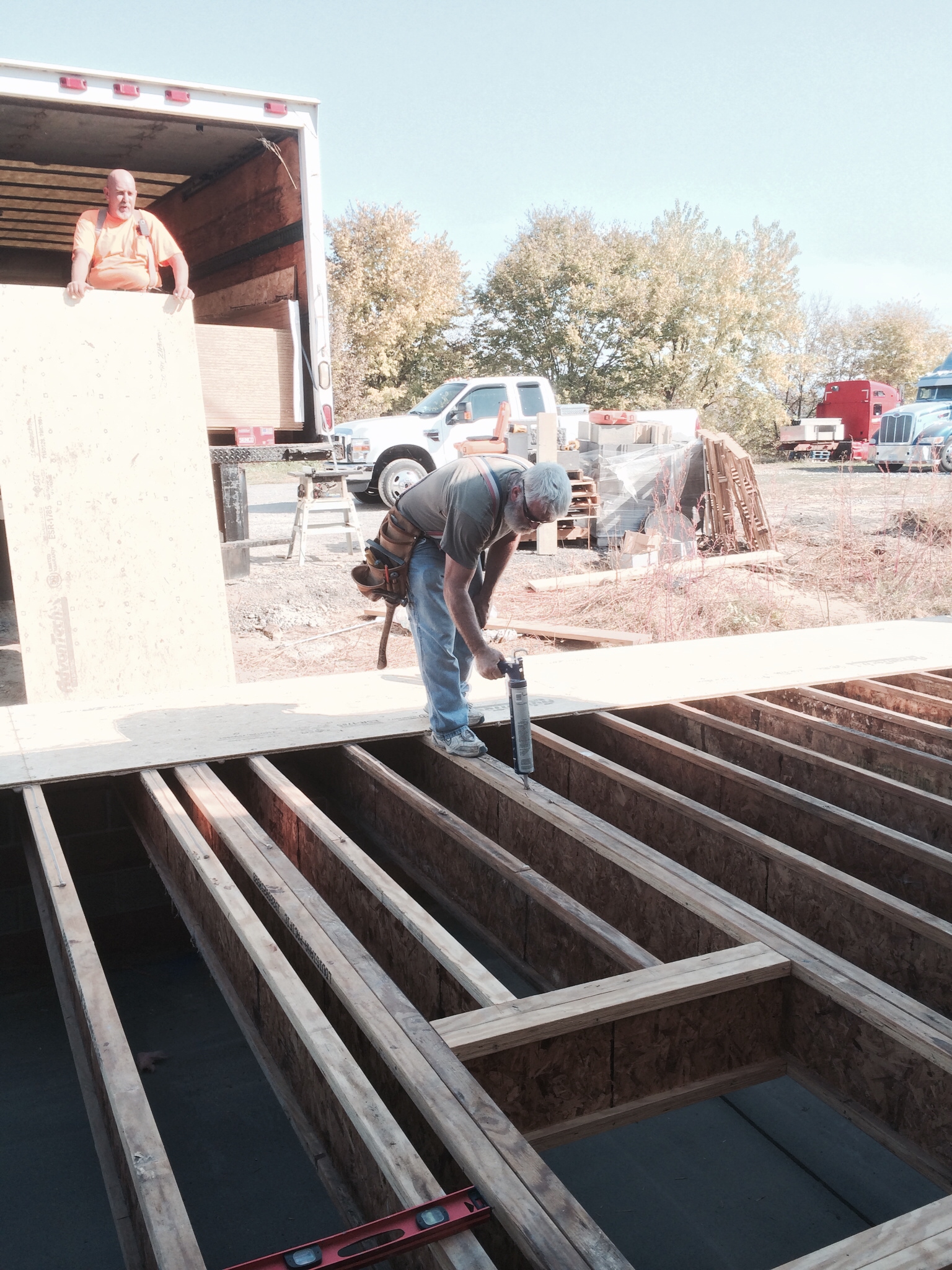
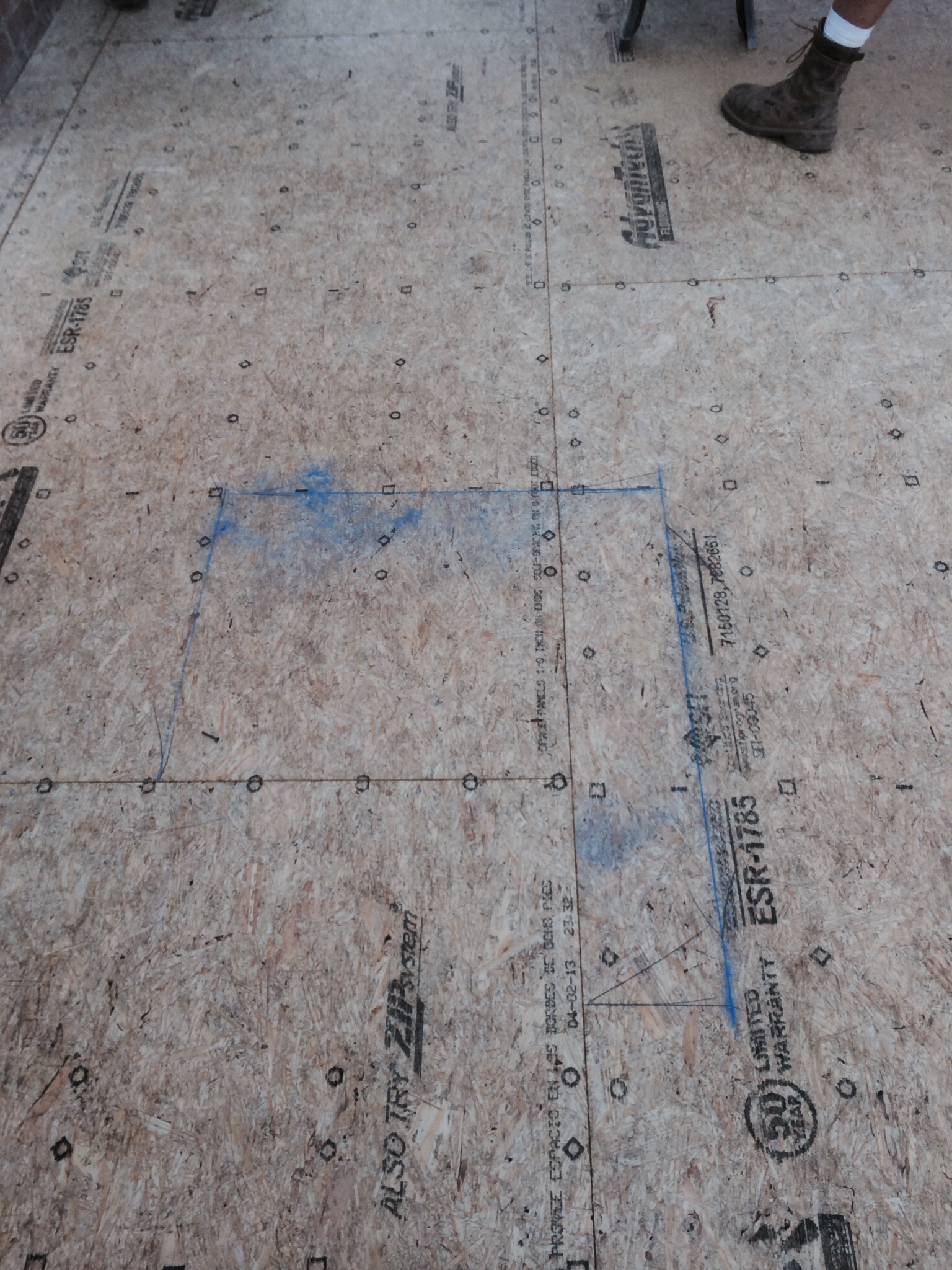
You can see in the above picture that they’ve left a square hole; this will be a trap door in our utility closet that will allow access to the crawl space under the house. Here’s a shot from in the crawl space up at the newly laid floor joists:

The guys covered the floor joists with glue and then laid down sheets of sub-floor.
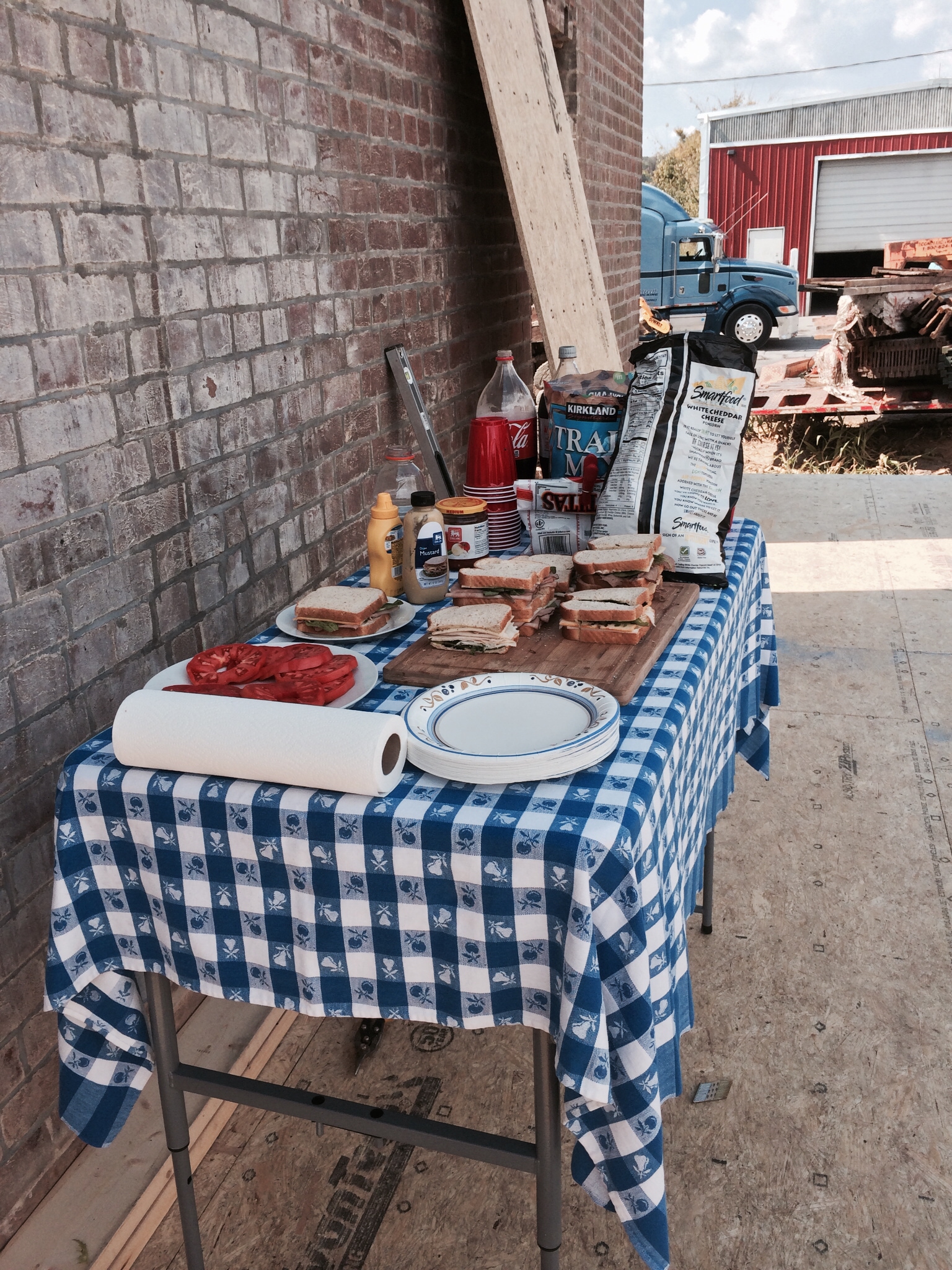
Just in time for us to set up lunch in our brand-new addition (even if it’s a little exposed to the elements right now):
Chad literally danced a jig on the new sub-floor. Finally, the crew framed the walls. They constructed them on the floor and once they were finished they lifted them up into place – like a small-scale barn raising.

Then, up, up, and away!


And, a panoramic:

Hooray! We even walked off the rooms to get a feel for how big the spaces would be. Here’s the 3D model we posted a couple of posts ago:
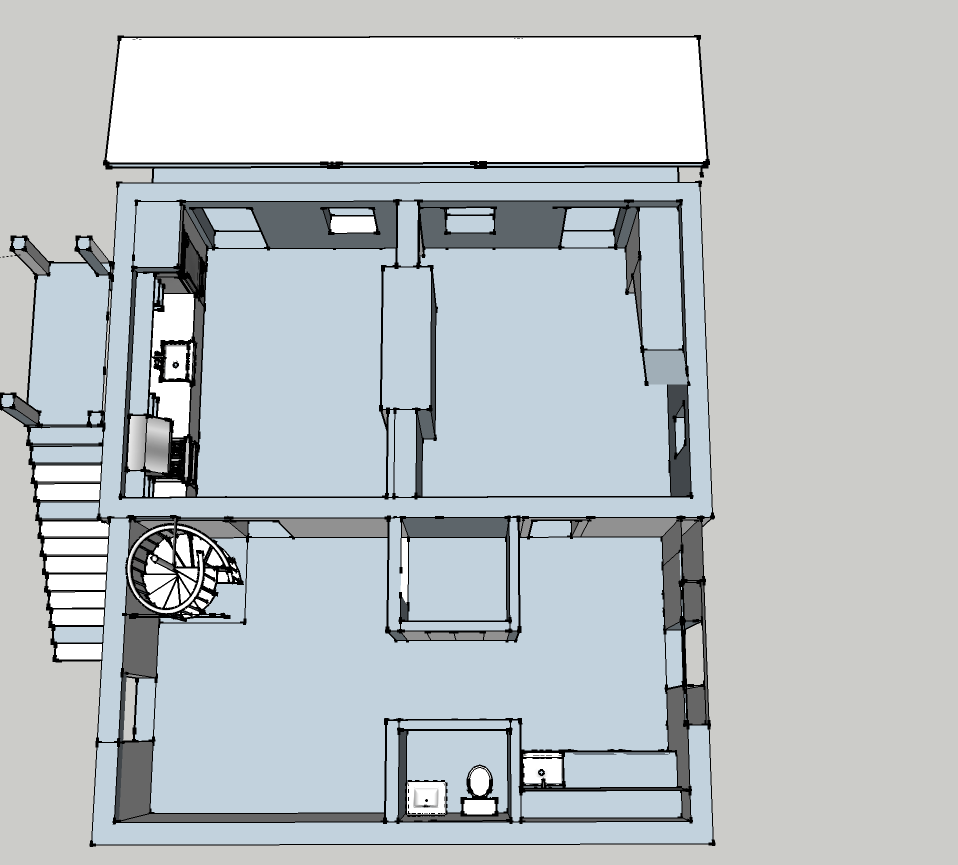
The white block at the top is the front porch, so the large rectangular space across the bottom is the new addition. It’s got a mud room on the right, a powder room, and a living room on the left. The utility closet with the trap door is the small, square room right in the middle of the addition. It’s a little breezy now, but some day (hopefully soon), this will be quite a comfortable space.
Sadly, our building inspector had more bad news than just the radon vent. He also said that the dirt floors inside the existing brick structure (the front rooms on the 3D model, above) need to be 18″ below the floor joists. We had originally thought it needed to be 18″ below the FLOOR – as you can tell from the process described above, the floor height and the bottom of the floor joists are a good 14″-16″ difference. And you may have picked up by now that shoveling dirt ranks as one of my least favorite chores in the whole world. It is really, really not fun. Luckily, we were able to help recruit Chad’s brother, Daniel, to lend his strong muscles to the cause.
This is my “oh my gosh, we’re shoveling again” picture. This is before the shoveling began.
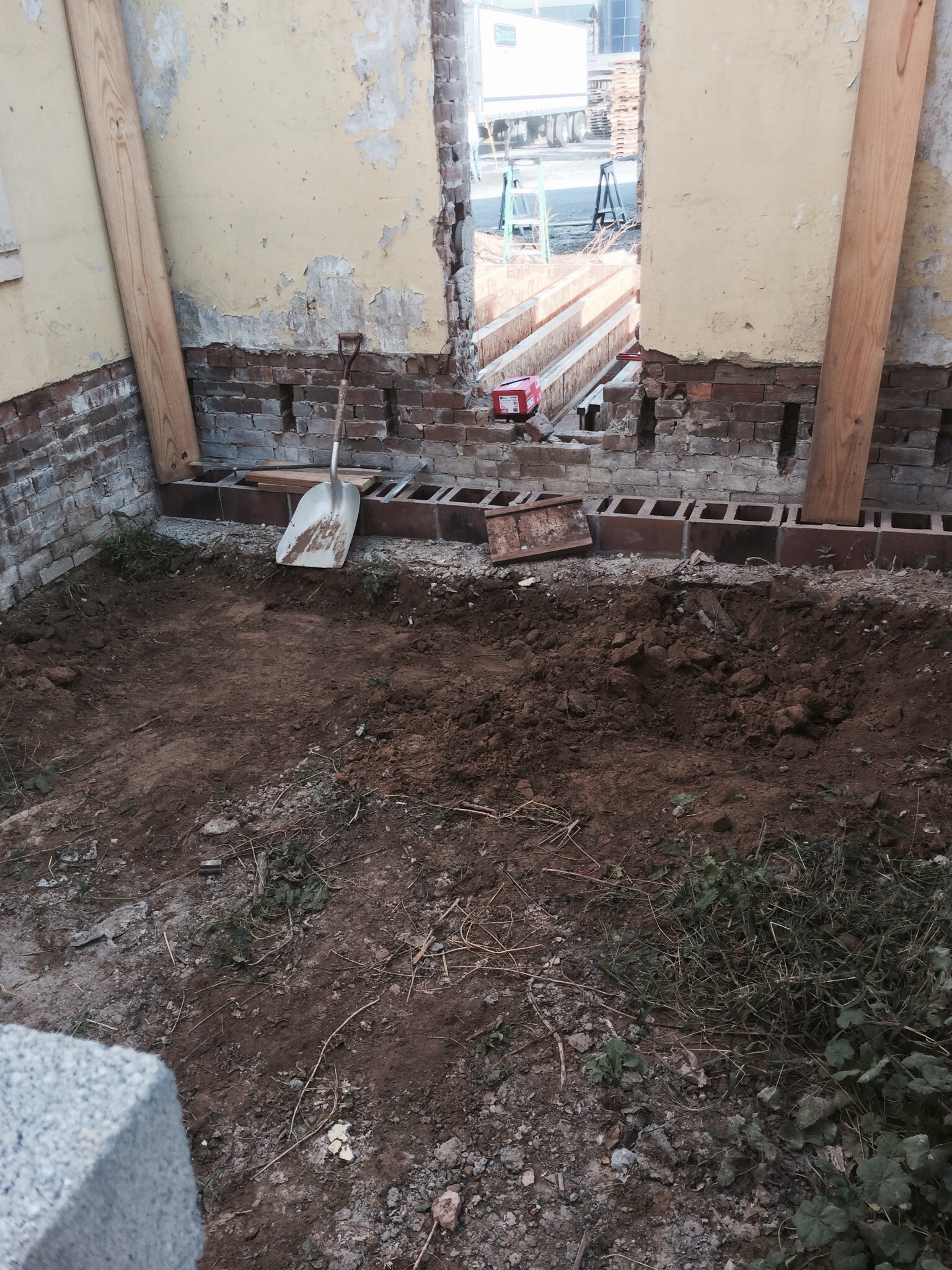
Look, Daniel found a groundhog hole! How gross is that??

And inside the hole: a beautiful crafted nest of shredded paper. Ugh.

And, the beautiful, beautiful final product. In most places, we shoveled down the full 14″-18″.
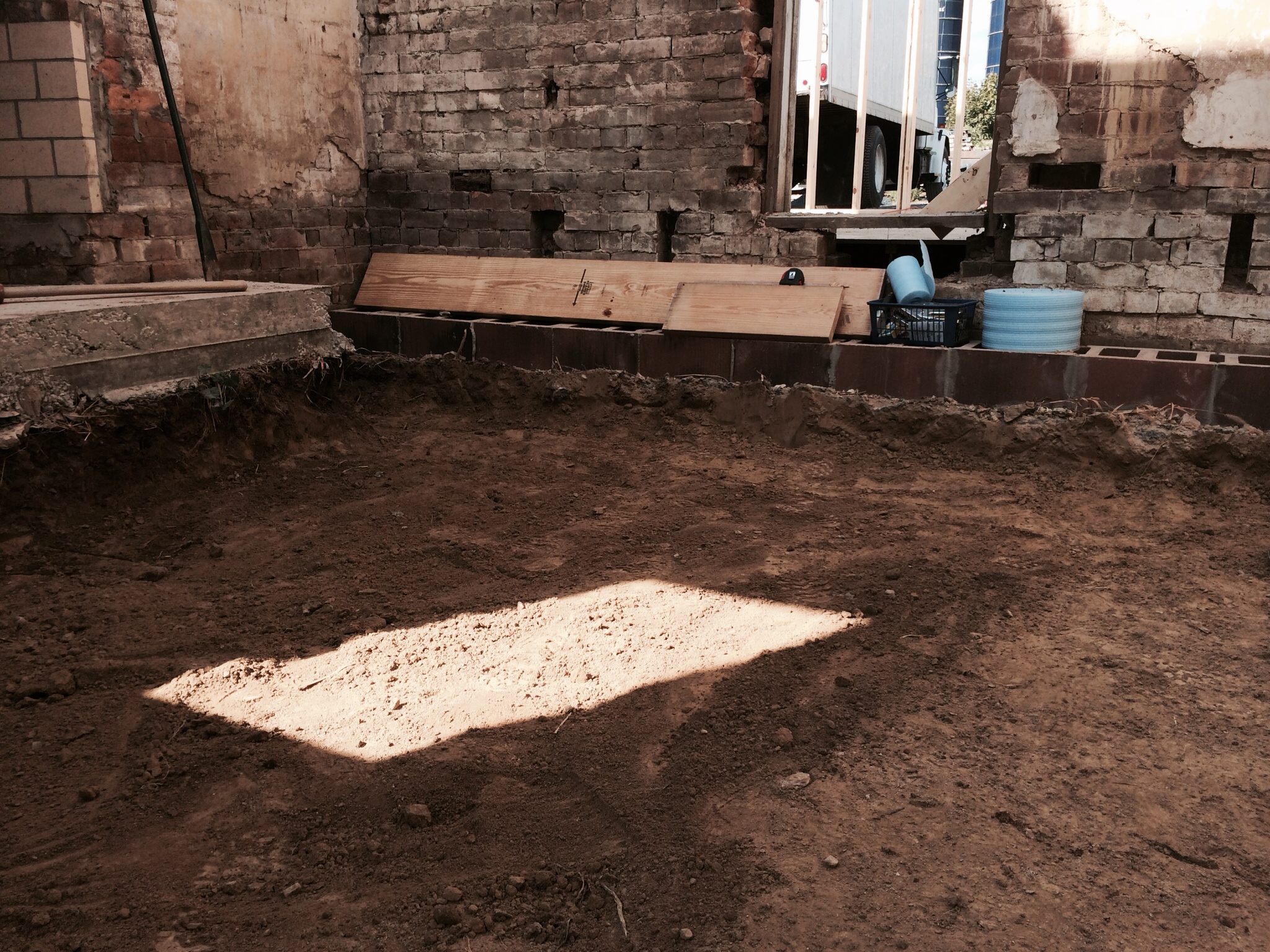
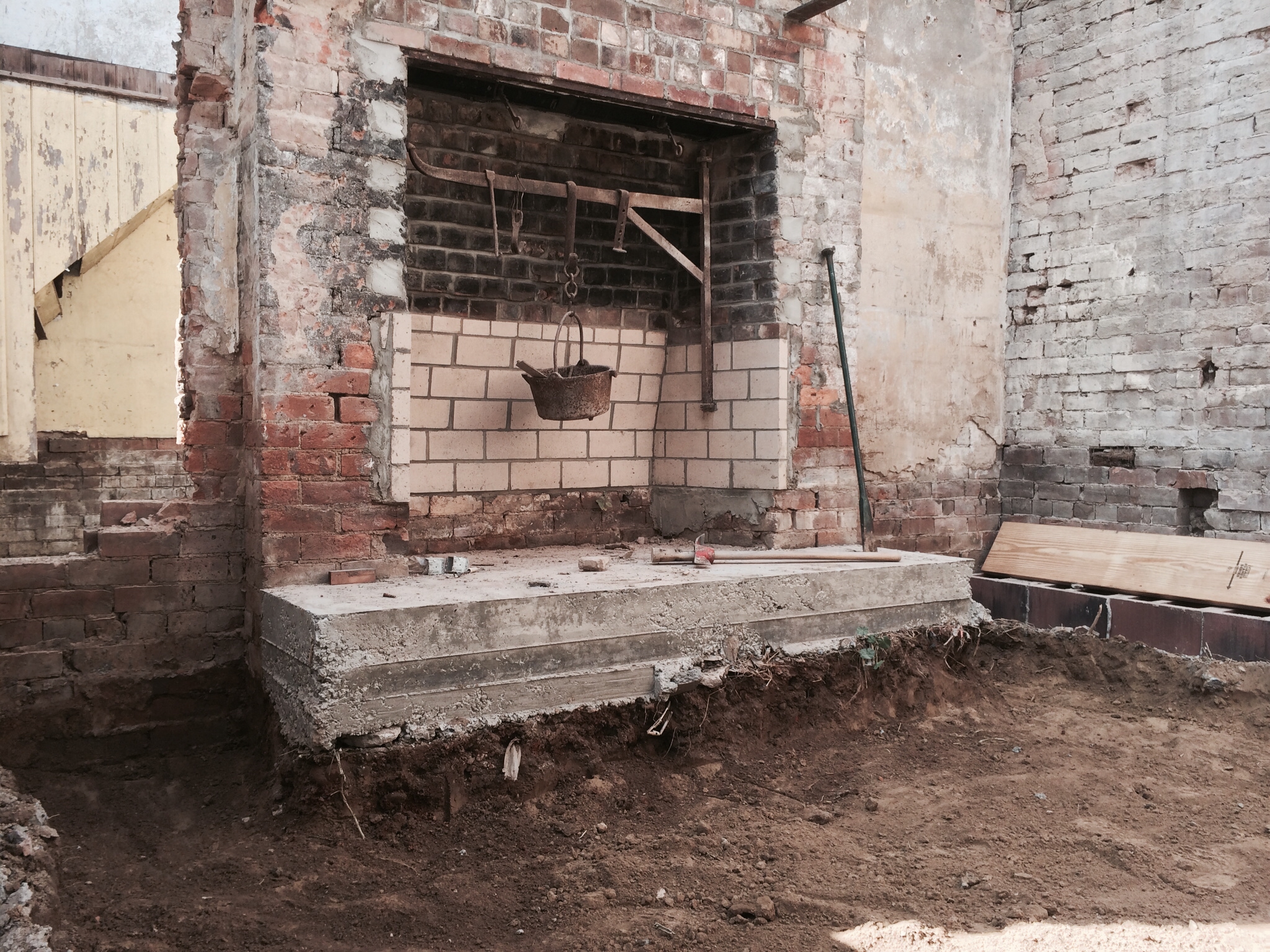
You can see we had to dig so far down that we hit the bottom of of the hearth. We’re going to have to ask the masons about how we make sure that’s not a structural problem . . .
This is an example of what one of the next steps will be: the same thing as outside. We will lay vapor barrier and plate, then floor joists, and then sub-floor.
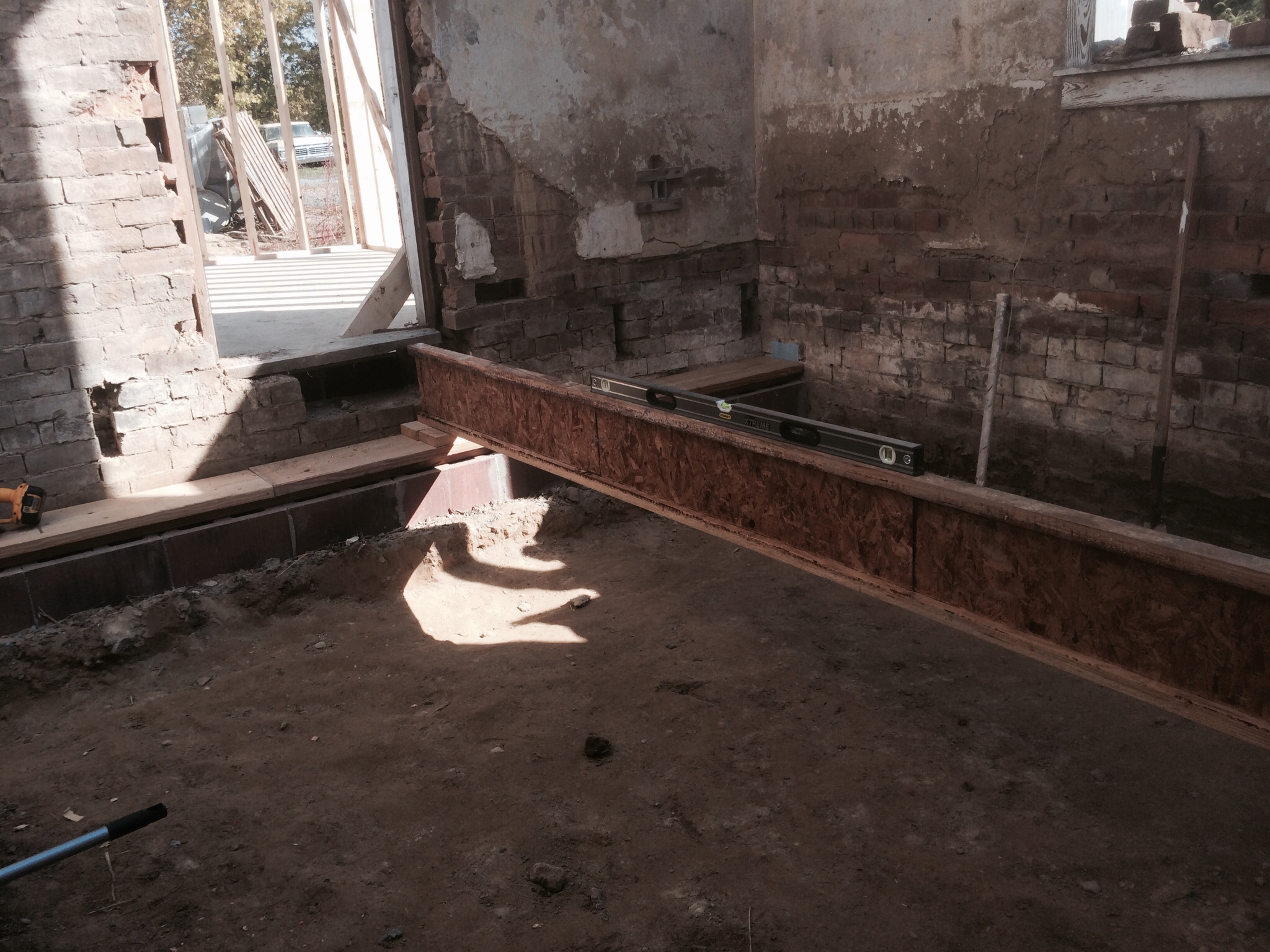 We’ve always been impressed by the good work our masons do – you can see that they laid the cinder block footers perfectly. It might be the first time this old house has had level floors!

At the end of the day we were exhausted, but so excited. If the rain ever ends, we will frame the second floor of the addition and lay the floor joists inside the original structure. We’re moving in the right direction!
 Living on the Edge(Hill)