up Up UP!

At the end of our last post we had gotten the first floor joists installed in the addition and and some of the exterior walls framed up.   IMG_0093

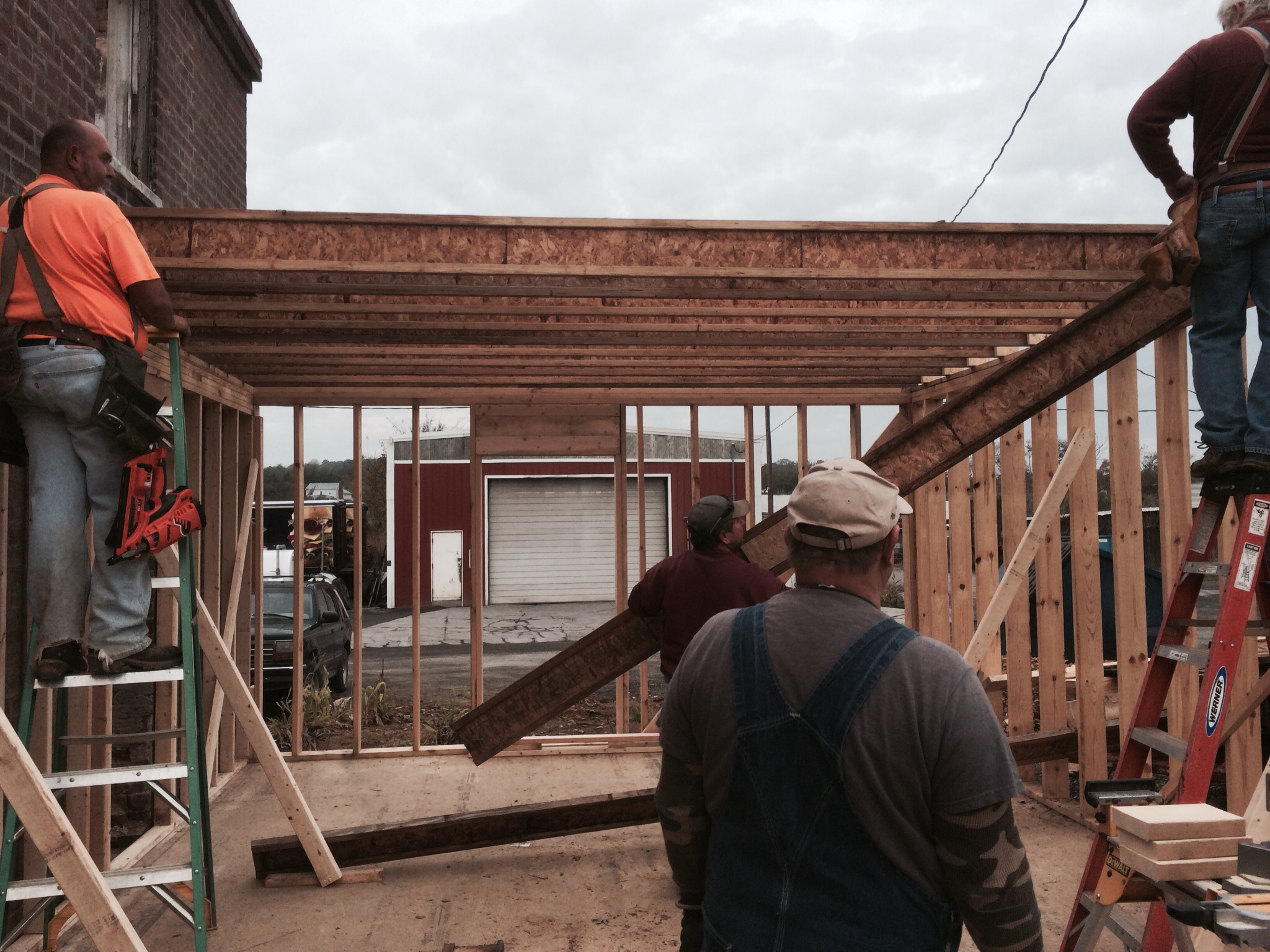
Over the next couple of weekends the framing crew continued hard at work, with rather dramatic results.  During this phase it was so satisfying to see all of our hard planning realized in a physical structure!

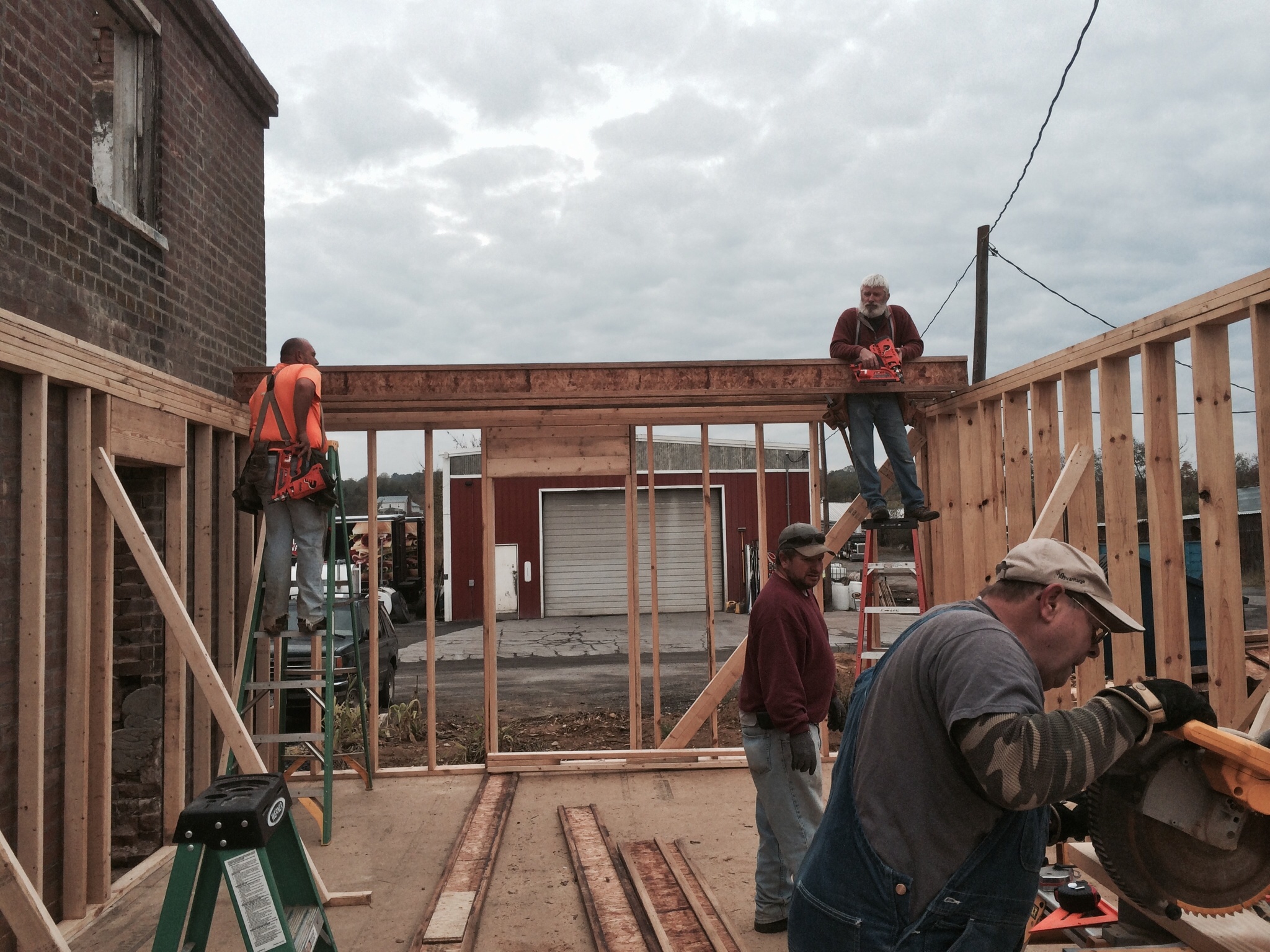
The weekend following our last post we continued pushing forward, expanding into the original structure and up!  First, we added the last wall on the first floor addition, which abuts the original structure to carry the floor joists of the second story of the addition.  IMG_0088
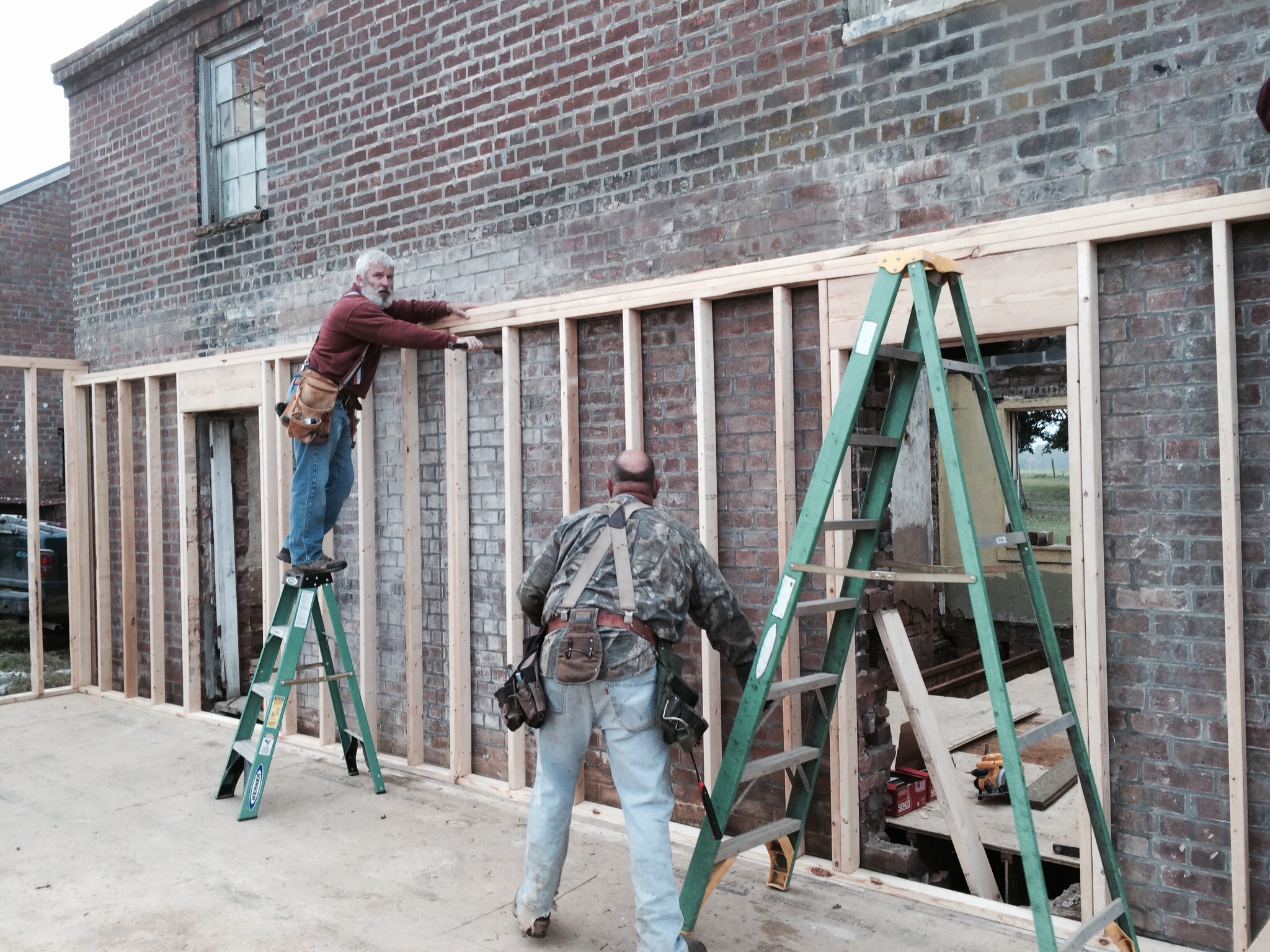
Once all four walls were erected, we then had to make sure the structure was plumb and square.  Luckily one of our crew has a bit of experience, and he strung up a line along the rear of the wall with this temporary two by four block.  IMG_0090We then lined up another two by four using the string as a guide, and began adding the temporary braces, keeping everything square.

IMG_0099

This part involved a lot of hammering into position.

IMG_0100

IMG_0104

Finally we were able to begin adding our second story floor joists!
IMG_0106

IMG_0108]

IMG_0115

The next step was to put down the sub flooring of the second story.  Luckily, a few of the farm tools come in quite handy during the construction phase:

IMG_0110

The flooring was installed using nails and glue to make sure we got a good tight fit.

IMG_0120

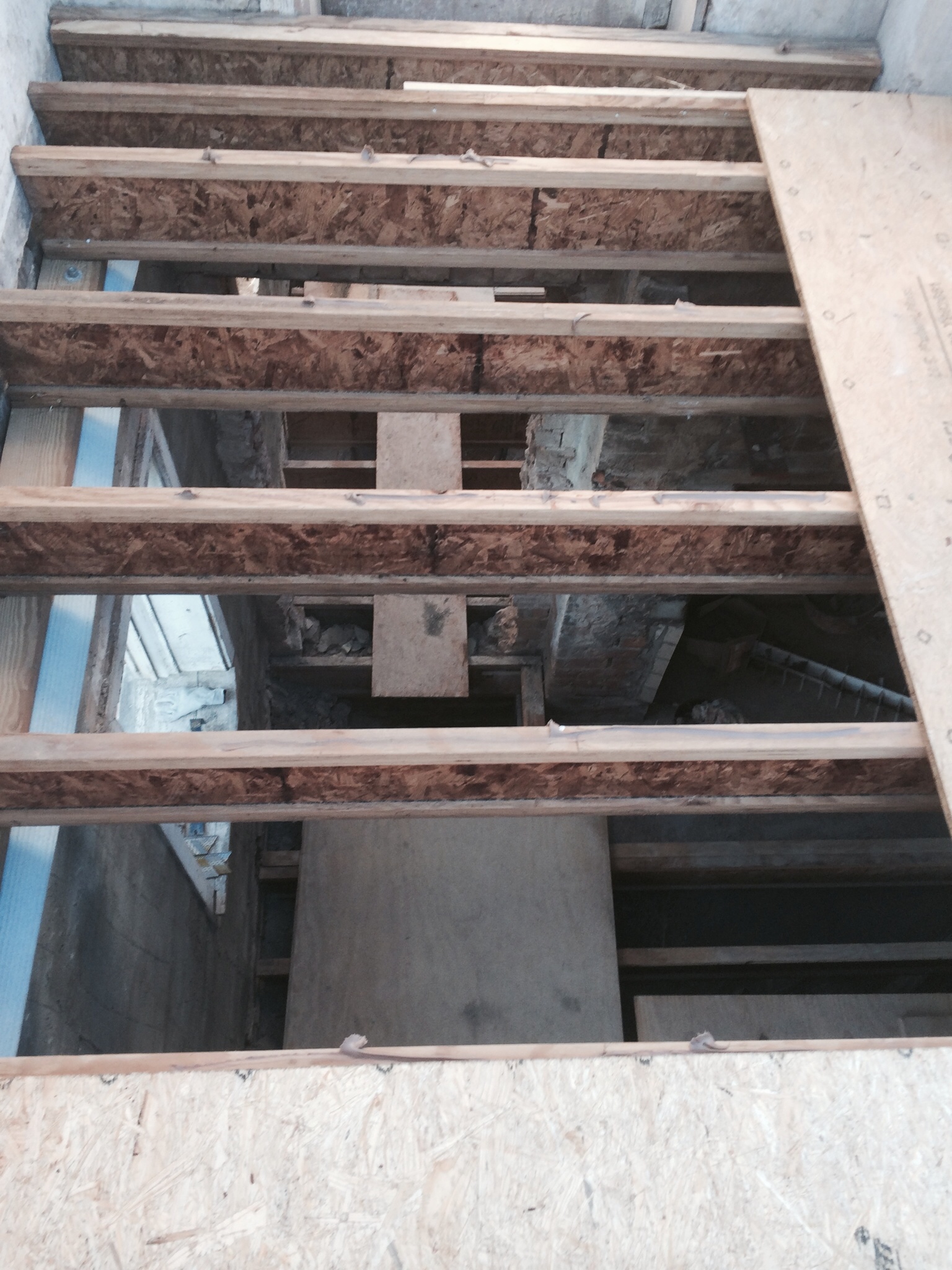
As we neared completion on the sub flooring, we left Dan a “Go-For” hole so he could get the tools up to the second story:
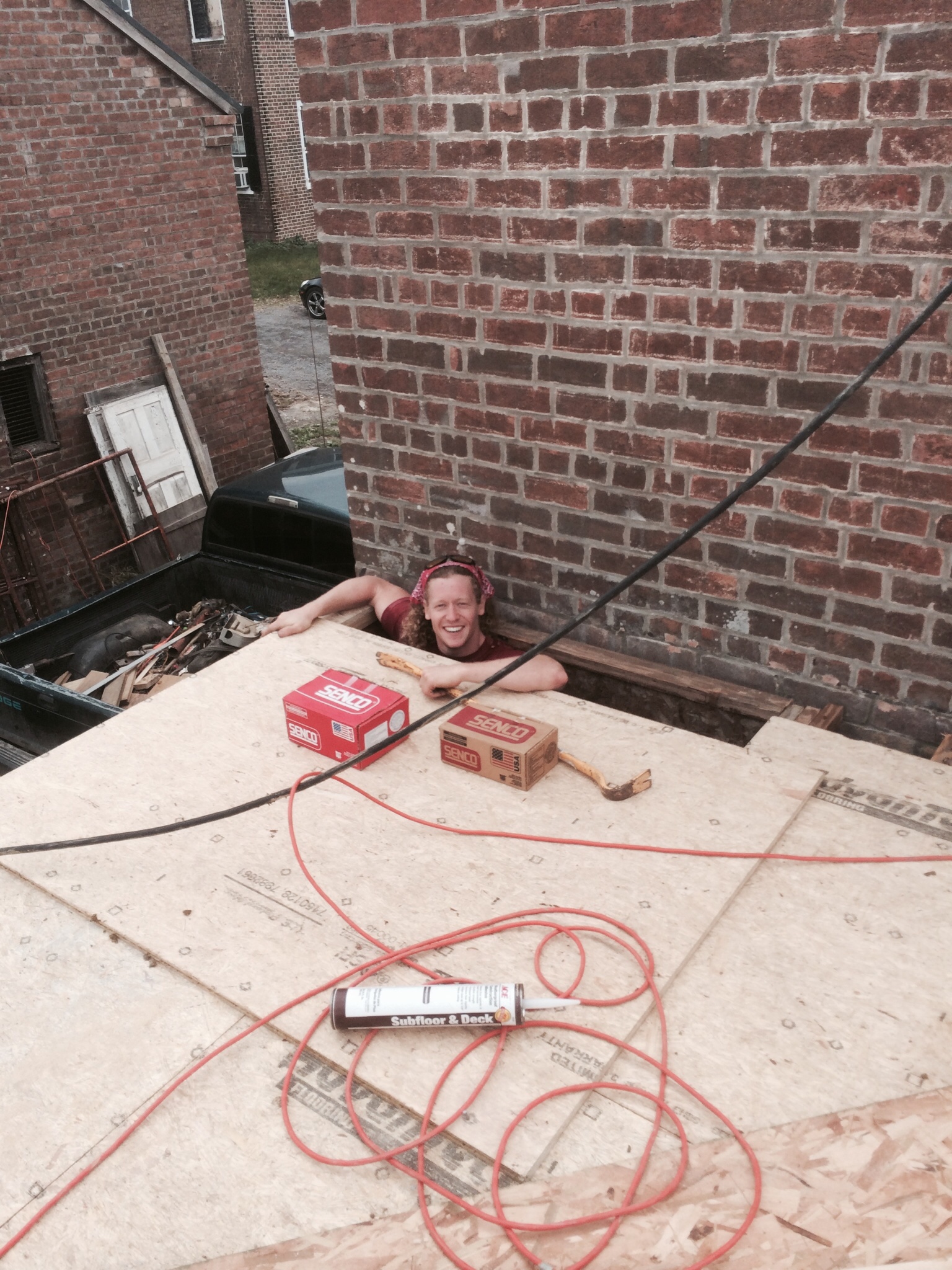
IMG_0126The area around Dan is where our spiral staircase will eventually be installed.  After we got the subfloor down for the second story, we went back to the first story and installed plywood sheeting on the exterior walls. We then moved into the house, installing the first floor joists on the new poured concrete and cement block foundation that the masons had previously installed.  In the photos below, you can see the framing around the fireplace in what will be our future kitchen:
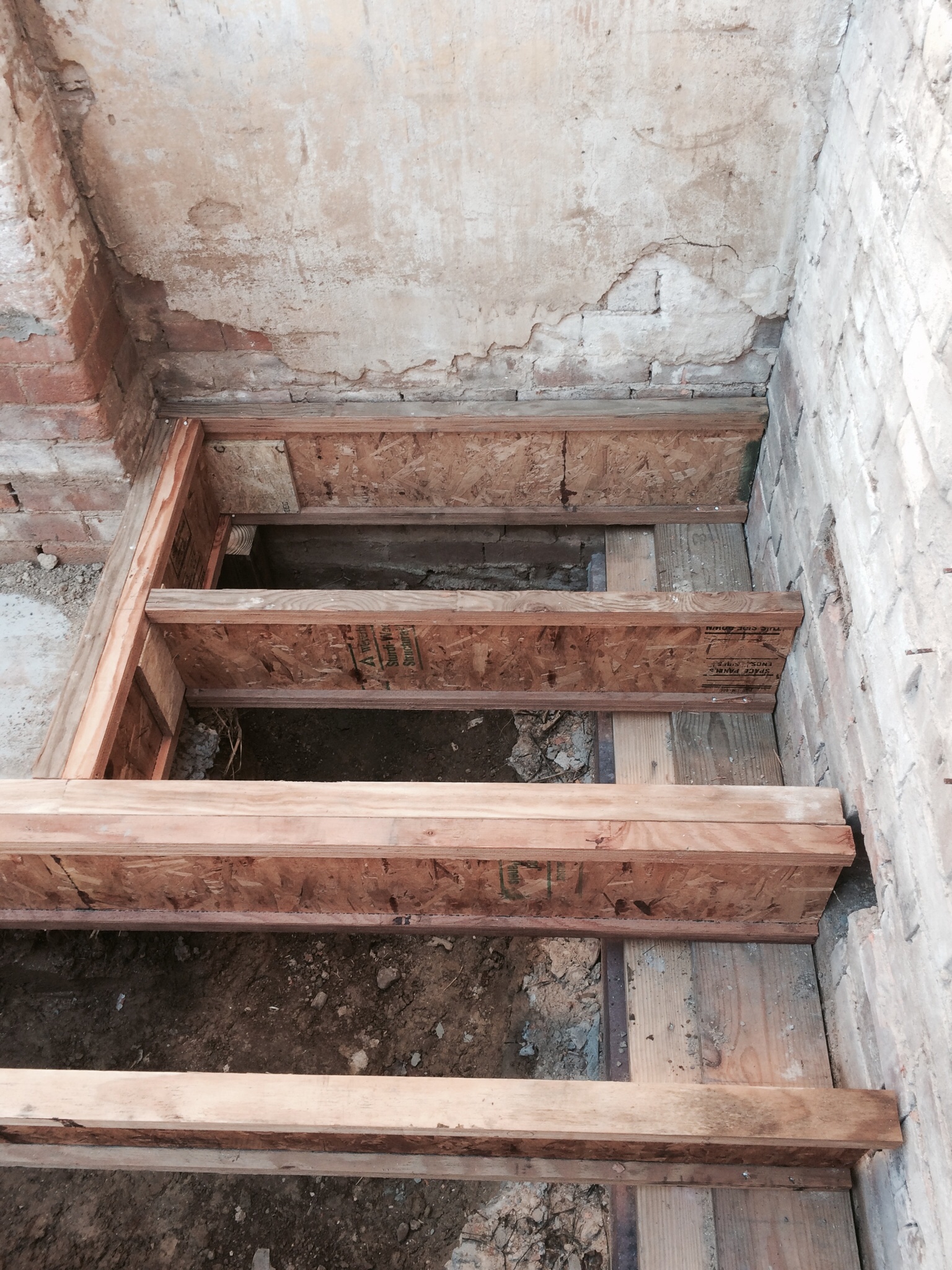
IMG_0134

IMG_0138
After we installed the floor joists in the main house we went back with vapor barrier, and installed the sheeting underneath the crawl space, stapling everything to the framing:

IMG_0140

IMG_0143

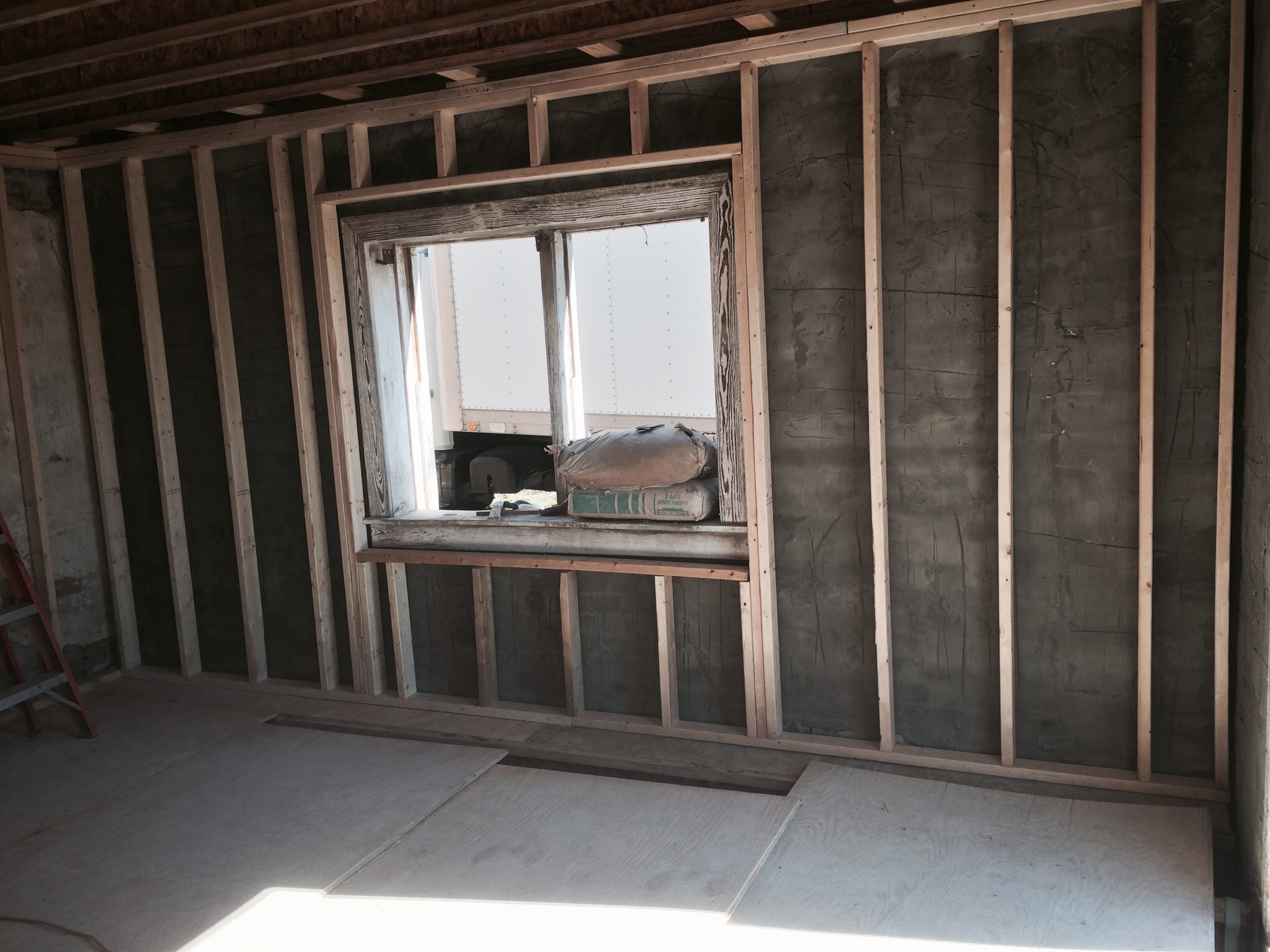
Once the vapor barrier was down, we debated whether we wanted to frame any interior walls, but ultimately decided to so we can conveniently run wiring and utilities in the few necessary areas. First, we had to install a portion of sub flooring to rest the framed walls upon.  We did not install wall to wall sub flooring in the original first floor rooms yet, we still need to run HVAC, plumbing and electric, as we won’t have crawl access to that area once the floors are complete.

IMG_0165

Also, you can see how the brick walls have been roughly parged for strength.  The exposed walls will get a finish coat of the parging cement, and will be white washed.
IMG_0175

After the interior framing was complete, the second story floor joists were installed inside the main structure:

IMG_0149

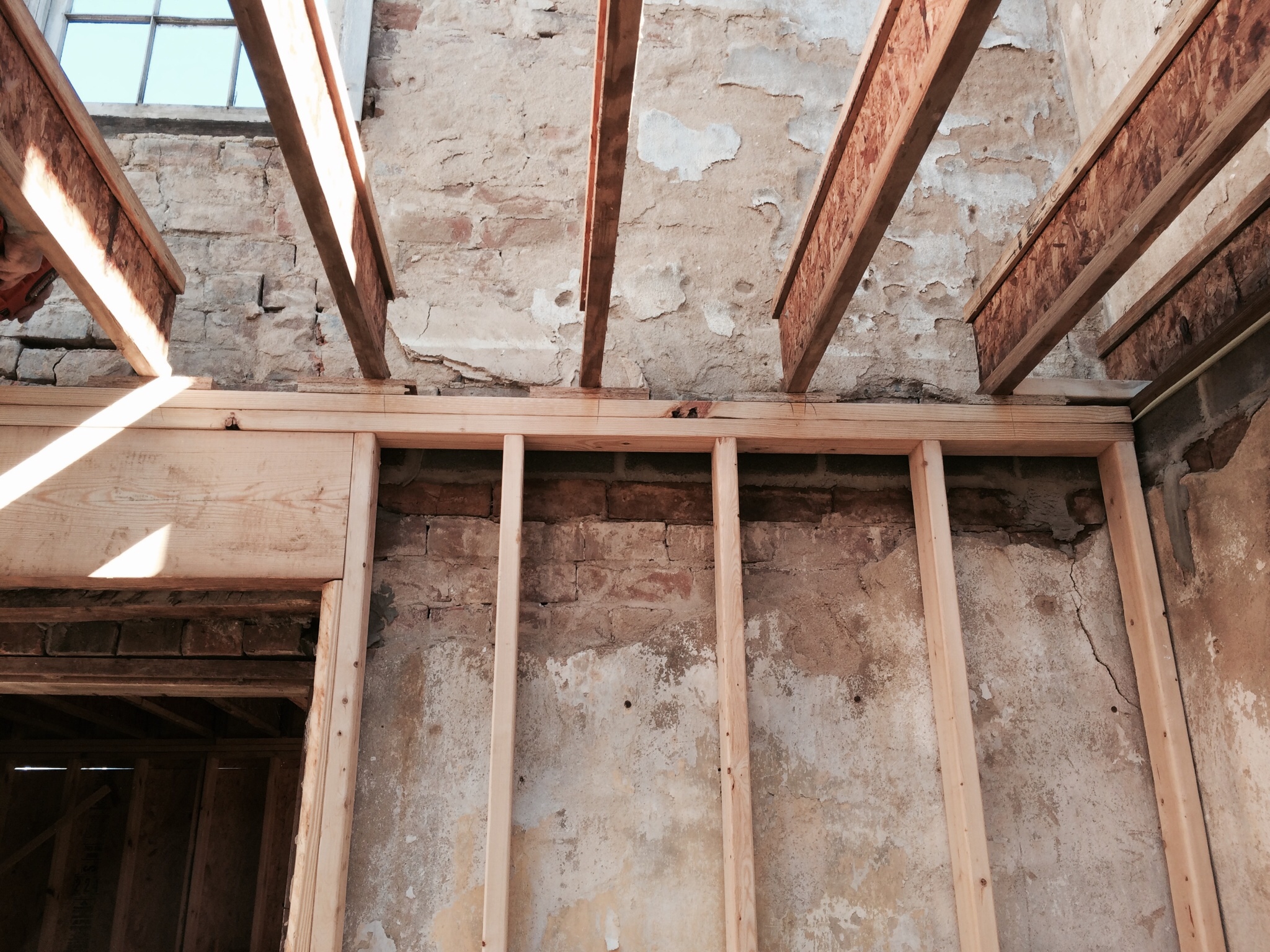
In the picture below, you can just make out the course of cinder block peaking out from behind the framed wall.  During the planning phase we decided to steal five inches of ceiling high from the second story and give ourselves some extra head room on the first floor.  With the perspective we now have with the framing, we are so happy we took this extra step!  We are planning exposed vaulted ceilings in the second story, so the head room we stole won’t be missed upstairs.
IMG_0151

IMG_0147

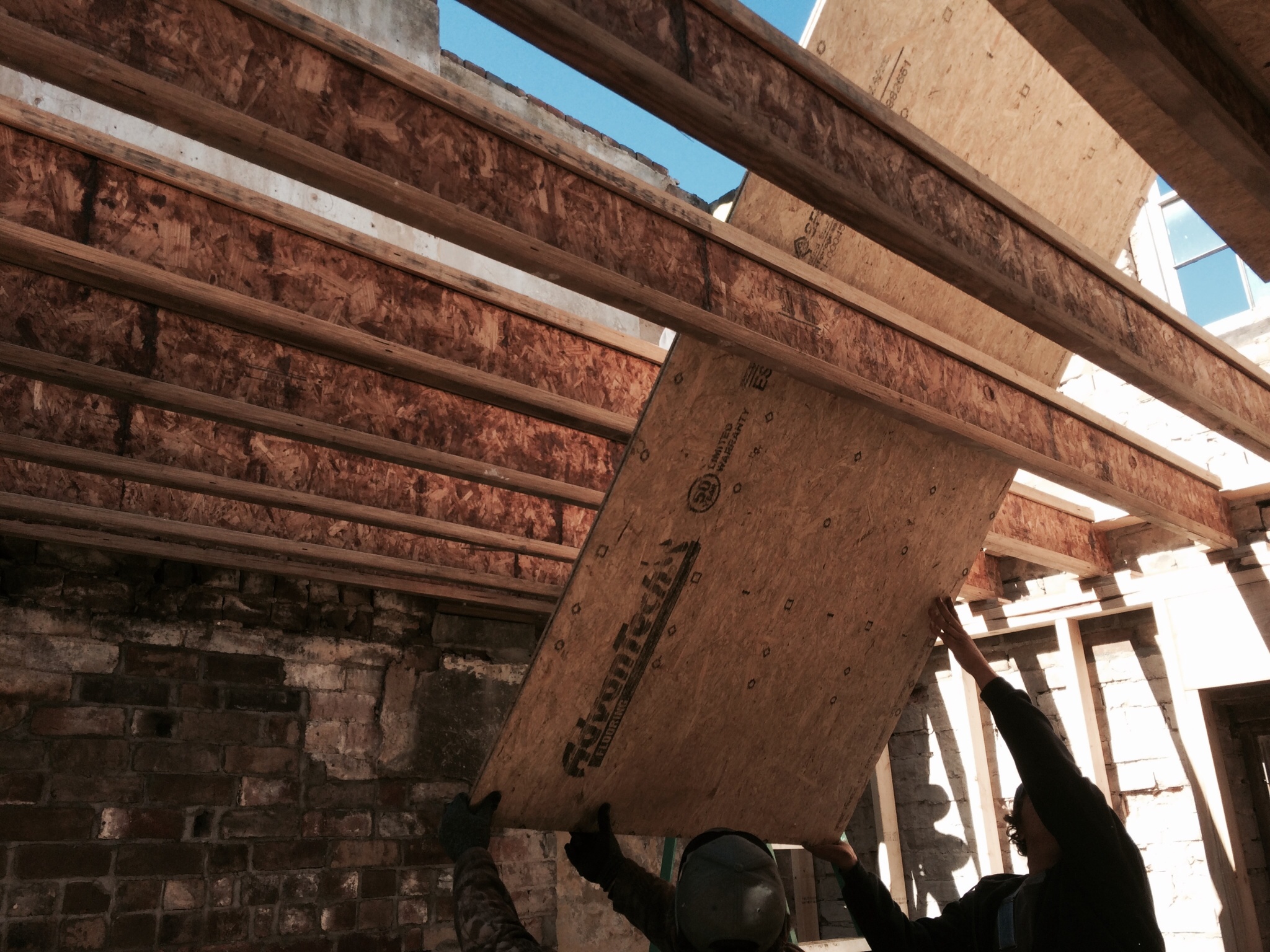
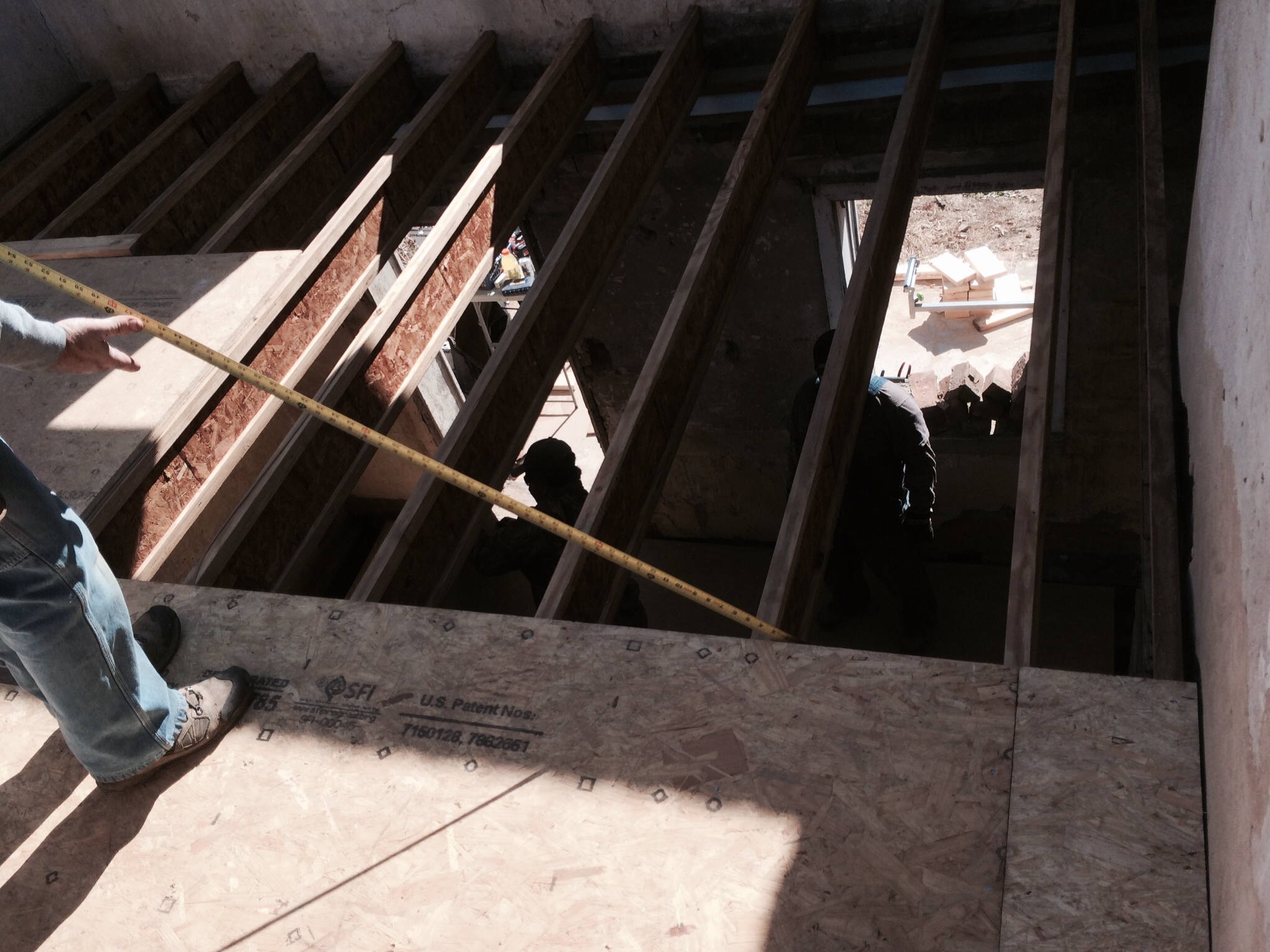
With the floor joists in, we then installed the sub flooring in the second story of the main house.
IMG_0153

IMG_0163

IMG_0161

IMG_0166

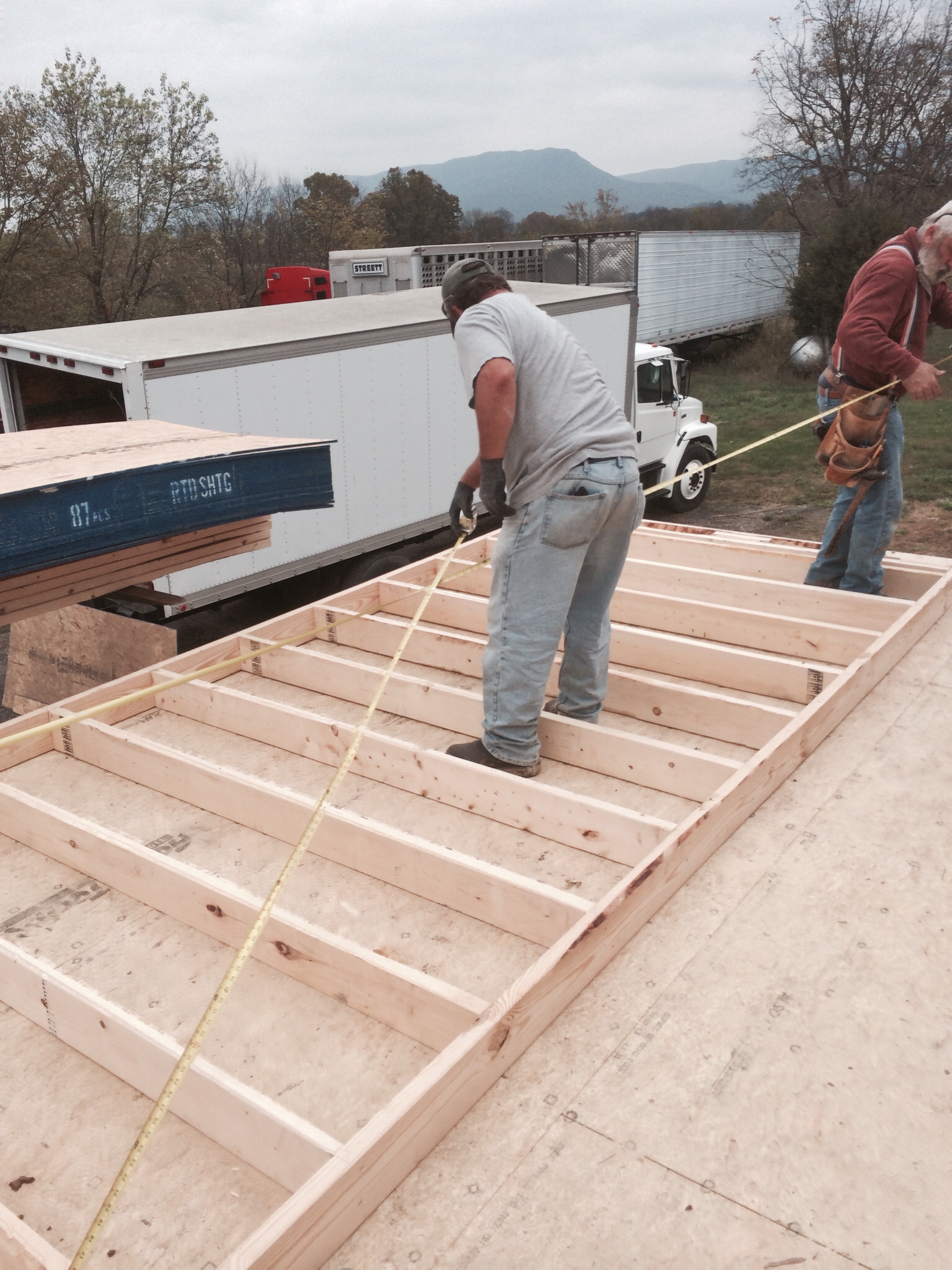
IMG_0171Next, we framed up the second story exterior walls and faced them with plywood.  Here you can see us making sure the walls are square as they went up: IMG_0129
IMG_0131

And last, but certainly not least, we framed the interior walls.  Well, two walls, a powder room, and a utility room.  Everything else is open!

Our upstairs bathroom will go between these two walls, the extra-wide opening is for the installation of pocket doors.

IMG_0169

Utility room on the left, downstairs half bath on the right:
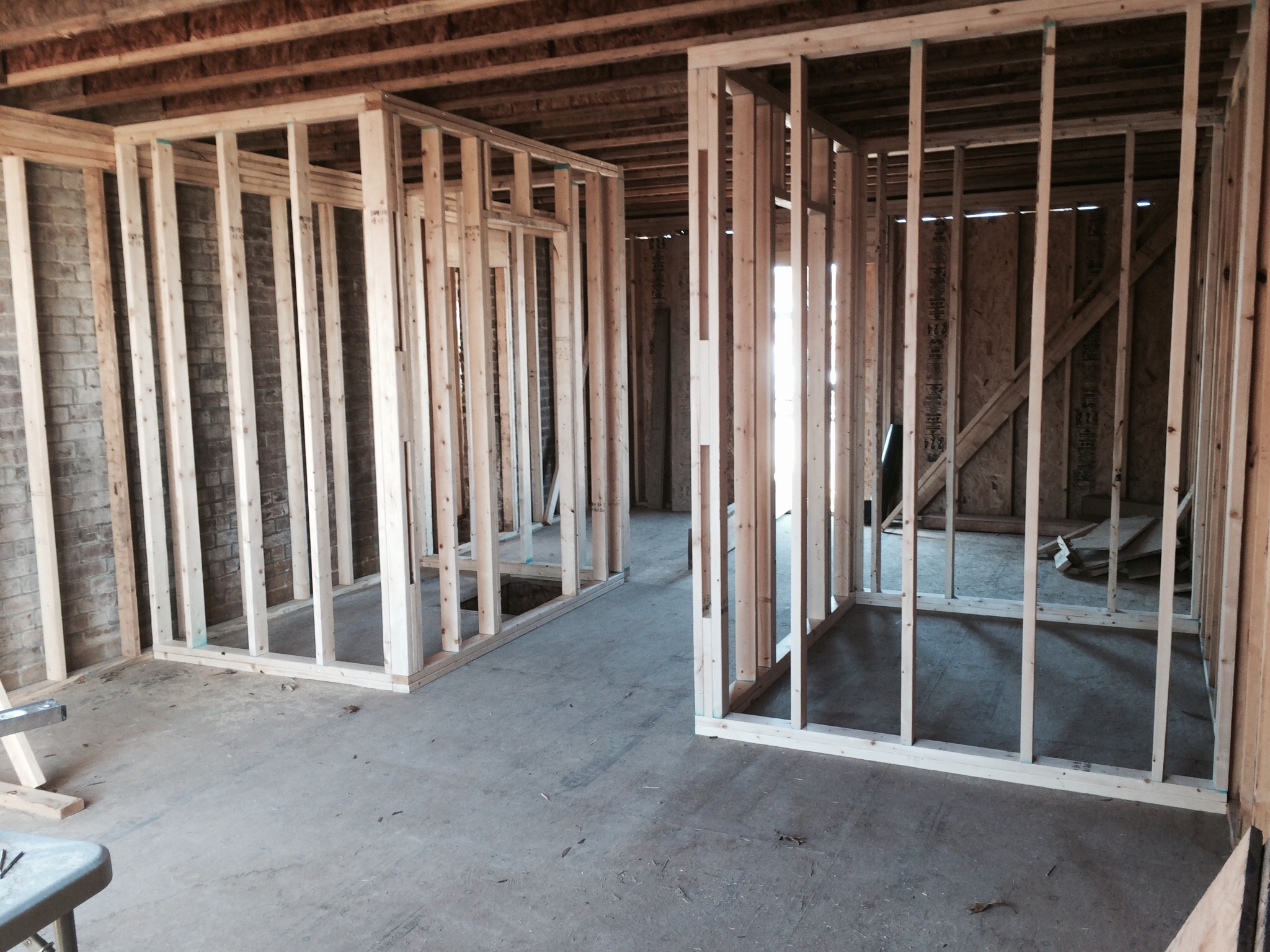
IMG_0173

ALL FRAMED UP!

Our next post will focus on some of the logistical considerations we have been juggling, and some interesting architectural finds.


The Great Frame-Up

As you know, our forward progress this summer was . . . a little slow, to say the least.  Between studying for the bar and the scheduling delays of some of our professionals, things were moving at a snail’s pace.  Our optimism took a minor hit, as well – we quickly realized that our goal of moving into the Little House by the time the weather got chilly had been a little ambitious.  In the last week or two, however, the pace has really picked up and we are feeling really motivated once again!

After the footers were framed in, we had a few things we needed to get done:

1) Get the concrete footers poured

2) Pour gravel

3) Build a radon vent (Surprise!  We didn’t know we need this until the building inspector came out and failed our site)

4) Lay cinder block on top of the footers

5) Install foundation vents

6) Add a vapor barrier over the gravel, pour the crawl space floor

Here’s what the poured footers looked like:

IMG_0057

Once the footers were poured, we got our DIY hats back on.  Chad’s brother helped get the gravel into the hole, and we used gravel rakes to spread it evenly around the foundation space.

IMG_0059

IMG_0060

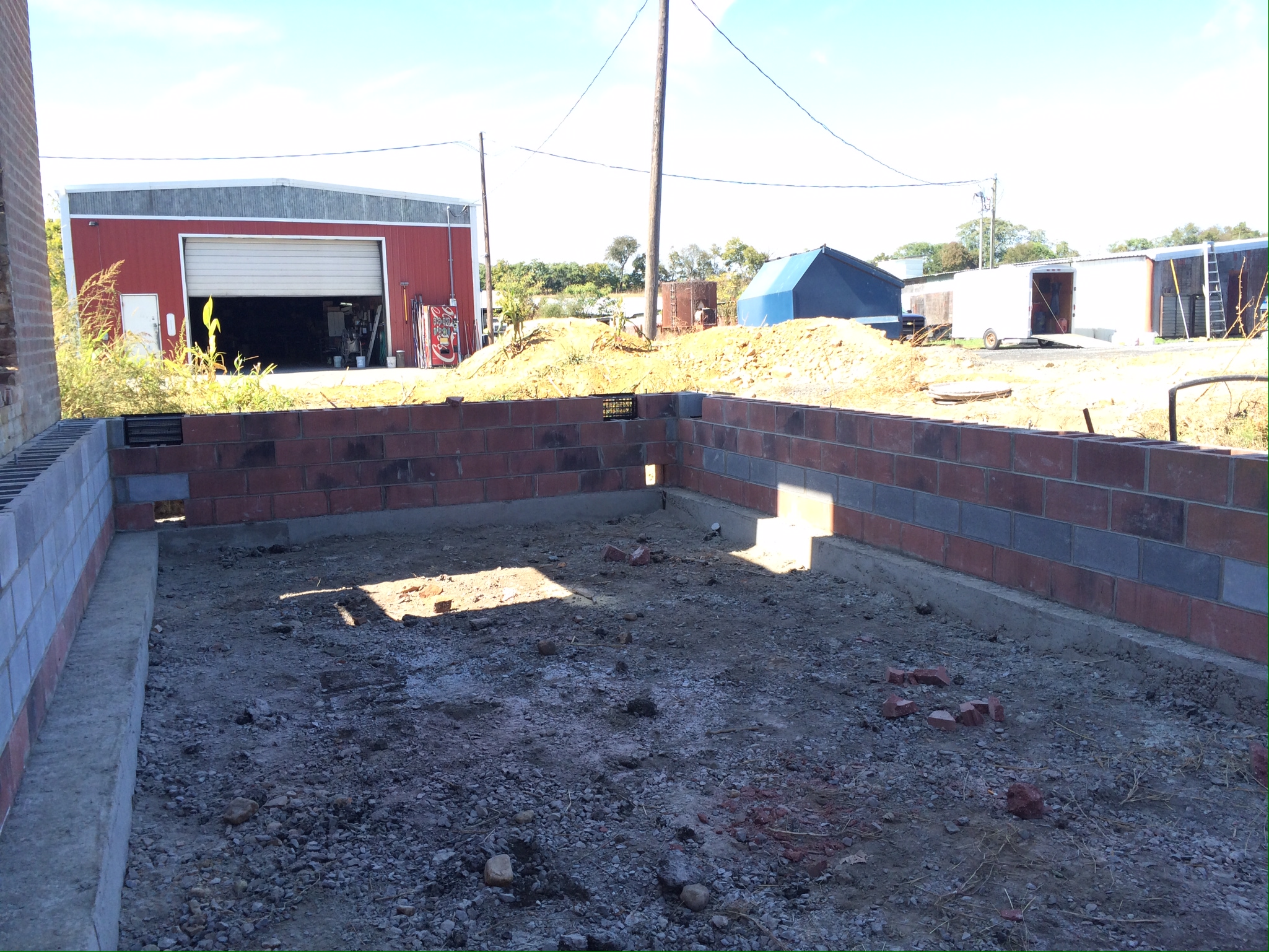
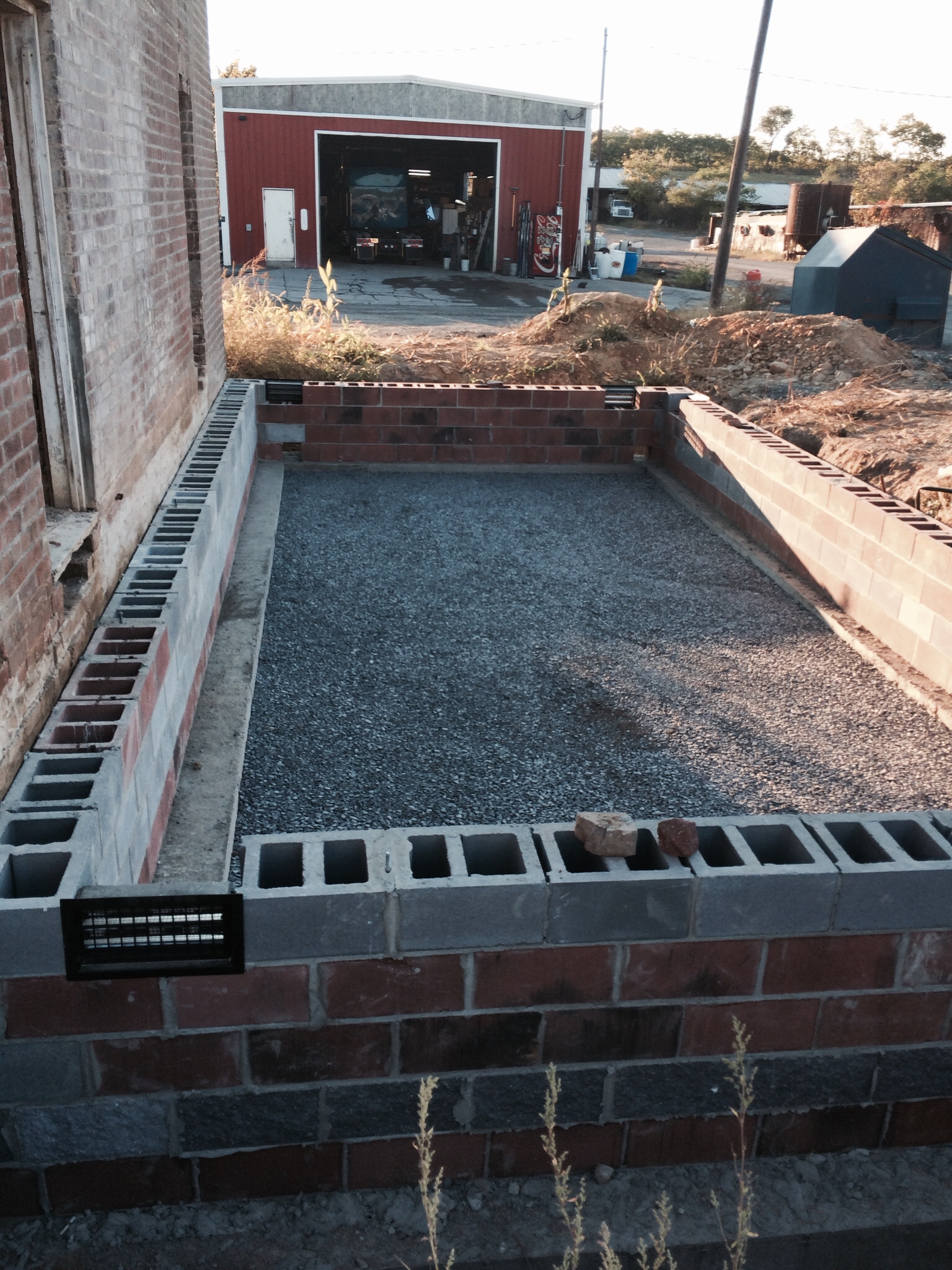
The concrete footers then got topped off with a wall of cinder block.

IMG_0026

Please note the very fancy RED cinder block – bought for pennies on the dollar from Dollar General after it purchased too many signature red blocks for building a new location down the road.  Score!  Four courses of cinder block sit on top of the footers to make up the wall:

IMG_0061And voila, with a little help from our masons, we had a wall!

IMG_0073

IMG_0072

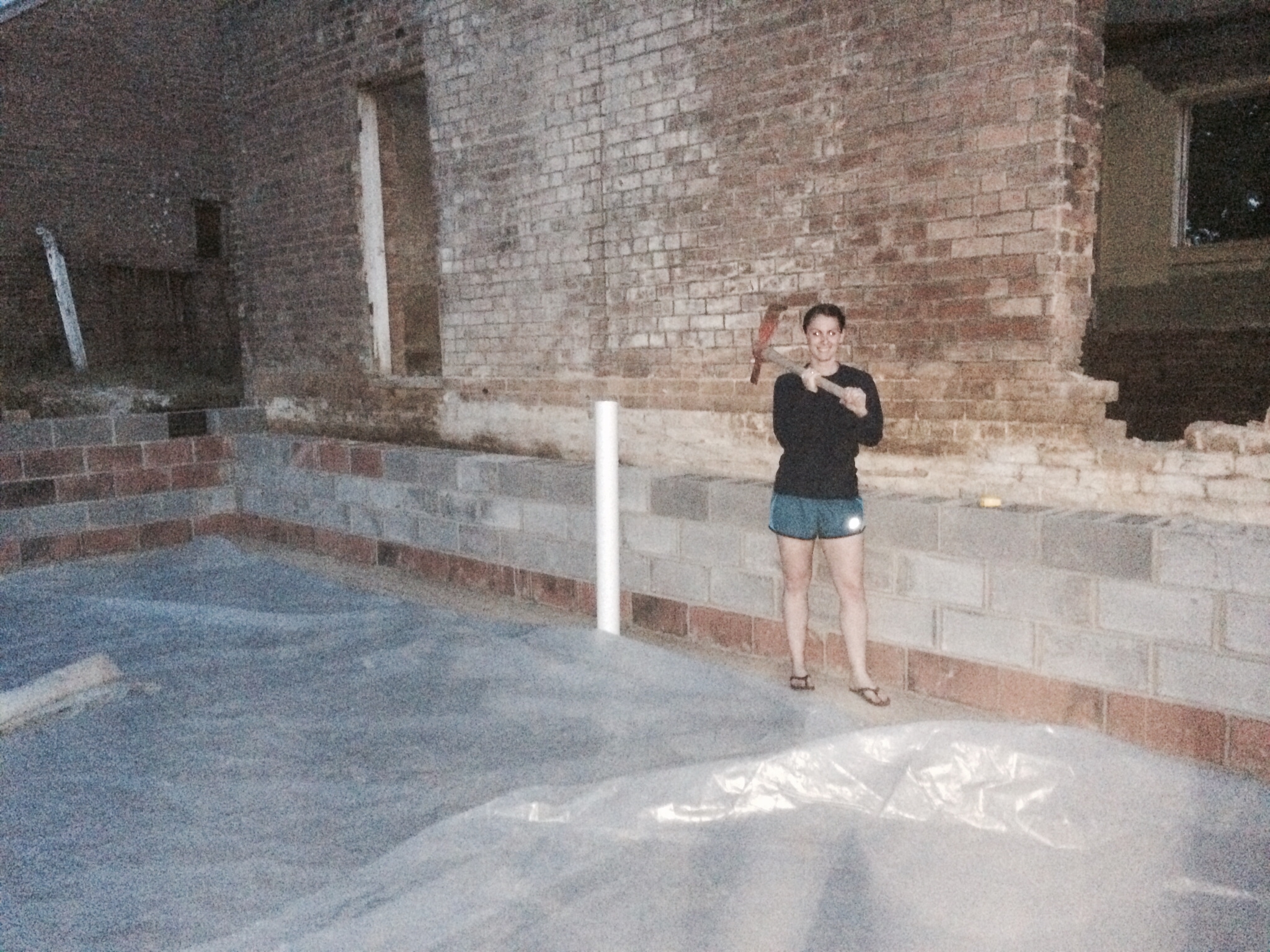
We also built a radon vent – this is nestled into the ground when the gravel is put in, and helps flush the radon out without poisoning the house.  The radon system wasn’t something we were warned about during our initial building permit approval; however, when we had our foundation walls inspected, the inspector kindly noted our absence of radon vent.  Of course, this head’s up came 24 hours before the concrete foundation was scheduled to be poured . . . and the vent needs to be installed BEFORE the concrete.  Luckily, it turns out this portion of the radon vent is just PVC pipe, so we used the same bonding agent we had used for the smokehouse conduit.  And yes, I am wielding a sledge hammer.

IMG_0076

IMG_0077

After hearing “radon vent” and “we’re going to do this ourselves,” I was a little skeptical, but after we were done, I was almost underwhelmed with how easy it was.  Wham, bam, two PVC pipes, and thank you, ma’am.  As you can see, the gravel also got covered with vapor barrier as the final step.

One of the last steps before framing was to buy and “install” foundation vents.  I say “install” because after opening the box, there’s not much to it.  The mason’s left holes in the cinder block wall periodically, and we just slid the vents into the hole.  Chad splurged on these and spent an extra $10/vent to get the temperature sensing auto open and close models.  No need to remember twice a year openings and closings!  You can see one of the vents in the bottom left-hand corner of the picture, below.

IMG_0075

Finally, after all these steps were complete, the concrete company came and poured our crawl space floor!  It’s a little hard to see in the picture below, but we swear that’s concrete.

IMG_0038

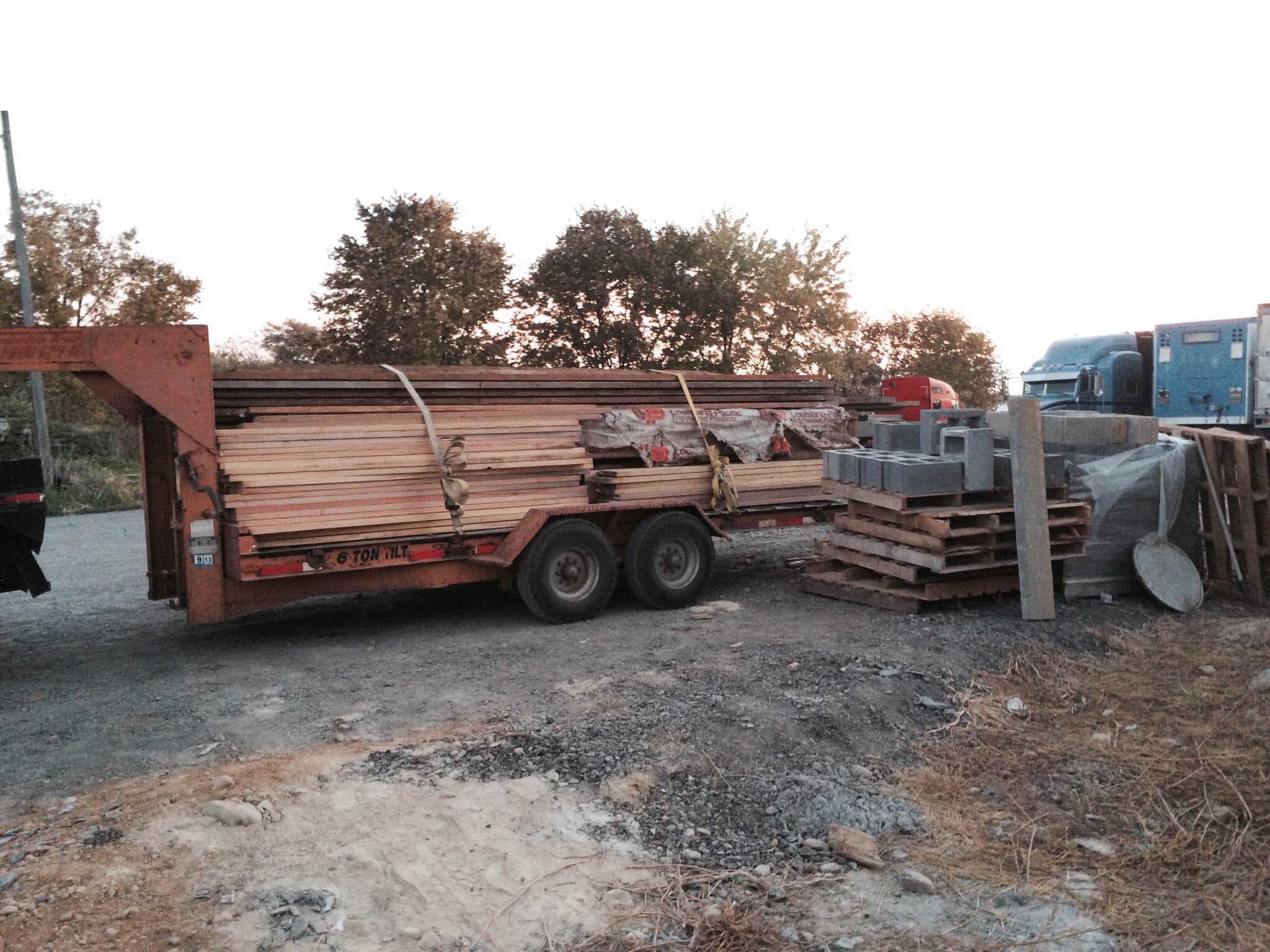
After all this was done, we called in the big guns for THE day – framing, part 1.  It is hard to explain our joy when we woke up around 6 a.m. last Saturday to see this next to our house:

IMG_0028

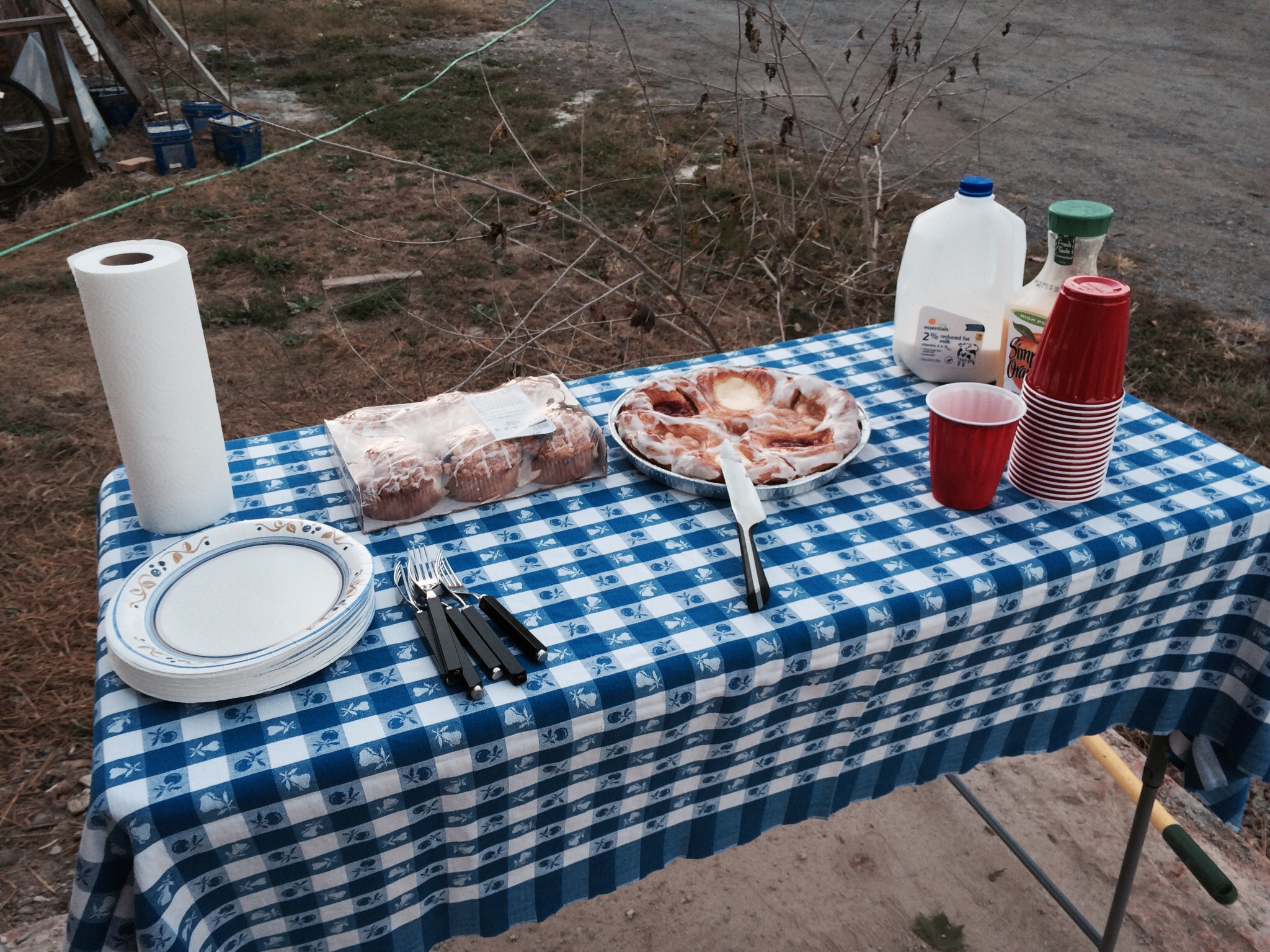
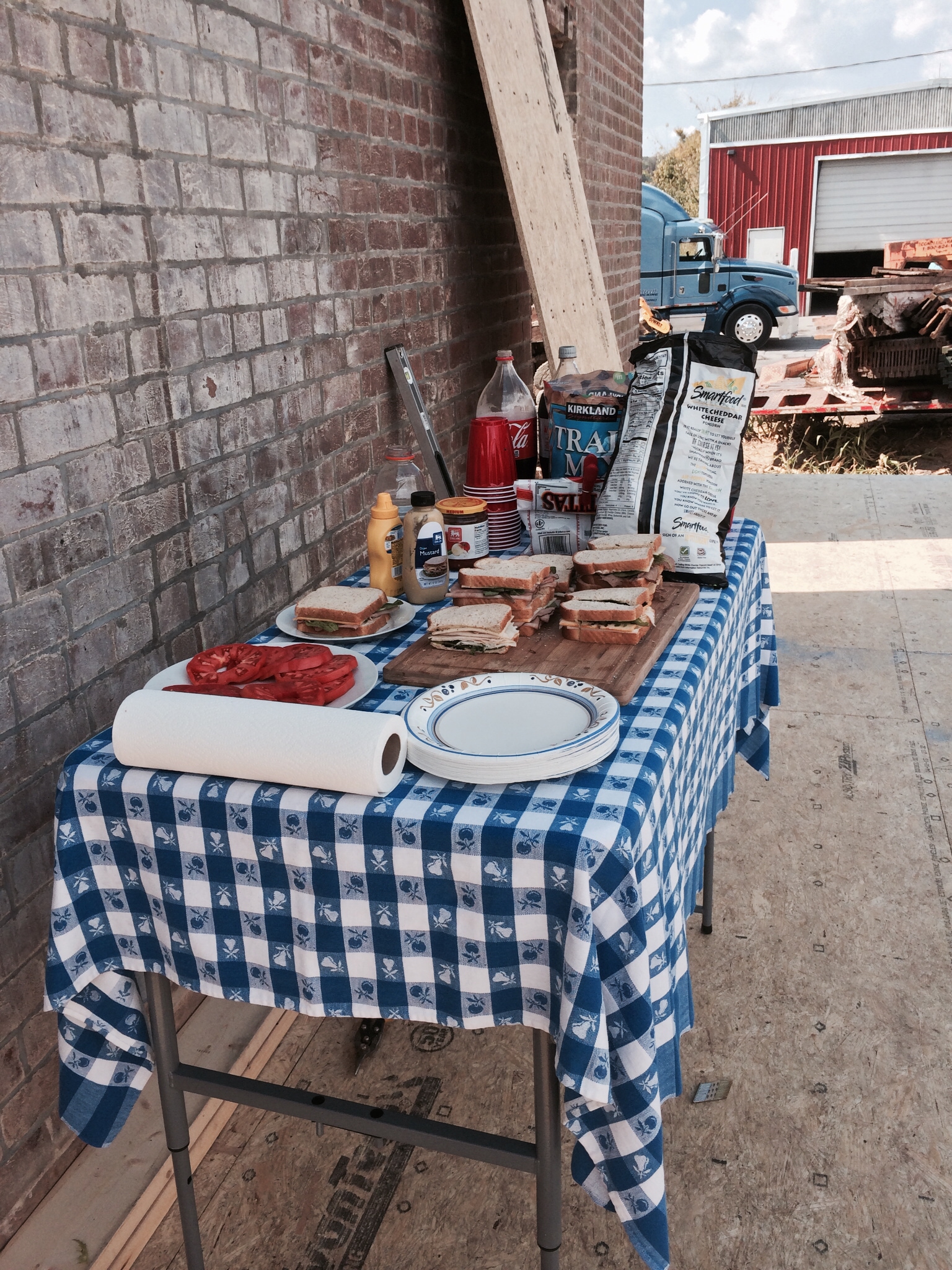
We had a crew of 4-6 through the day helping us get the job done.  We figured everyone works a little better with a full stomach, so we started with a breakfast spread:

IMG_0029

And then we got to work.  First, a layer of vapor barrier went on top of the cinder block wall, topped with pressure treated wood (“plate”).  The masons filled the cinder blocks with concrete and left a bolt sticking out periodically; this allowed us to tie the plate into the wall.  Here’s Chad with the roll of blue vapor barrier:

IMG_0032

IMG_0033

IMG_0030

Here’s an aerial shot of the bolt that ties into the cinder block:

IMG_0034

Once the plate was bolted in around the entire wall, then we could set our floor joists at regular intervals.

IMG_0042

You can see in the above picture that they’ve left a square hole; this will be a trap door in our utility closet that will allow access to the crawl space under the house.  Here’s a shot from in the crawl space up at the newly laid floor joists:

IMG_0039

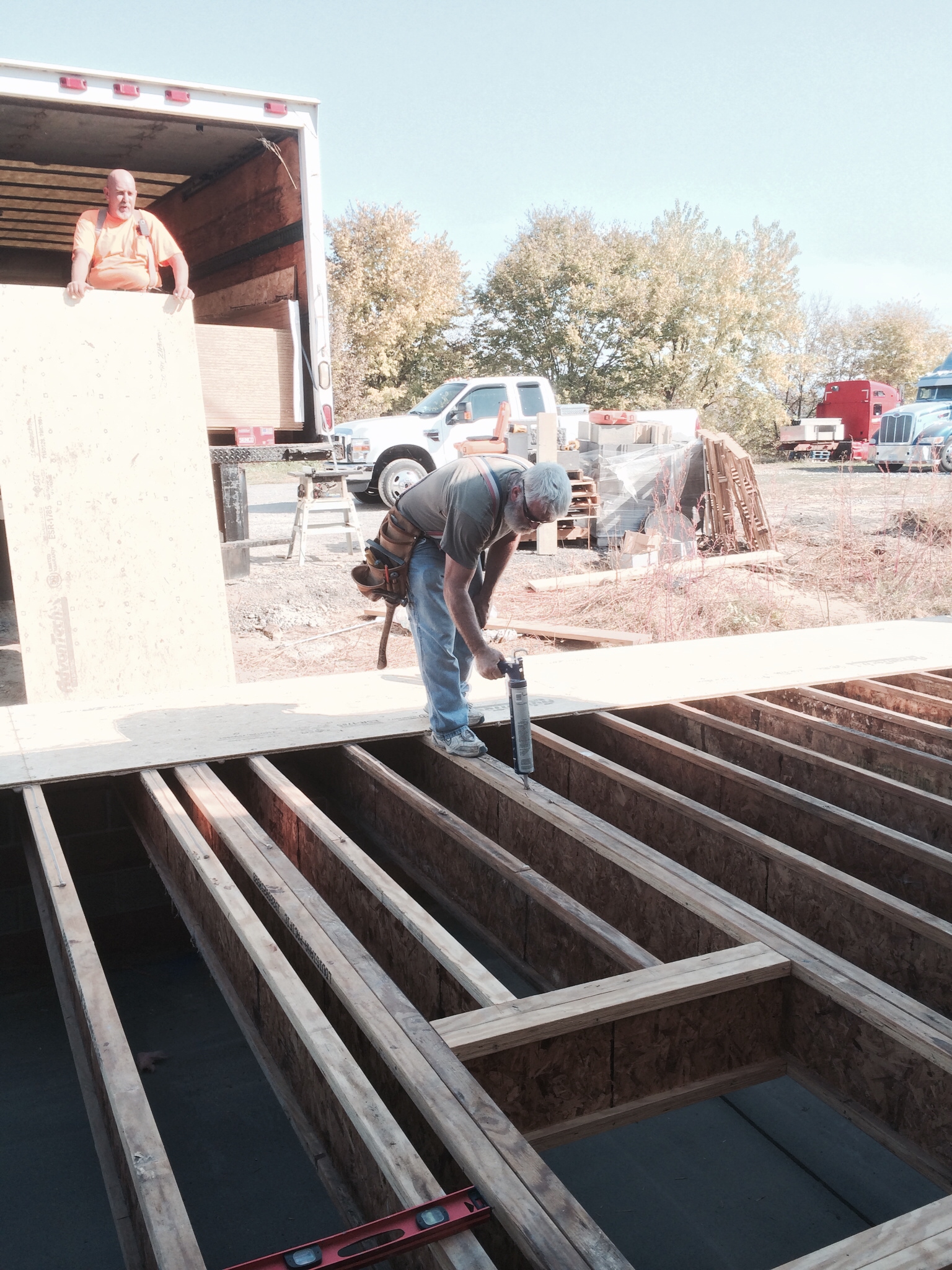
The guys covered the floor joists with glue and then laid down sheets of sub-floor.

IMG_0043

Just in time for us to set up lunch in our brand-new addition (even if it’s a little exposed to the elements right now):

IMG_0048

Chad literally danced a jig on the new sub-floor.  Finally, the crew framed the walls.  They constructed them on the floor and once they were finished they lifted them up into place – like a small-scale barn raising.

 IMG_0044

Then, up, up, and away!

IMG_0050

IMG_0047

And, a panoramic:

IMG_0052

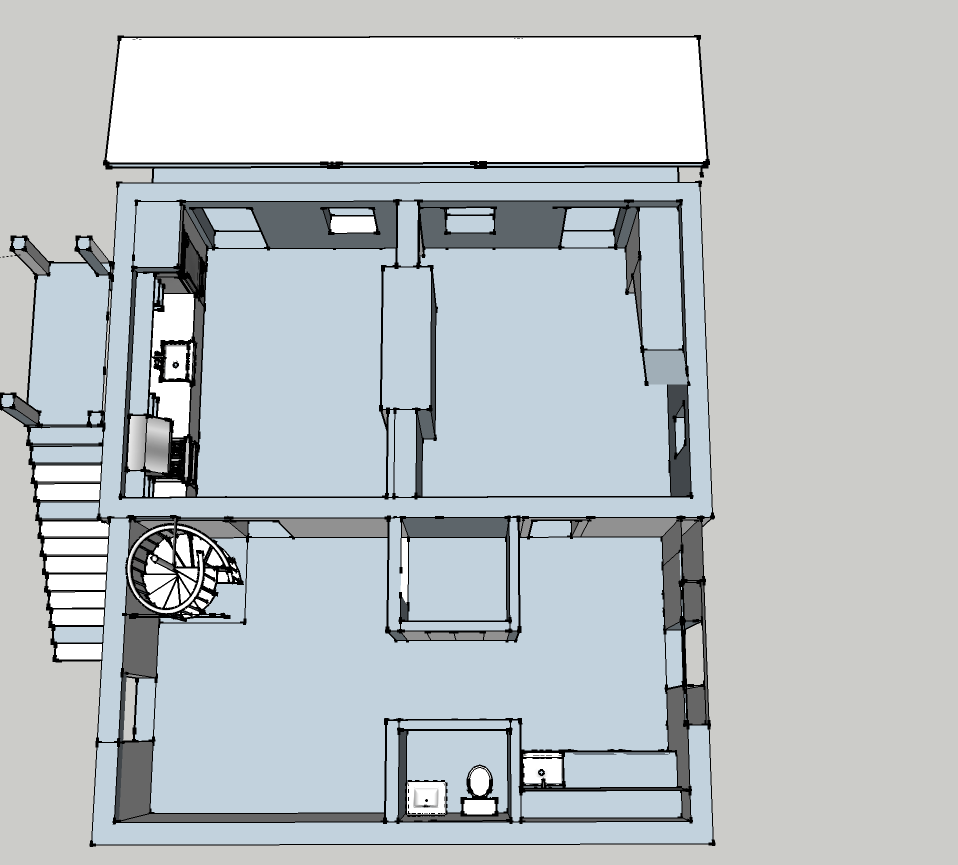
Hooray!  We even walked off the rooms to get a feel for how big the spaces would be.  Here’s the 3D model we posted a couple of posts ago:

Downstairs Floor Plan

The white block at the top is the front porch, so the large rectangular space across the bottom is the new addition.  It’s got a mud room on the right, a powder room, and a living room on the left.  The utility closet with the trap door is the small, square room right in the middle of the addition.  It’s a little breezy now, but some day (hopefully soon), this will be quite a comfortable space.

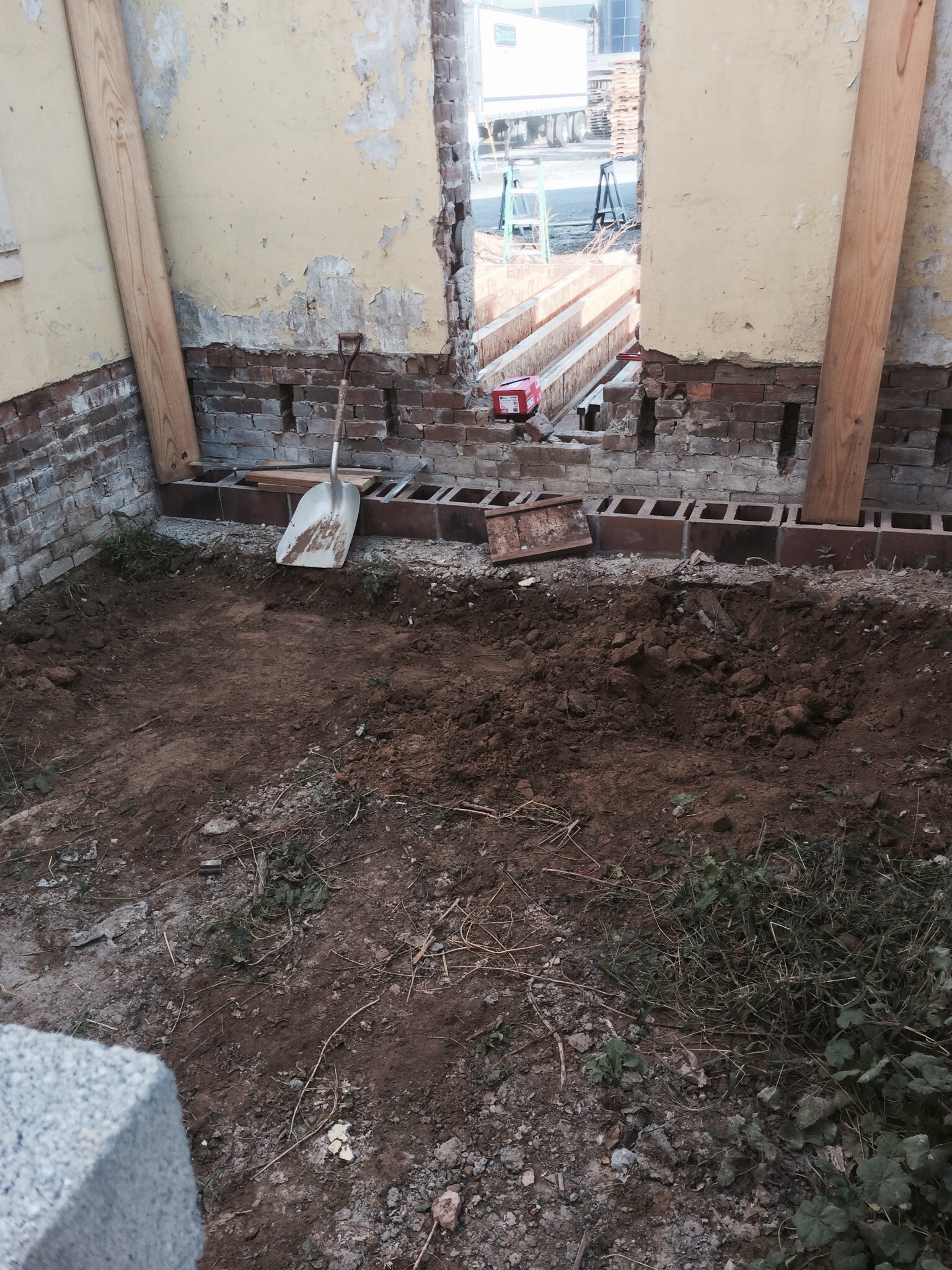
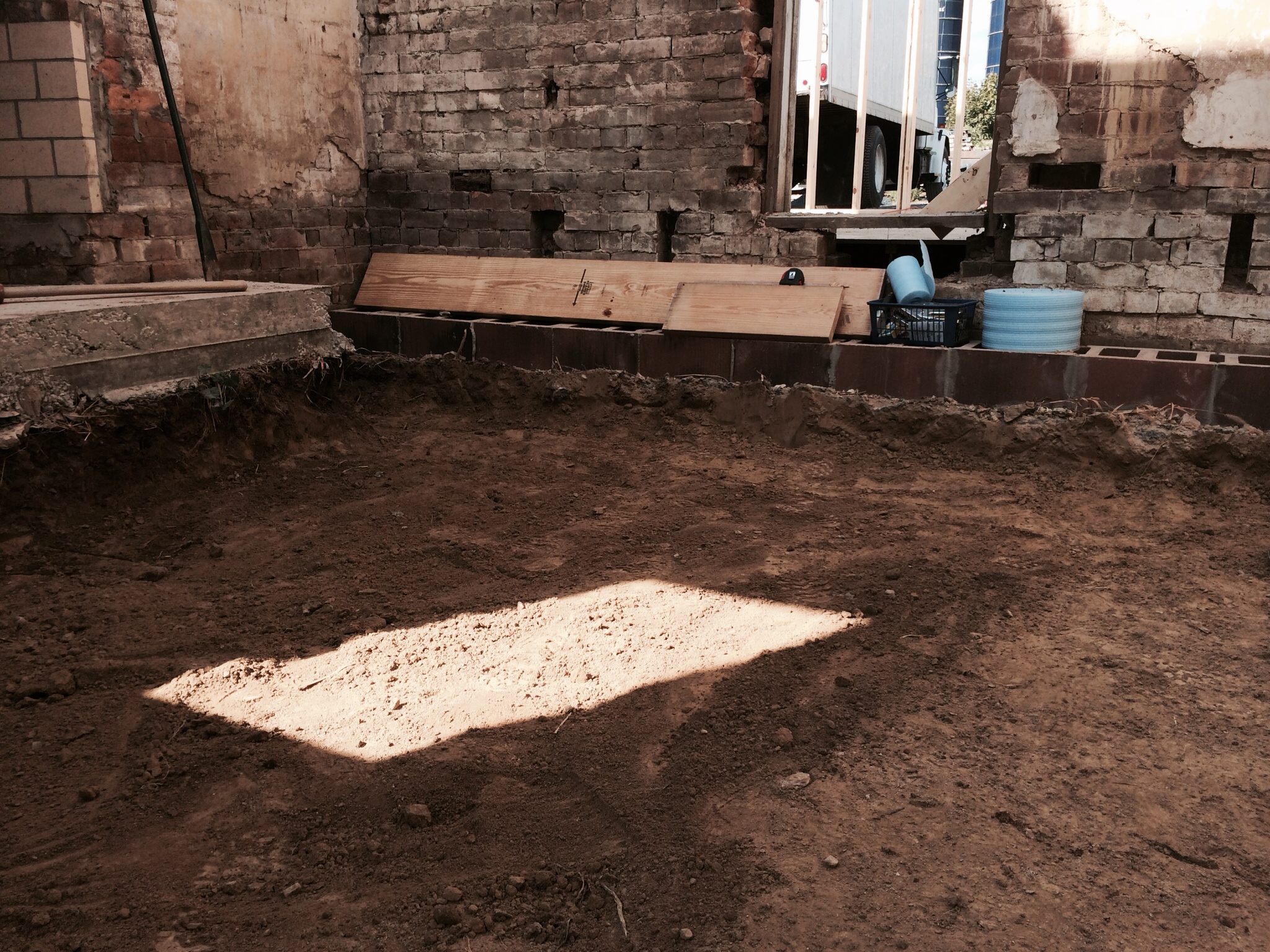
Sadly, our building inspector had more bad news than just the radon vent.  He also said that the dirt floors inside the existing brick structure (the front rooms on the 3D model, above) need to be 18″ below the floor joists.  We had originally thought it needed to be 18″ below the FLOOR – as you can tell from the process described above, the floor height and the bottom of the floor joists are a good 14″-16″ difference.  And you may have picked up by now that shoveling dirt ranks as one of my least favorite chores in the whole world.  It is really, really not fun.  Luckily, we were able to help recruit Chad’s brother, Daniel, to lend his strong muscles to the cause.

This is my “oh my gosh, we’re shoveling again” picture.  This is before the shoveling began.

IMG_0041

Look, Daniel found a groundhog hole!  How gross is that??

IMG_0045

And inside the hole: a beautiful crafted nest of shredded paper.  Ugh.

IMG_0046

And, the beautiful, beautiful final product.  In most places, we shoveled down the full 14″-18″.

IMG_0053

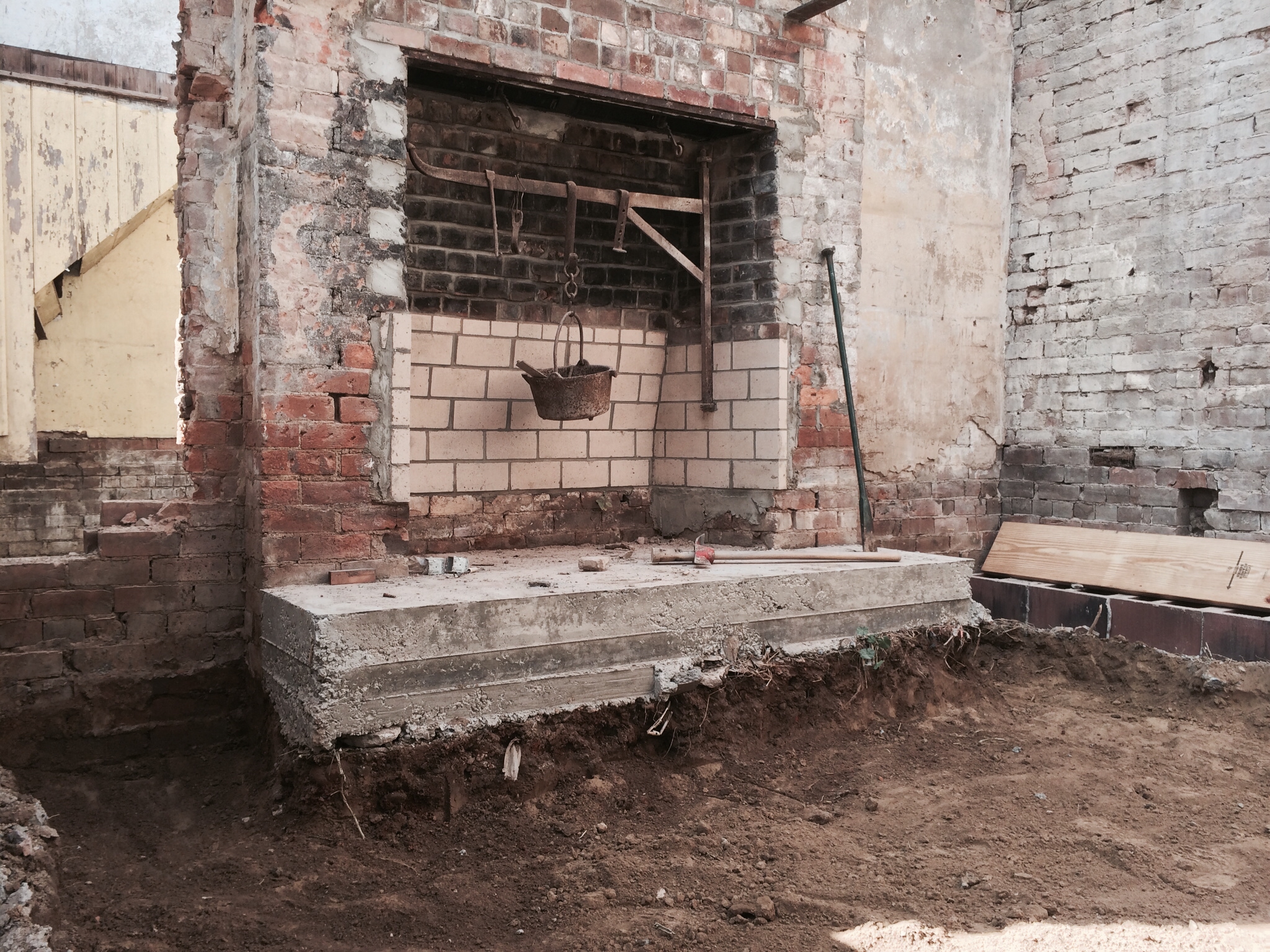
You can see we had to dig so far down that we hit the bottom of of the hearth.  We’re going to have to ask the masons about how we make sure that’s not a structural problem . . .

IMG_0054

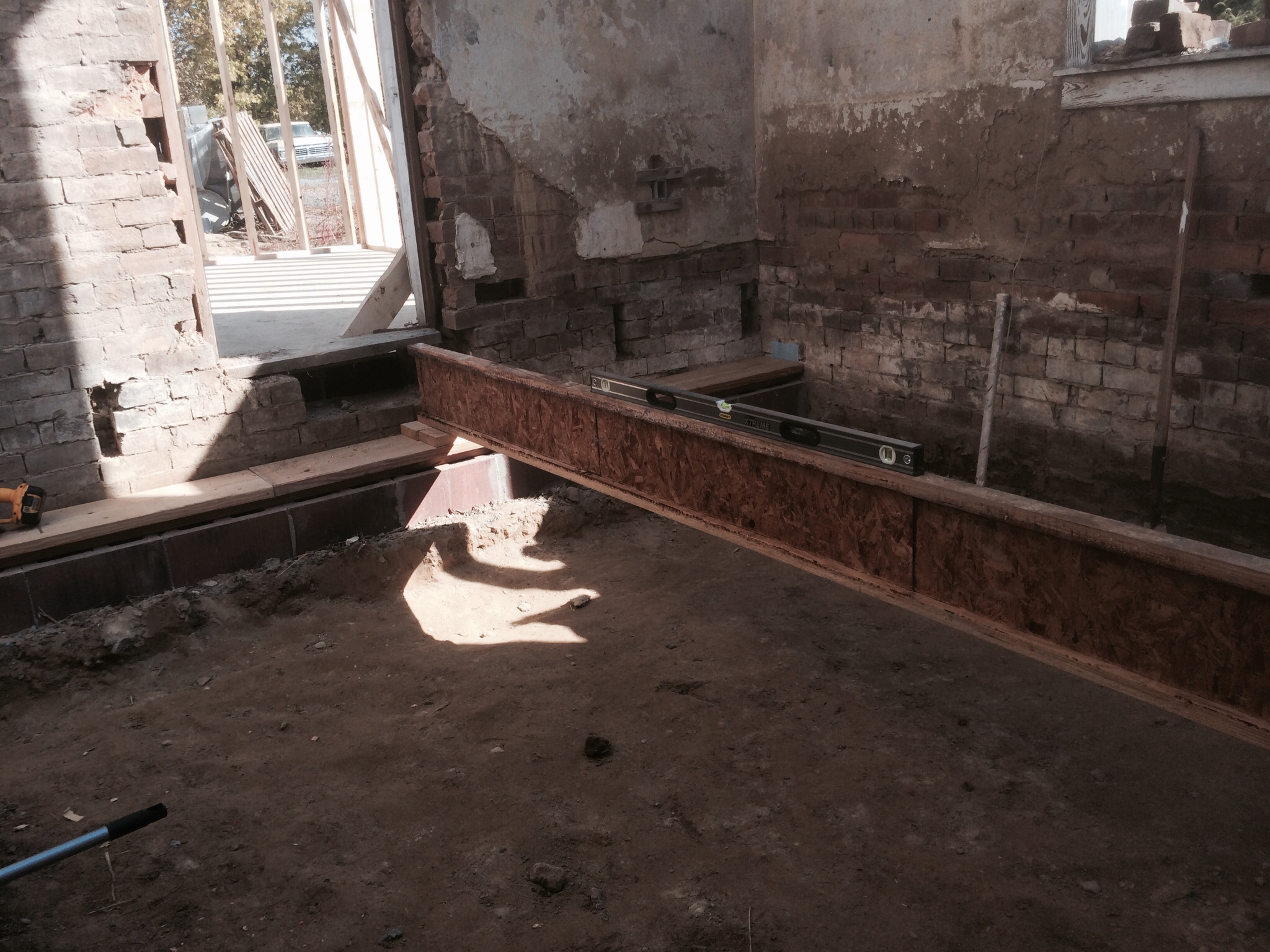
This is an example of what one of the next steps will be: the same thing as outside.  We will lay vapor barrier and plate, then floor joists, and then sub-floor.

IMG_0055We’ve always been impressed by the good work our masons do – you can see that they laid the cinder block footers perfectly.  It might be the first time this old house has had level floors!

IMG_0056

At the end of the day we were exhausted, but so excited.  If the rain ever ends, we will frame the second floor of the addition and lay the floor joists inside the original structure.  We’re moving in the right direction!