
So with the summer winding down, we have a few large projects to check off the list before our life becomes back-and-forths between work, law school, and UVA football. Rachel’s now entered her last week of her summer at BotkinRose in Harrisonburg, and we’ve been commenting a lot on how fast the summer seems to have gone…and then again, how some parts seemed to last forever. Like the weeks awaiting our appliances, the week without a dryer because it blew up, the week waiting for our first green tomato to turn, or the week when Afton mysteriously developed a stomach ailment and aimed at all of our carpeted surfaces. What a summer!
And what a lot of work it seems that we have been able to accomplish (even in the face of the mountain ahead).
With all of this reminiscing on our minds, there was one task that we had been putting off – time to call in the reserves. The in-law reserves, that is. On a rare weekend with no family events (and no major golf commitments – Steve’s tee time was 6:30 a.m., so he was done before lunch), the Winters Family piled into their car and came to the country….where they were promptly put to work.
Rehabilitating the dependencies is one of the main goals for this fall/winter, and the first step in that process was the removal of all of the debris that decades of neglect and rainstorms have deposited on our poor smokehouse:


And the view into the rafters:
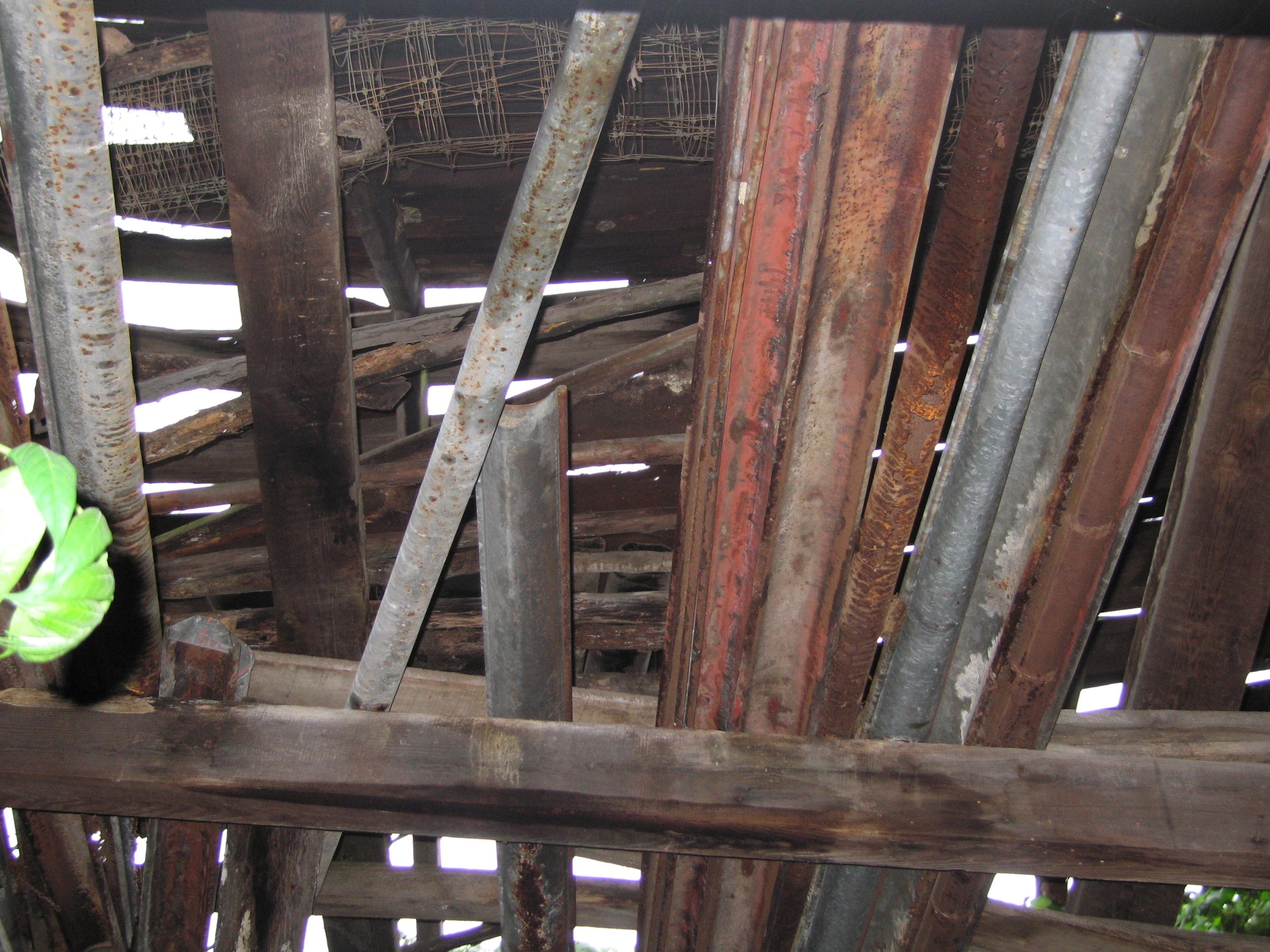

Apparently the smokehouse had served as a repository for a surprising number of old gutters, unused timber, and a random collection of detritus. Add a 200 year-old roof and countless windstorms and you get the perfect mix of rotted out support beams, dangling sheet metal, and the worst kind of Jenga you could imagine; a veritable death trap. Oh, and did I mention that the floor contained a mix of Virginia creeper and POISON IVY? The. Worst.
After a consultation with our craftsman, Colon, we were told the first step was to remove everything except the four brick walls and any of the structurally sound timbers. We were advised to obtain scaffolding, and, as luck would have it, Dad purchased some at a sale years ago (and Mom, despite several close calls, did NOT throw away the all-important connector pins which transform scaffolding from pile of metal poles to a useful support structure).
Enter the Winters Fam:

Minus the wedding attire, these folks were ready to get down and dirty:

(We promised Gina some quality time with a sledge hammer. Wish Granted…oh, and she may have forgotten appropriate footwear and attire…farm wardrobe to the rescue!).
First step: Haul out all of the ground timber that had fallen over the years and any low-hanging fruit.
Second Step: Construct scaffolding in an area least likely to be struck by falling debris:


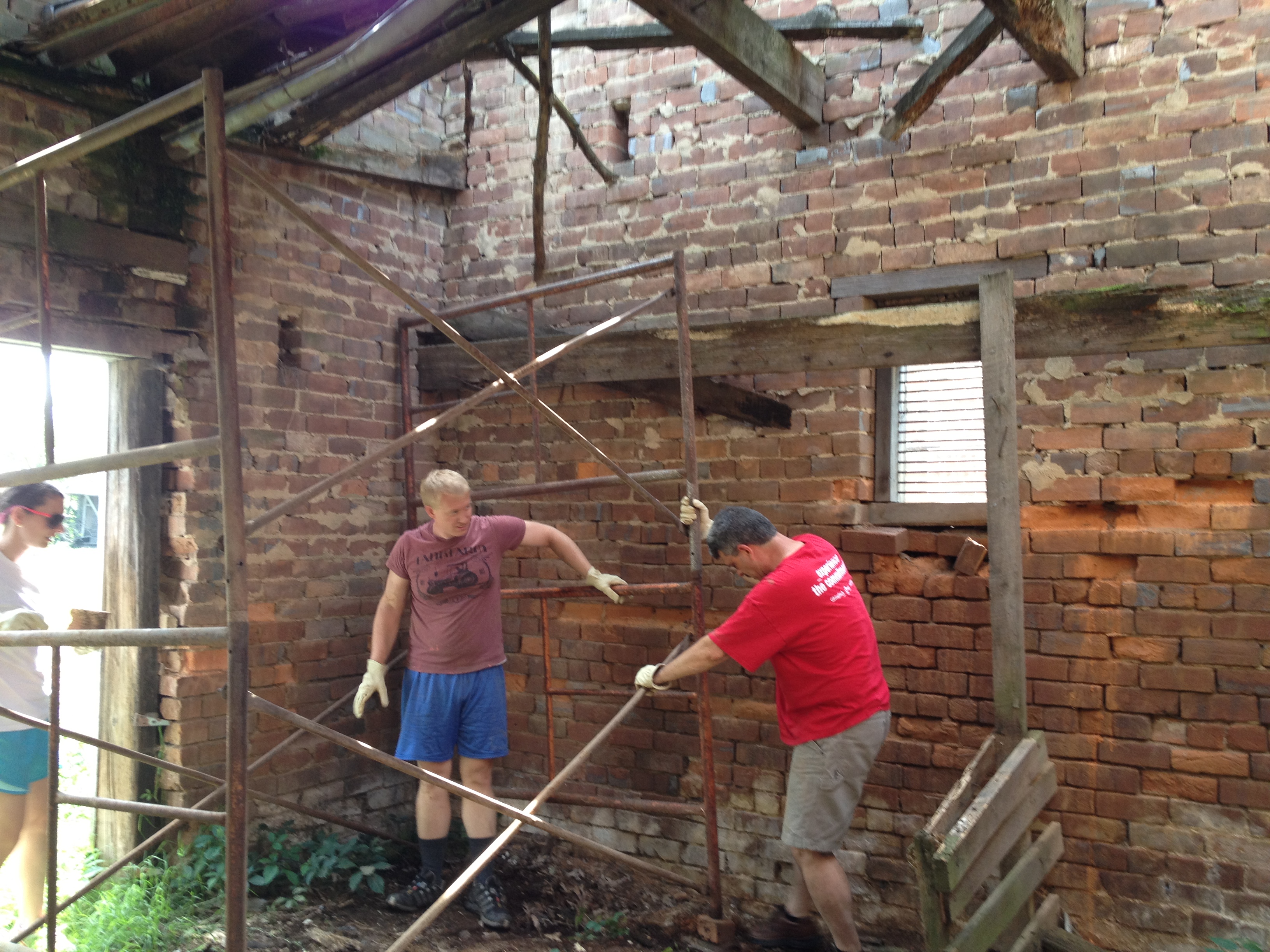
Step 3: Start pulling, and pray your target doesn’t pull back:
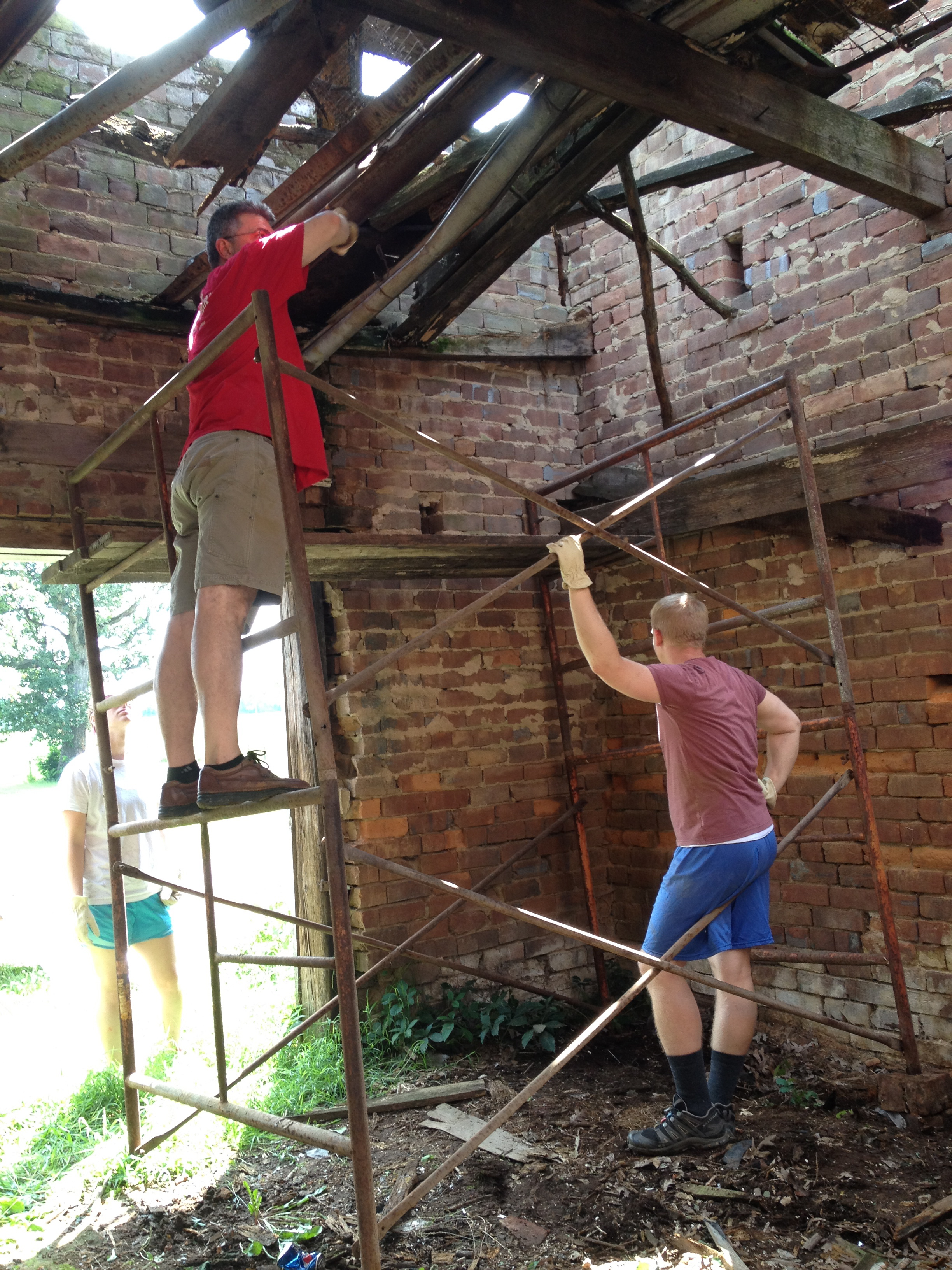
Piece by piece, we slowly removed all of the old wood, metal, and trash. We got two full loads of wood for the burn pile:
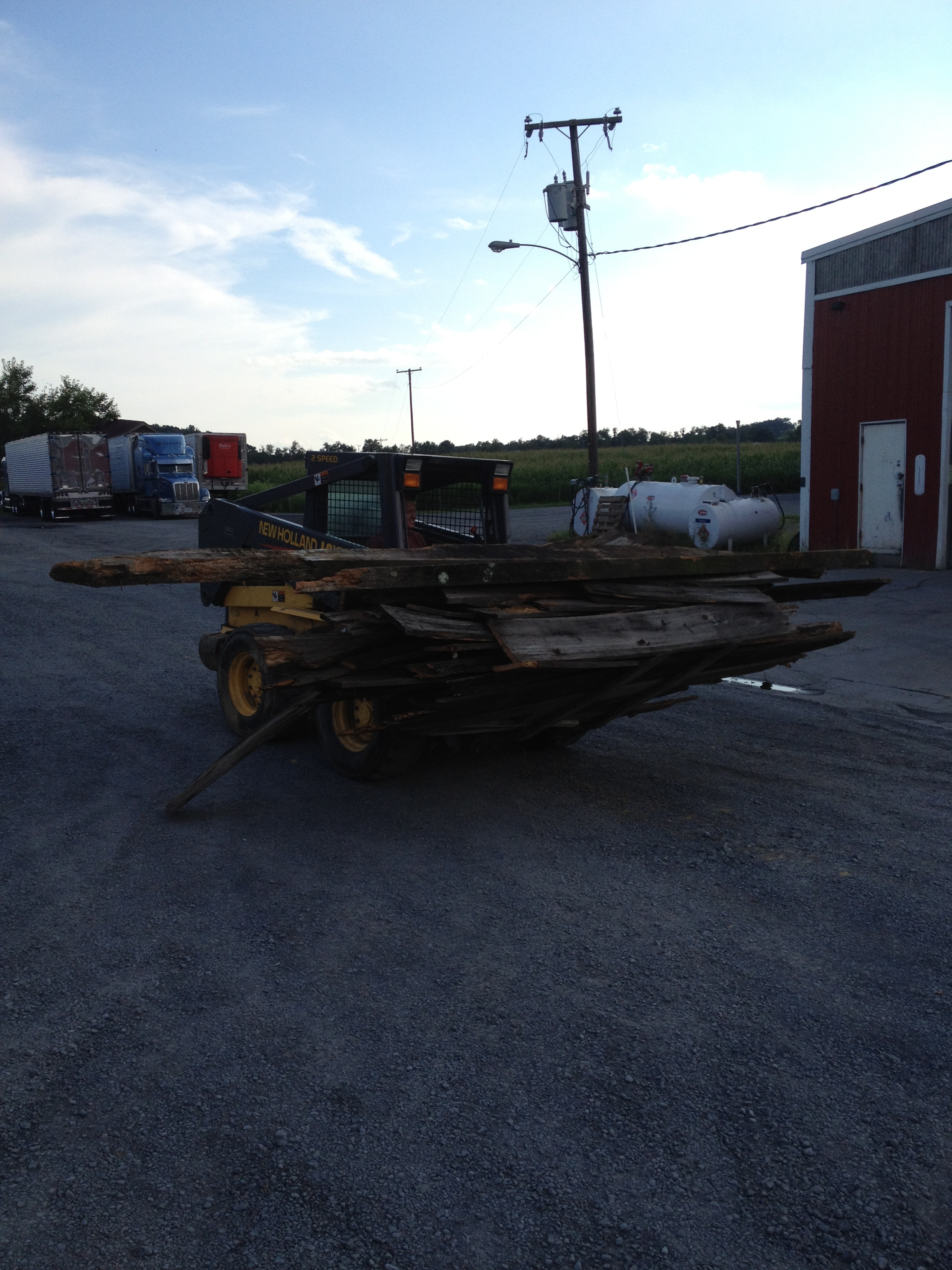
And one load of metal for the scrap yard:

As we came to the end, things were looking pretty…well, at least there was no more rotten wood!

(Note the salt line on the brick, above – the demise of the poor sports car in the ’60s.)

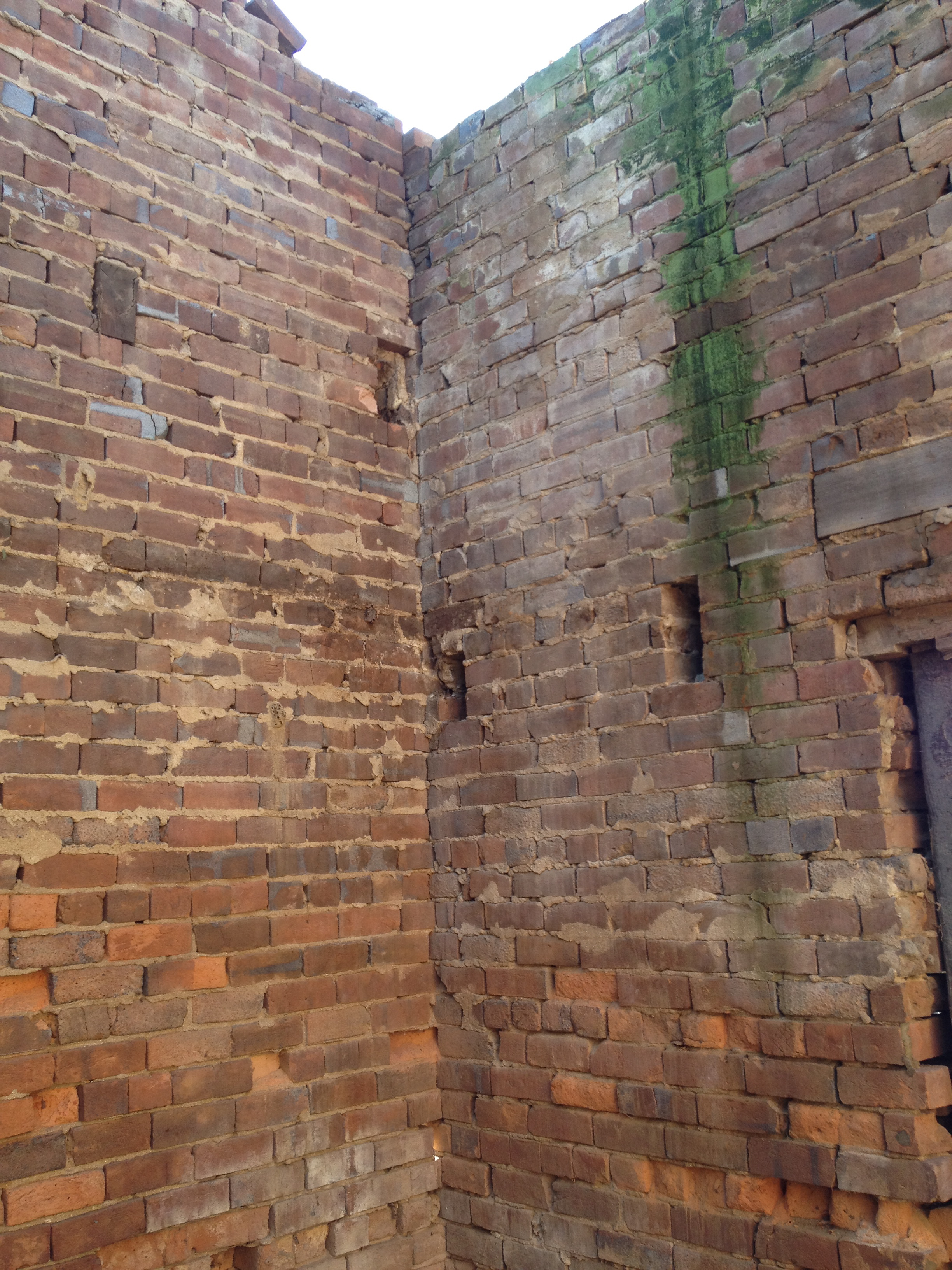
There would have originally been a 4×8 beam in each of those notches, and the smokehouse would have had a total of 12 said beams for holding salted meats in the process of being smoked. When we got into tearing out, only 8 beams remained and of those, the two pictured are the only that we kept, and we might lose one of those to its current state of decomposition. But hey, one 200 year-old beam is still pretty awesome!
Also, during the deconstruction, we found just a few of the original roof trusses:

Looking more closely:

Wooden peg construction, the real deal! A profile shot:

While these beams aren’t salvageable, we did get one (!) full length truss (the side that the roof lies on) and one (!) full length cross support, when, together with a second truss, these form the famous “A” frame that originally supported the roof. We are going to use this construction method as a template for our new structure.
We also found some paneled shutters, which we believe might have been original to the house. There are some louvered shutters on the property as well, but these paneled shutters have peg construction, and appear to be perfect matches to the hinges that are also on the house:

Lastly, we noted that every piece of wood taken from the structure was riddled with nails to hang meats. After spending the day handling the wood, we noticed we could even smell the smoky scent in the old beams. It smelled like authenticity.
After our day of de-construction, Rachel and I did a little Google-ing and discovered a few fun facts about smokehouses, which we will leave you with:
- There were originally smokehouses on every self-respecting plantation. Think of them as modern-day meat refrigerators; if you wanted pork in the summer, it had to be an extremely fresh slaughter or salted and smoked.
- Meats would sometimes be kept for 3 years in a smokehouse, and most smokehouses were constructed with very secure doors, as the smoking typically only took place for about a month after slaughtering (February to March), but meat thieves were at it all year long.
- Of the 88 original structures found in Colonial Williamsburg, 12 are smokehouses. It seems that practicality is a good form of preservation.
- Smokehouses were traditionally made of wood; “[l]avishing the investment of bricks on a utilitarian building devoted to a smoky, almost industrial use was pure ostentation.” Lucky us! It seems that the process of smoking and salting meat is directly inapposite to brick preservation. As mentioned before, the salt erodes the integrity of the brick, and salty brick is mercilessly attacked by fowl as a source of mineral supplement.
Next post we’ll be back in the house, tackling Dan’s bathroom:
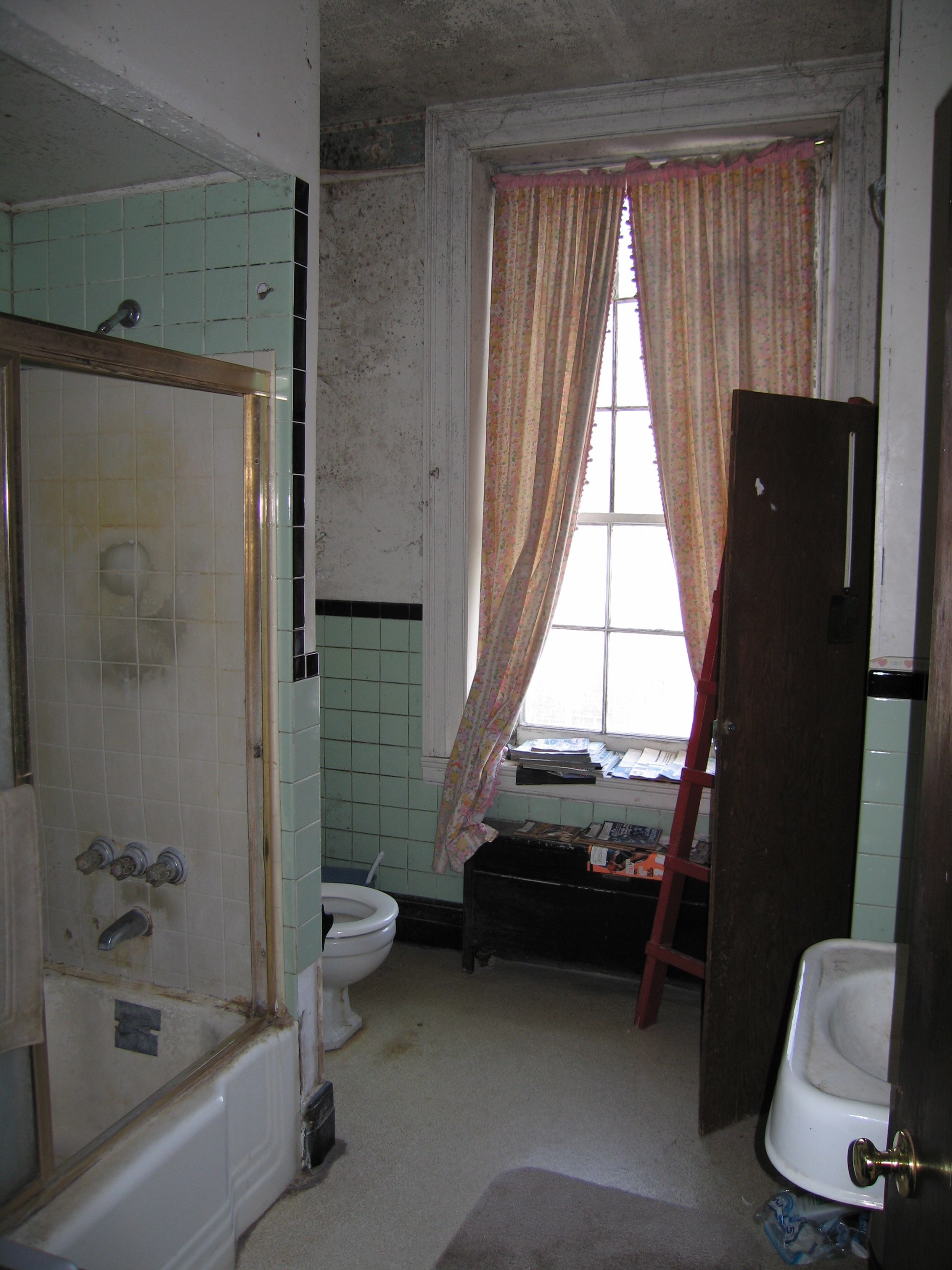
Holy mother of frat bathrooms.
 Living on the Edge(Hill)
I love you guys and this blog. seriously look forward to each installment! New Years in Quicksburg?
Pingback: Smokehouse Phoneix | Living on the Edge(Hill)
Pingback: Smokehouse Phoenix | Living on the Edge(Hill)
Pingback: Strong Foundations | Living on the Edge(Hill)
Pingback: Little House, Big Question | Living on the Edge(Hill)